Madison could become one of the largest U.S. cities to temporarily halt data center development as Mayor Satya Rhodes-Conway prepares to introduce a one-year moratorium on new zoning certificates for such facilities. The proposal, backed by 10 alders, reflects growing concern over the rapid expansion of data centers across the Midwest — and the lack of local regulatory tools to manage their impacts.

Rhodes-Conway says the moratorium is necessary because the city does not currently “have a defined use of ‘data center’ in our zoning code right now.” She plans to present the proposal at tonight’s city council meeting, marking a significant shift in how Madison may evaluate future digital infrastructure projects.
While smaller communities nationwide have adopted similar pauses, Madison would be among the country’s more prominent cities to do so. The measure could be lifted early if the city completes a zoning overhaul that clearly addresses how and where data centers can operate within municipal boundaries.
The mayor notes that the city has only just begun researching how other jurisdictions handle the issue and acknowledges the complexity of weighing sustainability, land use, and urban suitability. “It's not something that we've looked at yet, and we've barely started to do the research necessary to look at how other communities are addressing this,” says Rhodes-Conway. “Of course, I share the concerns that many folks in our community have about energy use and water use in particular, but also sustainability more broadly, which is why I feel like we need to just take a pause and figure out the issues and see how our regulations can address them.”
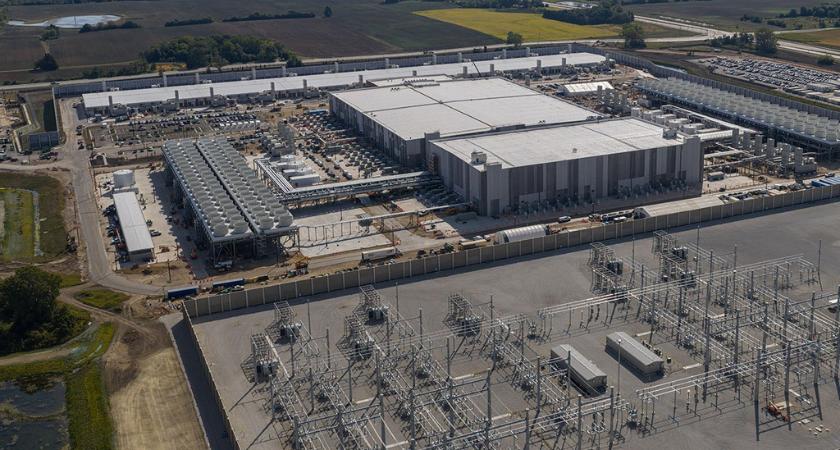
Data centers — large, power-intensive facilities used to house cloud computing and AI servers — have proliferated across the Midwest. States like Wisconsin, Illinois, and Ohio are increasingly targeted due to cheaper land, lower electricity costs, and proximity to the Great Lakes, a critical water resource. Madison residents and environmental groups fear this trend may eventually reach the city, driving up energy and water consumption in ways that could strain local resources.
Bloomberg reported earlier this year that national data center electricity demand could reach 8.6% of total U.S. usage by 2035, up from 3.5% today. That projection has heightened scrutiny on proposed facilities that rely heavily on water-intensive cooling systems.
In Wisconsin, state law contains almost no regulatory framework for these facilities — apart from a sales and use tax exemption — leaving local governments with little authority unless they develop their own zoning rules. Democratic lawmakers have pushed legislation for energy transparency and greener operations, but those bills remain stalled in the Republican-controlled Legislature.
While the mayor is not explicitly opposed to future data centers in the city, she underscores the limits of Madison’s geography and the need for smart, high-value land use. Many proposed data centers across Wisconsin involve massive, single-story campuses — a format she says simply doesn’t fit Madison’s dense landscape.
Though she doesn’t view data centers as inherently incompatible with urban areas, she explains that feasibility depends heavily on scale and design. Many regional projects have required hundreds or even thousands of acres. “If we were looking at something that was multi-story, closed-loop in terms of their cooling, could dump their heat to a next door use and is approaching this very sustainably, that might be a different situation,” she says.
Land scarcity also plays a role. “[The centers] do pay property tax, but the demand for different kinds of land uses in Madison is high enough that it's hard to imagine that a data center would be the highest and best use of land,” notes Rhodes-Conway.
.jpg)
If approved, the moratorium would break new ground in the state. Jerry Deschane, executive director of the League of Wisconsin Municipalities, says his group is “not aware of any such ordinances in Wisconsin at this time.” He adds, “That's not to say there aren't any; we're just not aware that any municipality has considered one.”
The proposal comes just days after local activist groups — including Party for Socialism and Liberation Madison, 350 Wisconsin, and 50501 Madison — rallied for a statewide pause on new data center developments. Ironically, none are currently proposed within the city, but officials say now is the moment to set standards before future applications arrive.
Broader public sentiment appears divided but skeptical. A recent Marquette Law School Poll found that 55% of state residents believe “the costs of large data centers are greater than the benefits they provide.”
If the city council introduces the moratorium tonight, it will move into committee discussions and public hearings before a final vote. During the pause, city staff would work on developing clear zoning definitions, sustainability requirements, and criteria for evaluating data center proposals based on land use compatibility, resource demands, and long-term community impact.
Supporters say the pause will help Madison avoid the pitfalls seen elsewhere — high water use, noisy generators, and sprawling industrial campuses — while giving the city time to decide what responsible digital infrastructure should look like in a dense, land-constrained environment.
For now, the mayor’s message is straightforward: take a step back, study the impacts, and set the rules before the first proposal arrives.
Originally reported by Liam Beran in Isthmus.



.png)