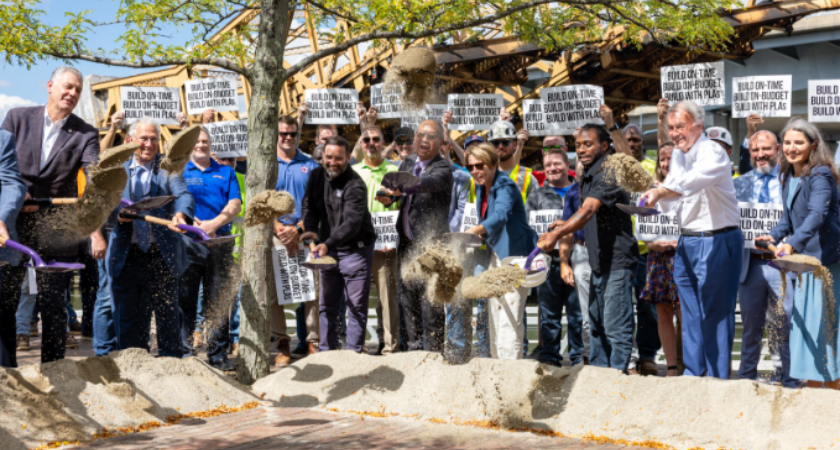
Major rail infrastructure investments can improve network capacity while supporting construction employment and long-term regional mobility. Massachusetts has broken ground on the North Station Draw One Bridge Replacement Project, a major MBTA investment designed to replace aging infrastructure and expand rail capacity north of Boston.
The existing bridge, built in 1931, carries four tracks over the Charles River and serves MBTA Commuter Rail routes as well as Amtrak's Downeaster. The replacement will use new vertical lift bridge structures capable of carrying six tracks.
The project is expected to support approximately 15,600 jobs during construction.
The project will add two tracks at North Station, increasing the station's total from 10 to 12 tracks. Work also includes replacement of the existing bridge approaches, a new control and maintenance facility, and approximately 1.5 miles of track and signal improvements north of the bridge.
Construction planning is intended to reduce the project duration from an initial estimate of eight years to approximately six and a half years. Completion is expected in fall 2032.
The project will be delivered under a Project Labor Agreement with the Greater Boston Building Trades. The agreement establishes project-wide wage, safety and working-condition requirements intended to support workforce coordination on the complex construction program.
The MBTA secured $472.3 million in federal funding through the U.S. Department of Transportation's National Infrastructure Project Assistance, or MEGA, program in September 2024. At the time, the award represented the largest federal grant received by the MBTA.
The bridge carries more than 11 million passengers annually, making construction sequencing and service continuity important considerations throughout the replacement program.
The North Station Draw One replacement demonstrates the scale of investment required to modernize aging rail infrastructure in heavily used transportation corridors. For construction contractors and infrastructure owners, the project also highlights opportunities associated with federally supported transportation programs, design-build delivery, labor coordination and complex work performed around active rail operations.
Source: Mass. Gov.