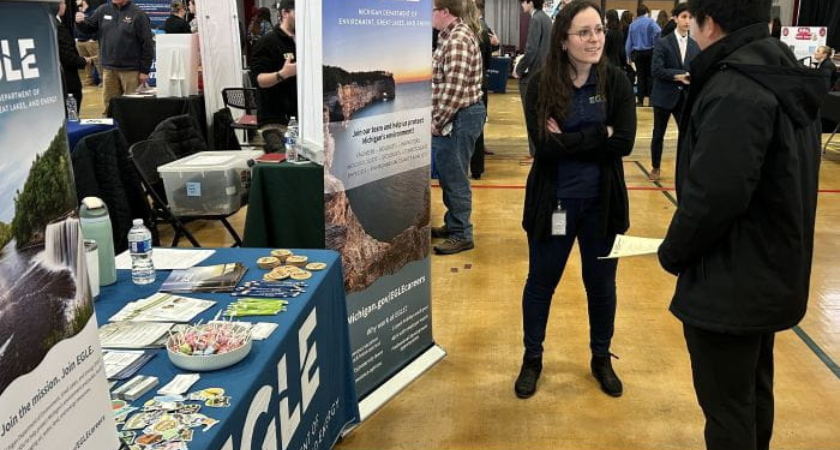
Michigan's environmental and infrastructure sectors are facing continued demand for skilled professionals, prompting the Michigan Department of Environment, Great Lakes, and Energy (EGLE) to expand its university recruiting efforts during the 2026 fall career season.
EGLE will send 28 staff members to career fairs, conferences and university events beginning Sept. 9 and continuing through Nov. 5. Representatives from five divisions will meet with students about employment and internship opportunities within the department.
EGLE staff representing Air Quality, Drinking Water and Environmental Health, Materials Management, Remediation and Redevelopment, and Water Resources will participate in events at universities across Michigan.
The schedule includes career events at the University of Michigan, Albion College, Central Michigan University, Michigan Technological University, Oakland University, Wayne State University, Michigan State University, Western Michigan University, Eastern Michigan University, the University of Detroit Mercy, Grand Valley State University and Northern Michigan University.
The department also will participate in the Michigan Sustainability Conference on Sept. 9 and 10.
Several participating universities will host State of Michigan panel discussions alongside career fairs. The new format is designed to give students more information about state government job titles, application procedures and how to evaluate information included in job postings.
The events are targeted toward students whose academic fields align with the departments participating in the recruitment effort. The format also gives students an opportunity to speak directly with state employees about potential career paths.
EGLE's recruitment and internship specialist is coordinating the university outreach. The department also directs students to its career and internship resources for additional information.
Workforce availability is an important consideration for environmental compliance, water infrastructure, remediation, construction and other projects that require specialized technical expertise. Recruiting students into environmental and infrastructure-related careers can help public agencies build the technical workforce needed to support permitting, environmental protection and infrastructure programs.
For contractors, developers and project owners, a larger pipeline of environmental and regulatory professionals can also support project planning and compliance activities across Michigan.
Source: Michigan Govt.