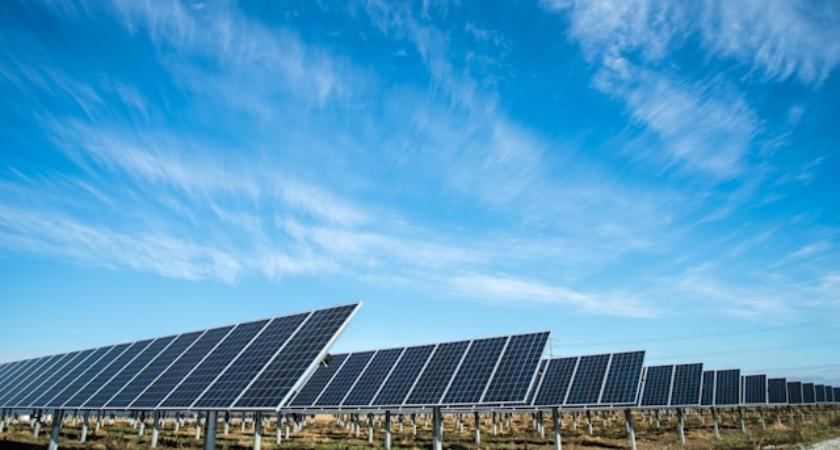
Solar developers are increasingly looking at ways to expand renewable generation without removing agricultural activity from productive land. Agrivoltaics, which combines photovoltaic generation with farming or grazing, offers one approach to using the same acreage for both purposes.
Mortenson recently highlighted the development model as solar construction expands across the United States. The approach can incorporate crops, native plants or livestock beneath and between solar arrays, depending on site conditions and project design.
The U.S. agrivoltaics market includes nearly 700 installations covering approximately 85,000 acres and producing about 14 GW, according to figures cited by Mortenson. The sector has grown substantially from 2020, when installations covered about 27,000 acres and generated approximately 4.5 GW.
Agricultural uses vary by project. Crops that perform well under partial shade can be planted beneath panels, while native vegetation can provide habitat for pollinators. Sheep are also commonly used for grazing and vegetation management around solar equipment.
The configuration requires project teams to consider panel height, spacing, agricultural operations and site conditions during development and design.
Agrivoltaic systems can provide operational benefits for solar developers in addition to maintaining agricultural activity. Vegetation beneath panels can contribute to cooler conditions around the equipment, while livestock grazing can reduce some vegetation-management requirements.
Financial incentives and tax credits may also be available depending on the location and characteristics of an individual project.
Mortenson points to its 209-MW Markum Solar Farm in Texas and 138-MW Arlington II Solar project in Georgia as examples of utility-scale projects incorporating agrivoltaic practices.
The model is also being studied as a way to address community concerns surrounding the conversion of agricultural land for large solar installations. Research cited by Mortenson has found greater public acceptance for some large-scale agrivoltaic projects compared with conventional solar development on open land.
For solar developers, landowners and infrastructure owners, agrivoltaics provides a framework for combining energy production with continued agricultural use. The model can influence site selection, engineering, construction planning and long-term operations.
As solar development continues to expand, dual-use projects could give owners and developers another option for addressing land availability while maintaining productive uses of the underlying property.
Source: Mortenson.