The development of major sports venues has helped shape the Twin Cities' identity as a leading U.S. sports market, creating opportunities for construction companies with specialized stadium and arena experience. Mortenson's delivery of six prominent regional venues reflects a decades-long presence in sports construction, alongside a growing national portfolio of large-scale entertainment projects.
Mortenson's connection to sports facility construction in Minnesota dates back to the 1920s, when company founder Mort Sr.'s father, Nels Mortenson, worked as general superintendent on the University of Minnesota's Memorial Stadium. The family later established the construction business in 1954.
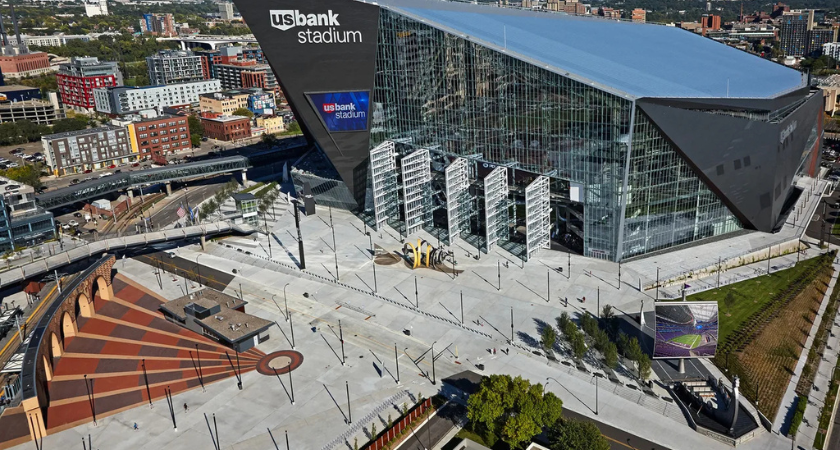
The company's Twin Cities portfolio includes Target Center, home of the Minnesota Timberwolves and Lynx; Grand Casino Arena in St. Paul; Target Field, home of the Minnesota Twins; Huntington Bank Stadium at the University of Minnesota; U.S. Bank Stadium, home of the Minnesota Vikings; and Allianz Field, home of Minnesota United FC.
Mortenson also returned to Target Center in 2017 to lead a $145 million renovation. The project upgraded seating, suites, premium spaces, the centre-hung scoreboard, sound systems, digital signage and concourses, while the arena continued hosting events through much of the construction period.
The contractor's sports and entertainment work extends well beyond Minnesota. Its nationwide portfolio includes Allegiant Stadium in Las Vegas, Chase Center in San Francisco and Climate Pledge Arena in Seattle.
Recent and ongoing projects point to further growth in the market. Mortenson is part of the joint venture selected to build a new stadium for the Washington Commanders and has been selected to help deliver a new downtown ballpark for the Kansas City Royals. The company is also working on Continental Coliseum, the new home of the Oklahoma City Thunder, and has joined the project team for the San Antonio Spurs' planned downtown arena and district.
The breadth of this work reflects the specialized coordination required to deliver sports facilities, which often combine complex structural systems, technology infrastructure, premium hospitality areas and demanding operational requirements.
Mortenson's sports practice also incorporates data analytics to help owners assess the business implications of design decisions before construction begins.
One key consideration is the balance between premium and standard seating. That decision affects not only initial construction costs but also potential revenue throughout a venue's operating life. Mortenson's analysis considers seating, amenities, technology, access, demographics and other factors that can influence financial performance.
For large facilities such as U.S. Bank Stadium, which accommodates approximately 70,000 seats, evaluating pricing and revenue assumptions early can influence major design and investment decisions.
Sports venues are long-term infrastructure investments that require alignment between construction budgets, fan experience, operating needs and revenue expectations. Mortenson's regional track record and national project portfolio demonstrate how specialized construction expertise and early financial analysis can help owners manage the complexity of these developments.
For developers, sports organizations and public-sector partners, involving experienced construction teams during early planning can help identify cost pressures and design trade-offs before they become difficult to address during delivery.
Source: Mortenson.