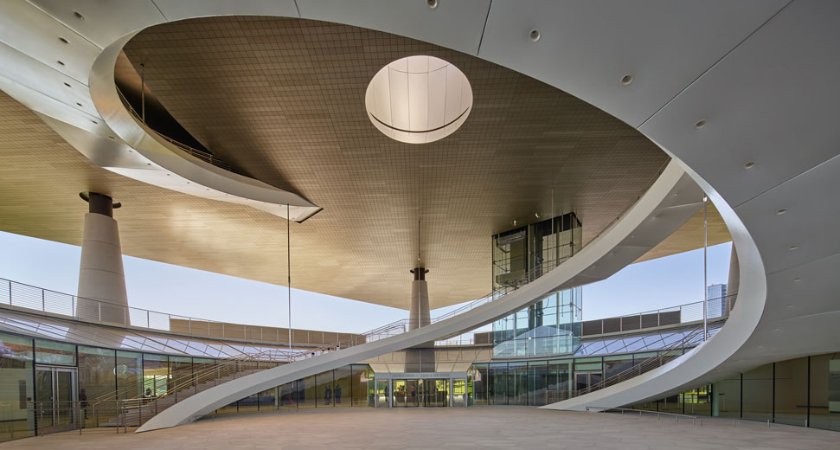
A Texas cultural landmark has received international attention after the National Medal of Honor Museum was named to the Prix Versailles 2026 list recognizing the world’s most distinguished museum architecture.
The annual recognition program highlights projects that combine architectural quality, craftsmanship, and cultural meaning. The museum’s selection places it among a small global group of seven institutions, signaling continued elevation of civic and cultural facilities within the broader construction landscape.
The project reflects a growing shift in public construction toward buildings that are expected to function not only as operational facilities, but also as architectural representations of identity and purpose. Museums and memorials are increasingly designed as experiential environments where structure, materials, and spatial planning contribute to storytelling.
Linbeck served as the construction partner on the project, working alongside design and project teams to translate architectural vision into a completed facility. Delivery required close coordination between stakeholders to maintain design intent while meeting construction requirements for a high-profile public institution.
From an industry perspective, recognition of this type reinforces the expanding role of construction firms in delivering complex cultural assets. These projects often demand elevated precision, specialty materials, and early alignment between design and construction teams to achieve intended outcomes.
For owners and developers, the recognition highlights how cultural and civic projects are increasingly judged on more than function and cost alone. Design quality, public perception, and long-term cultural value are becoming central performance benchmarks alongside budget and schedule.
It also signals that early collaboration between owners, architects, and contractors is critical to achieving high-design outcomes. Projects of this type benefit from integrated planning approaches that reduce redesign risk and help preserve architectural intent through construction execution.
For public and institutional owners in particular, the trend suggests rising expectations from stakeholders and communities for landmark-level design, even on traditionally utility-driven facilities. This can influence procurement strategies, team selection, and risk management approaches on future civic developments.
Originally reported by Linbeck.