Las Vegas — Once considered one of the most affordable housing markets in the United States, Nevada has increasingly become a symbol of the country’s growing housing affordability crisis.
.avif)
For many younger residents, including 27-year-old Brian Torres Suazo, purchasing a home has become increasingly difficult despite stable employment and financial assistance programs. Torres Suazo, who works on the Las Vegas Strip, says the dream of homeownership remains out of reach for now.
“I would be paying more — a lot more — in mortgage than I am for rent right now,” said Torres Suazo, a food runner on the Las Vegas Strip. Sometimes he feels like politicians aren’t listening to people like him. “It’d be nice if more people that knew what it’s like to work for a living could be in those rooms to make decisions,” he added.
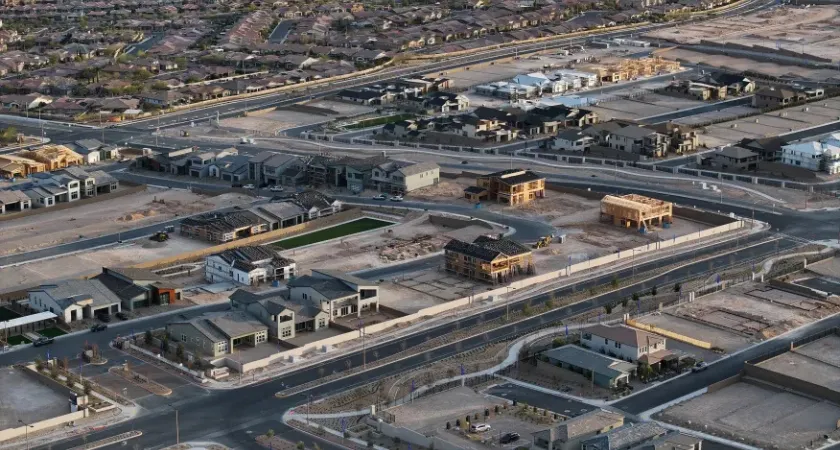
Across the city, new housing developments continue to rise in the desert landscape, but high home prices and borrowing costs continue to limit access for many first-time buyers.
Housing affordability was once largely associated with high-cost markets such as New York and San Francisco, but the issue is now affecting many metropolitan areas across the country.
During the COVID-19 pandemic, remote workers moved from expensive coastal cities into Sun Belt regions like Phoenix, Dallas and Charlotte, driving up housing demand and pushing prices higher.
At the same time, historically low mortgage interest rates during the pandemic encouraged many homeowners to refinance their properties. Those low payments now contrast sharply with today’s higher borrowing costs for new buyers.
In Las Vegas, the housing market experienced dramatic price growth. According to the Case-Shiller home price index, resale home prices increased 53% between December 2019 and December 2025. Federal Reserve data shows the median home sale price rose 65% between early 2020 and early 2025, reaching roughly $393,000 before easing slightly to about $379,000 by the end of last year.
Mortgage rates followed a similar trajectory nationwide, dropping to 2.65% in 2021 before climbing to nearly 8% in 2023 and later settling near 6% in early 2026.
Even with some stabilization, monthly housing payments remain far higher than before the pandemic. By late 2025, the median resale home in Las Vegas with a 20% down payment cost about $2,300 per month, roughly double what buyers paid in 2019.
Strong population growth has also intensified housing demand in southern Nevada. Clark County, which includes Las Vegas, saw its population grow 17% between 2014 and 2024, reaching approximately 2.4 million residents.
Real estate professionals say the market still attracts newcomers from higher-cost states.
“If you ask locals who grew up here, some of them feel that housing is out of reach for them,” said Las Vegas real estate agent Tony Clifford. “You talk to somebody from out of state – Northwest, West, California – we’re still so cheap compared to them.”
Another factor influencing affordability is the growing role of institutional investors in the housing market. According to research from the Brookings Institution, large investors own roughly 11% of single-family rental homes in Las Vegas, compared with about 3% nationally.
Some political leaders have proposed limiting corporate ownership of residential homes.
“People live in homes, not corporations,” said Donald Trump in a January social media post while calling for Congress to restrict large institutional investors from purchasing houses.
The cost of housing has increasingly become a central issue in national and local politics as voters express frustration with the rising cost of living.
Nevada remains a key political battleground following the 2024 presidential election, with both major parties focusing on economic concerns ahead of upcoming congressional races.
Proposals from policymakers include expanding housing development funding, reducing regulatory barriers to construction and unlocking federal land for residential development. The federal government owns approximately 84% of Nevada’s land, which could potentially be used for new housing supply.
.webp)
Nevada’s governor, Joe Lombardo, recently announced $64 million in funding to support housing development projects in the Las Vegas and Reno regions.
Meanwhile, Nevada Attorney General Aaron Ford has proposed measures aimed at increasing housing supply and addressing rental pricing practices.
Housing affordability remains a complex challenge. While high property values benefit homeowners by increasing equity, they also create barriers for first-time buyers and individuals looking to move into larger homes.
Some homeowners also face financial strain from rising association fees and property costs.
“I want to move,” said Las Vegas resident Michele Niemeyer, who owns a condo near the Strip. “I just don’t know where.”
As population growth, investor activity and construction costs continue to influence the housing market, policymakers and industry leaders are increasingly focused on finding ways to expand supply and improve affordability across rapidly growing regions like Las Vegas.
Originally reported by JONATHAN J. COOPER, Associated Press in Fox 44 News.