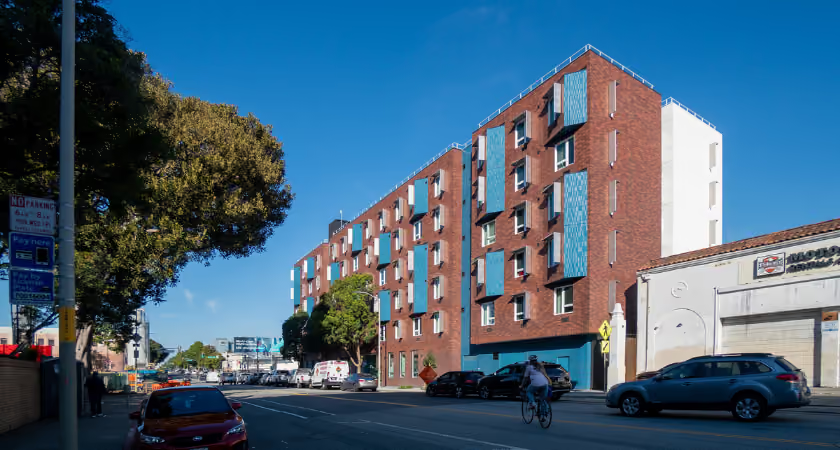
A new affordable housing community for seniors has opened in San Francisco's Mission District, adding 145 permanent supportive housing units as California continues to confront housing affordability and homelessness challenges.
Located at 1633 Valencia Street, the development was created to provide stable housing for residents aged 55 and older while supporting broader efforts to expand affordable housing options in one of the nation's most expensive housing markets.
The project was developed by Mercy Housing California and designed by David Baker Architects, with financing support from the San Francisco Housing Accelerator Fund. Construction was delivered through a design-build approach led by Cahill, emphasizing early collaboration among project stakeholders.
The project team adopted a front-end planning strategy designed to improve budget certainty and construction efficiency. Contractors, designers and trade partners worked together during preconstruction to evaluate building systems, coordinate design decisions and identify opportunities to reduce project risks before construction began.
Early involvement from specialty contractors helped inform pricing and constructability reviews, while building information modeling (BIM) coordination was advanced during design to minimize potential conflicts during construction.
The team also incorporated prefabrication techniques for selected framing and mechanical, electrical and plumbing systems. Such strategies are increasingly being used across the housing sector to improve labor productivity and reduce construction schedules.
Affordable housing developers continue to face mounting pressure from rising construction costs, financing complexities and growing demand for housing. Projects that can maintain budget discipline while accelerating delivery are attracting increased attention from public agencies, nonprofit organizations and private-sector partners.
According to project information, the development achieved occupancy slightly more than two years after entitlement approvals, demonstrating the potential benefits of integrated project delivery methods in affordable housing construction.
Beyond providing housing, the development creates a long-term supportive environment for older adults and contributes to broader community stabilization efforts within the Mission District.
The project reflects a growing trend toward collaborative delivery models in affordable housing, where developers seek greater certainty around costs, schedules and project outcomes. As housing shortages persist throughout California and other major metropolitan areas, owners and contractors are increasingly exploring approaches that improve efficiency without sacrificing quality or resident-focused features.
For affordable housing developers and public-sector owners, the project demonstrates how early contractor involvement, prefabrication and integrated design-build delivery can help address cost and schedule challenges. As demand for affordable housing continues to outpace supply, strategies that improve project predictability may become increasingly important for delivering new units at scale.
Source: CAHILL.