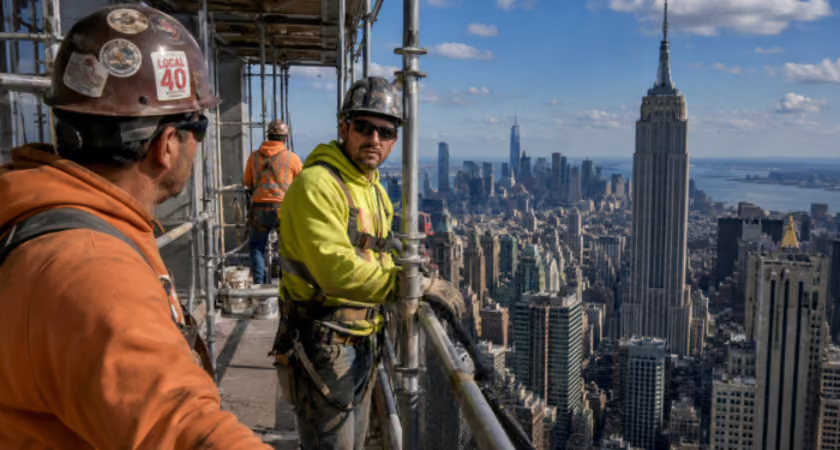
The latest construction fatality data from New York underscores the continued importance of safety management, workforce training and regulatory compliance across the state's building sector.
According to a recent workplace safety report, 55 construction workers lost their lives on New York job sites during 2024. While that figure represents an improvement from the 74 fatalities reported the previous year, construction remains one of the most dangerous industries in the state.
The findings arrive as contractors, developers and public owners face increasing pressure to improve worker protection while maintaining project schedules and managing labor shortages.
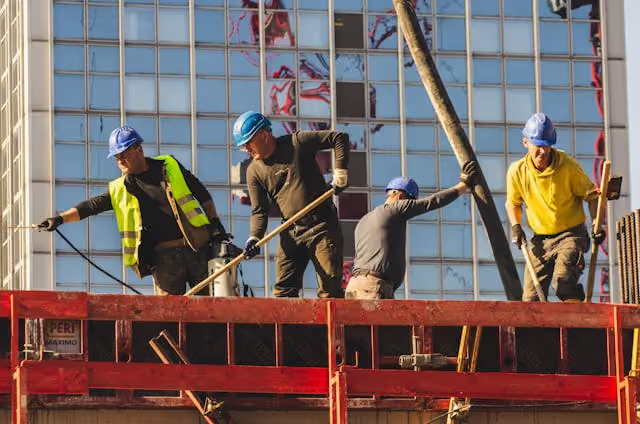
Over the past decade, at least 587 construction workers have died while working on projects across New York, illustrating the long-term challenges facing the industry despite advances in safety practices and technology.
Fatality rates showed modest improvement during 2024, both statewide and within New York City. However, construction workers continue to face significantly greater occupational risks than workers in most other industries.
New York City recorded 19 construction-related deaths in 2024, compared with 30 fatalities the previous year. Despite the decline, city construction workers remained substantially more likely to experience a fatal workplace incident than the average employee across all industries.
The report also identified significant differences between union and non-union construction environments. An analysis of OSHA-investigated fatality cases found that the majority of workers who died in 2024 were employed on non-union projects.
Safety organizations argue that access to formal training programs, established reporting procedures and stronger worker protections can contribute to improved safety outcomes. Industry leaders have increasingly emphasized investment in workforce development as labor shortages continue to challenge project delivery throughout the region.
The report also highlighted a reduction in federal workplace safety enforcement activity.
OSHA inspections conducted across New York declined in 2025 compared with prior years and remain below pre-pandemic levels. Average penalties assessed in construction fatality investigations also fell during 2024, reaching their lowest level in several years.
Safety advocates contend that reduced inspection activity and lower penalties may weaken deterrence efforts, particularly for employers with recurring violations. The report noted that many fatality investigations involved worksites where additional OSHA violations were identified.
The findings have prompted renewed discussion around construction safety legislation, worker training requirements and accountability measures for contractors with repeated safety violations.
Several policy recommendations outlined in the report include expanded safety training mandates, enhanced protections against workplace retaliation, stronger penalties for severe violations and additional safeguards addressing emerging job-site hazards.
For project owners, general contractors and developers, the latest data reinforces the growing business case for proactive safety investment. Beyond protecting workers, strong safety performance can reduce project delays, lower insurance costs, improve workforce retention and limit legal exposure.
As regulators, labor organizations and public agencies continue to scrutinize job-site safety performance, contractors with established training programs, documented safety procedures and strong compliance records may gain a competitive advantage when pursuing public and private sector work.
The report also serves as a reminder that safety management capacity remains a critical component of successful project delivery as construction activity continues across New York's residential, commercial and infrastructure sectors.
Originally reported by R&I Editorial Team in Risk & Insurance.