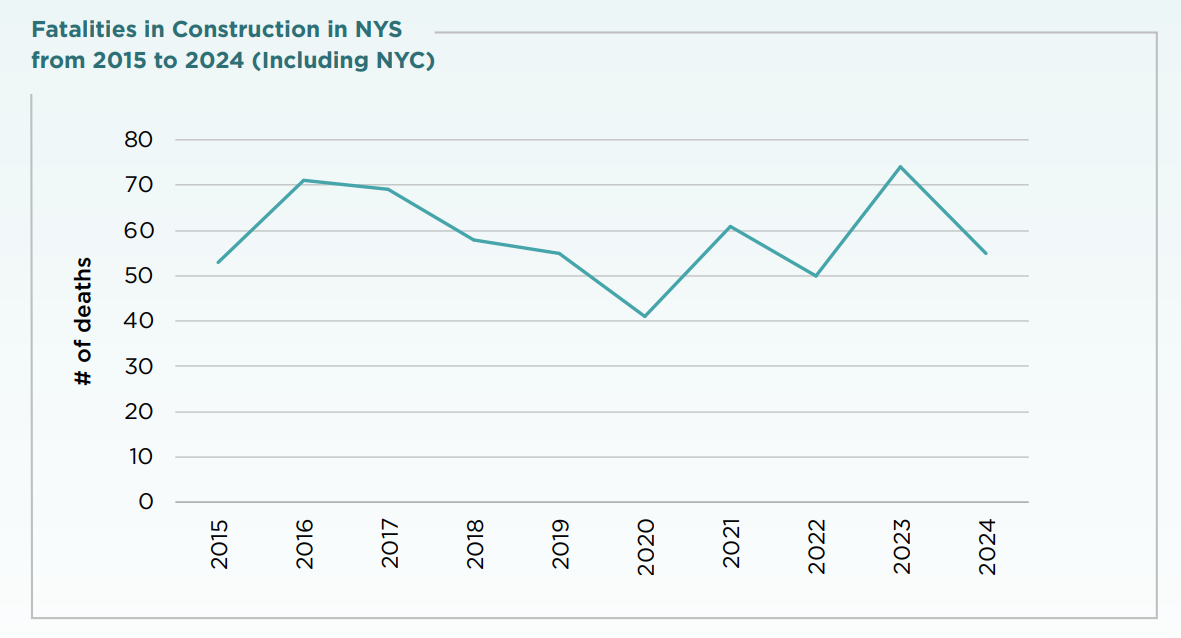
NEW YORK -- More than four dozen construction workers died on the job in New York State in 2024, and the enforcement systems meant to protect them have grown weaker, not stronger, according to a new report from a leading worker safety organization.
The annual Deadly Skyline report, released in May 2026 by the New York Committee for Occupational Safety and Health, or NYCOSH, documents 55 construction fatalities across New York State last year. That figure is down from a decade-high of 74 deaths in 2023, and advocates say the modest improvement offers little comfort given the persistent failures in oversight, accountability and worker protections they say are driving the deaths.
The report makes clear that these fatalities are not random. They are concentrated among immigrant workers, at non-union job sites, and in an enforcement environment where inspections are falling, fear of reporting is rising and fines are declining.
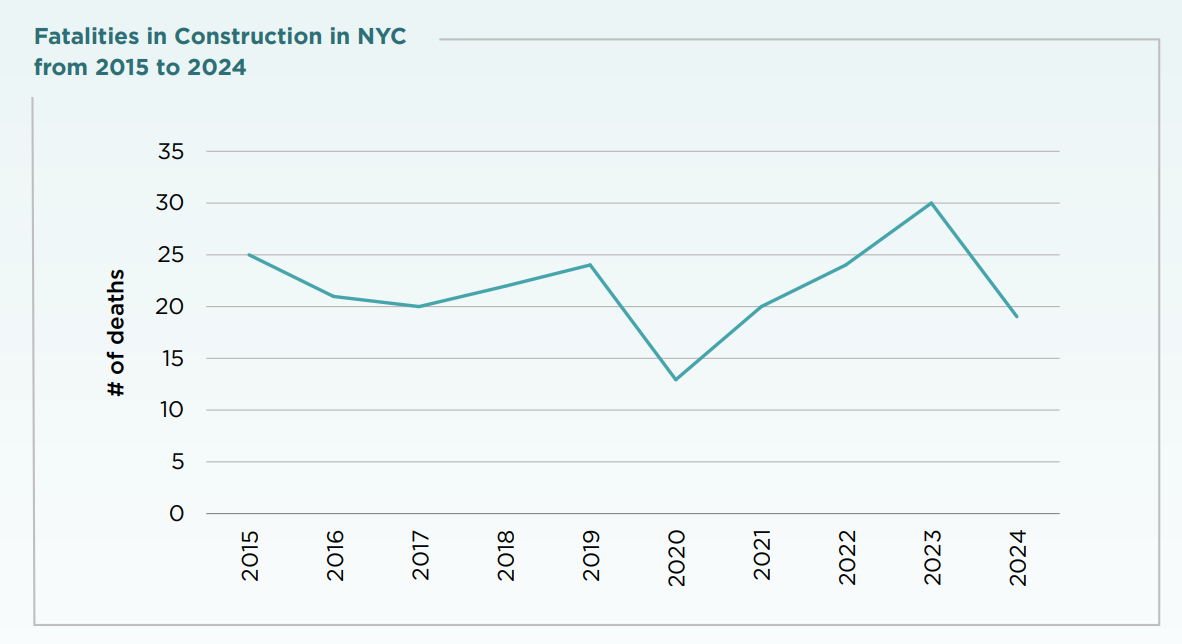
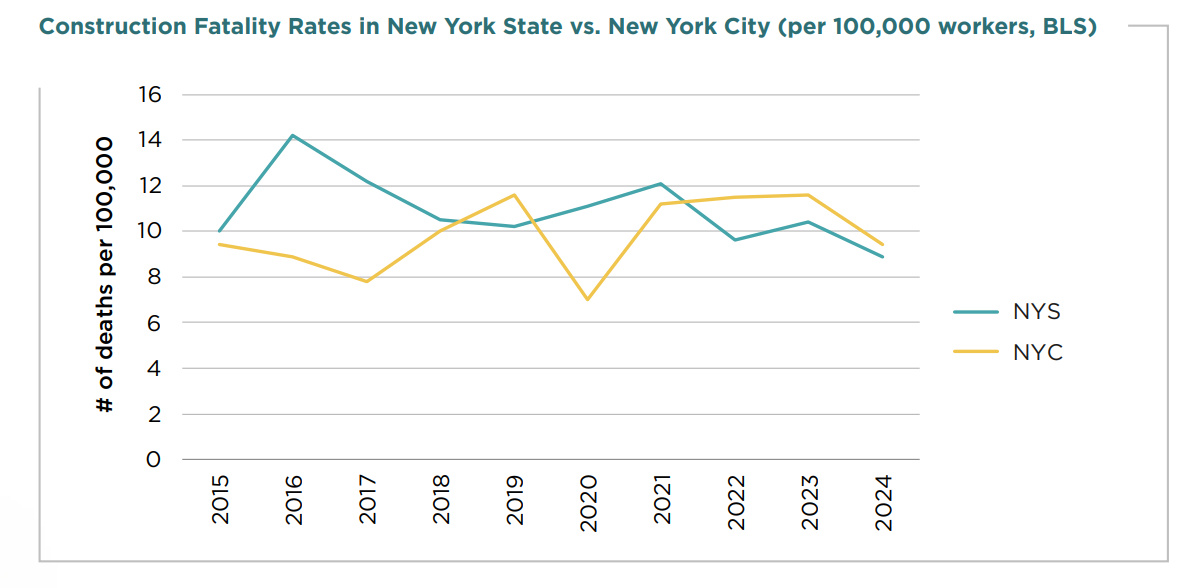
New York City saw 19 construction worker deaths in 2024, compared to 30 the previous year and 24 in 2022. Statewide, the construction fatality rate dropped from 10.4 deaths per 100,000 workers in 2023 to 8.9 per 100,000 in 2024. The city's rate fell from 11.6 to 9.4 per 100,000 over the same period.
Those numbers, while lower, remain far above what workers in other industries face. In New York City, construction workers are more than six times as likely to experience a fatal workplace incident compared with the average worker citywide. The overall worker fatality rate citywide was 1.5 per 100,000 workers. For construction workers, it was 9.4.
Between 2015 and 2024, at least 587 construction workers have died on the job in New York State. In New York City alone, 218 workers were killed over that decade, an average of roughly 22 per year.
The report draws on data from the U.S. Bureau of Labor Statistics, the Occupational Safety and Health Administration, the New York City Department of Buildings, and the New York State Department of Labor, among other sources.
One of the report's most striking findings involves the relationship between union membership and worker safety. NYCOSH analyzed 31 OSHA investigations of construction fatalities in New York State in 2024 and found significant disparities between union and non-union workers. Among these fatalities, 81% of construction workers who died on the job were non-union.
The disparity, the report argues, reflects structural differences between union and non-union workplaces. Unionized workers often have greater access to safety training, stronger workplace protections, and mechanisms for reporting hazards through collective bargaining agreements.
In contrast, non-union workers, who are more likely to be employed on smaller or less-regulated projects, may face weaker safety programs, limited oversight, and greater pressure to prioritize productivity over safety.
The findings underscore long-standing calls from labor advocates to expand safety training requirements and enforcement beyond the unionized sector.
The report also renews attention to the disproportionate toll on Latinx workers. Latinx individuals make up an estimated 18.6% of New York State's workforce, and they accounted for 25.8% of worker fatalities in 2024.
NYCOSH researchers say this disparity is not accidental. Latinx workers are often concentrated in jobs with higher physical risk, limited safety oversight, and inconsistent access to training and protective equipment. Language barriers can make it harder to understand workplace hazards or assert rights on the job. And in the current political climate, immigrant workers fear deportation for simply going to work, which can also make workers less likely to report unsafe conditions, refuse dangerous tasks, or seek medical care, ultimately increasing their risk of workplace injury and illnesses.
The report cites investigative reporting documenting how immigration enforcement activity near worksites has intensified the vulnerability of immigrant construction workers, particularly in the roofing and demolition trades. The chilling effect, the report argues, creates a feedback loop in which dangerous conditions go unreported and unaddressed, increasing the risk of future fatalities.
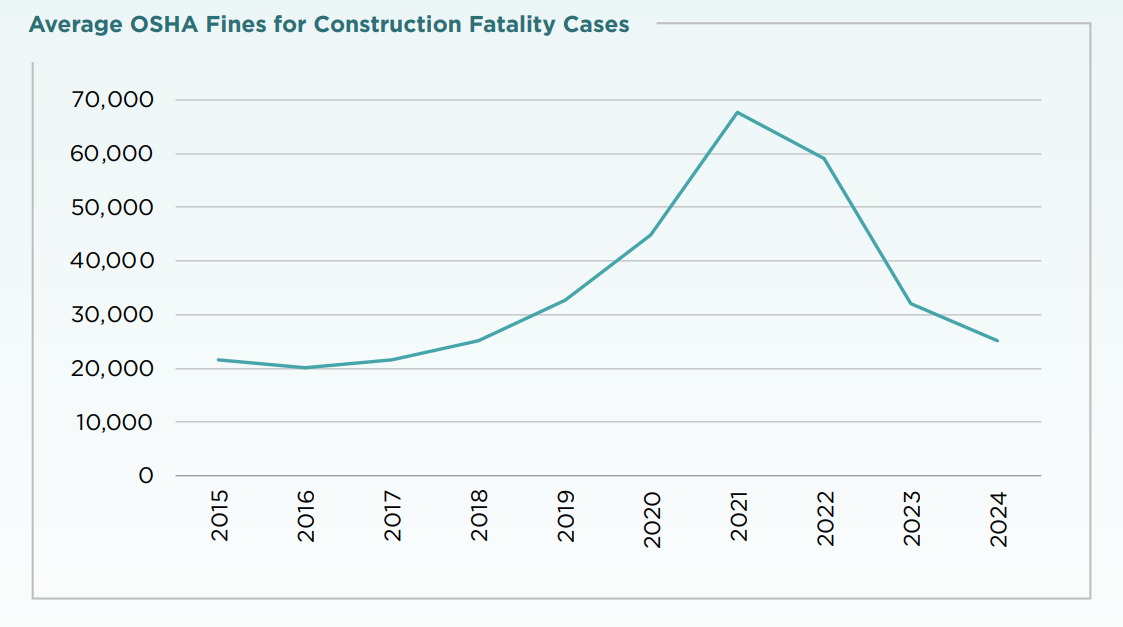
Financial penalties for construction fatalities in New York have declined sharply. The average fine amount in 2024 was $25,295, down from $32,123 in 2023. This is the lowest average fine amount since 2017.
The decline continues a trend that began in 2022, after fine amounts had climbed steadily following a 2016 federal rule that increased the maximum penalties OSHA could impose. Fines peaked around 2021, then reversed course.
NYCOSH argues that declining fines undermine deterrence. When penalties fail to impose meaningful financial consequences on employers, the report contends, the incentive to invest in safety is diminished.
Compounding the fine reductions is a broader retreat in enforcement visibility. In 2025, OSHA issued just three press releases, the lowest number of press releases since NYCOSH began publishing this report and reviewing this data.
In 2019, the agency had issued 21. Press releases, the report notes, serve a public accountability function by alerting workers, employers and communities to unsafe conditions and their consequences. Their near-disappearance removes a key layer of transparency from the enforcement system.
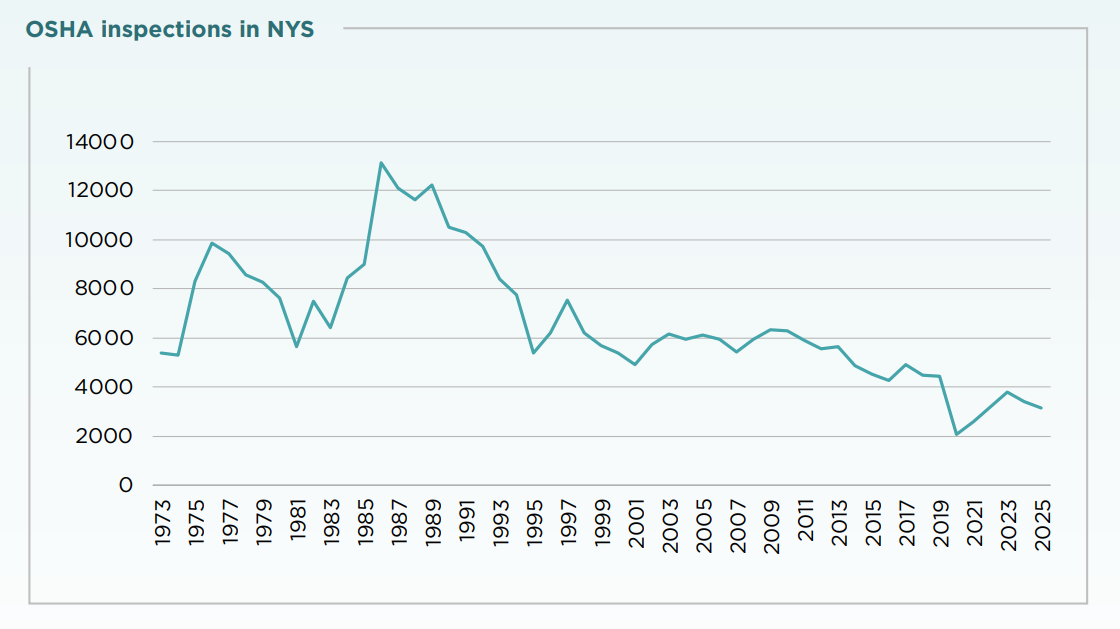
In New York State, OSHA conducted 3,162 inspections in 2025, representing a 7.3% decrease from 3,411 inspections in 2024, and a 29.1% decrease compared to pre-pandemic levels in 2019.
The long-term trend is even more dramatic. OSHA conducted more than 6,000 inspections statewide in 2010. Inspection activity had been declining for years before COVID-19 accelerated the drop. Despite some partial recovery, inspection numbers remain well below historical norms.
The report also notes that OSHA's budget has been effectively frozen in recent years. Funding was frozen at $632 million in 2023, 2024, and 2025, and dropped slightly in 2026, when OSHA was appropriated $629.3 million. Adjusting for inflation, OSHA has less purchasing power today than it did a decade ago, even as the number of American workers has grown.
In New York City, the Department of Buildings, which regulates construction safety and site compliance, is operating with a significant staffing gap. As of April 2026, the DOB had 1,619 staff employed, with a vacancy rate of 12.6% compared to the vacancy rate of 5.05%, the average for City agencies.
The NYC DOB's blended vacancy rate over a ten-year period was 13.4%, meaning chronic understaffing is not a new problem. NYCOSH argues that the agency cannot fulfill its enforcement mandate without a full complement of staff and adequate funding. The proposed FY2027 Executive Budget calls for reducing the DOB's allocation from $230.9 million to $225 million, a cut of $8.2 million.
The report breaks new ground in its examination of heat-related fatalities. NYCOSH research revealed four construction fatalities in New York State that occurred when temperatures met or exceeded 80 degrees Fahrenheit at the time of the incident. The cases involved workers in Long Island City, Port Washington, Manhattan and Huntington, with estimated temperatures at the time of their deaths ranging from 82 to 96 degrees.
Research shows that occupational heat stress can begin at temperatures that many people consider moderate, particularly for workers performing strenuous physical labor in direct sunlight or near heat-absorbing surfaces such as concrete and metal. The New York State Insurance Fund found that work-related injuries increase by approximately 29% on days when temperatures exceed 90 degrees Fahrenheit.
NYCOSH is calling on state lawmakers to pass the TEMP Act, which would require employers to provide outdoor workers with water, rest breaks, shade and other heat protections. Federal heat safety rules remain stalled.
In one of its more pointed findings, NYCOSH analyzed construction fatalities investigated by OSHA in New York State in 2024 and found that 77% of worksites where a worker died also had OSHA violations identified during the inspection. The violations were often directly connected to the circumstances of the fatality.
In fall-related deaths, for example, employers were frequently cited for failing to provide required safety training and for not installing basic fall protection measures such as harnesses, guardrails or safety nets.
Despite those violations and those deaths, there are currently no legal restrictions preventing these employers from receiving public subsidy dollars.
NYCOSH is calling on state and city officials to change that, arguing that public money should not flow to employers with documented records of endangering workers.
The report's recommendations span multiple levels of government. Among the priorities: mandating safety training statewide, modeled on New York City's Local Law 196; protecting and strengthening OSHA at the federal level; and expanding the use of Carlos' Law, which allows for criminal penalties of up to $500,000 against corporations whose negligence results in worker deaths.
NYCOSH is also calling on district attorneys outside Manhattan and Brooklyn to begin criminally prosecuting negligent contractors, and urging municipalities across the state to use licensing authority to prevent repeat offenders from obtaining new construction permits.
For Latinx and immigrant workers specifically, the organization recommends expanded outreach in workers' native languages, stronger anti-retaliation protections and more proactive enforcement targeted at workplaces with documented histories of violations.
The broader message of the report is unambiguous: the deaths documented in its pages were not random, and they were not inevitable. They were preventable. And until the systems meant to prevent them are strengthened, New York's construction workers will continue to leave for work and not come home.
The Deadly Skyline report was produced by NYCOSH researcher Samantha Fisher, M.P.H., with contributing authorship from Executive Director Charlene Obernauer. It is available at nycosh.org.