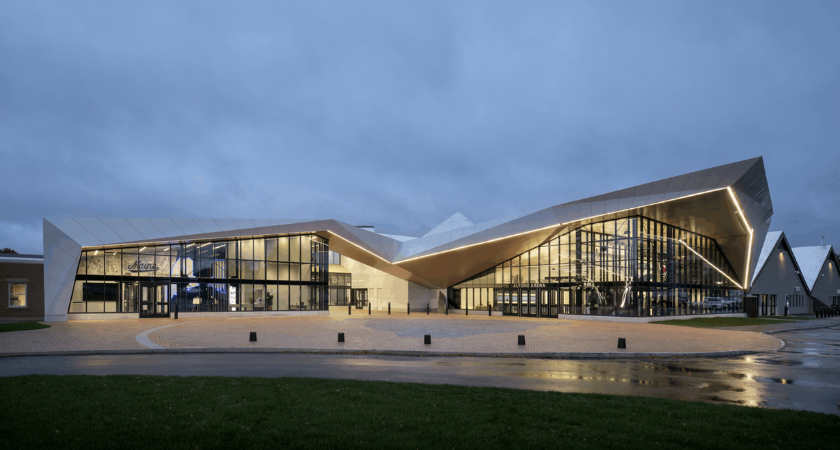
Owners increasingly are choosing to renovate active facilities rather than suspend operations or construct replacement buildings, creating new challenges for contractors responsible for delivering projects without disrupting day-to-day activities. A recent renovation at the University of Maine's Shawn Walsh Hockey Center and Harold Alfond Sports Arena highlights how phased construction, safety planning, and operational coordination are reshaping occupied facility projects.
PC Construction completed approximately 31,000 square feet of renovations and 21,000 square feet of new construction while the hockey arena remained in service for practices, games, university events, and athletic operations.
The project required an 18-month construction schedule, longer than a comparable renovation at an unoccupied facility because work had to be sequenced around sporting events, broadcasts, graduation activities, and year-round building use.
Construction activities were organized in phases, beginning with exterior work before progressing to isolated interior spaces, concourses, public areas, and final commissioning. Certain renovation activities were deferred until after the hockey season to maintain access for athletes and spectators.
Maintaining safe operations required close coordination among the construction team, university officials, athletic staff, and facility operators. Temporary barriers, controlled access routes, interim safety measures, and environmental controls helped separate construction activities from occupied spaces.
Daily communication supported schedule adjustments as facility operations changed, while project teams balanced construction progress with ongoing public access and athletic programming. Dedicated supervision and safety oversight also helped manage risks associated with occupied construction.
Renovation projects in active sports venues, healthcare facilities, transportation hubs, and educational campuses are becoming more common as owners seek to extend the life of existing assets while minimizing operational disruptions.
For contractors, these projects require specialized expertise in construction sequencing, stakeholder coordination, scheduling flexibility, and risk management. Successful delivery depends on integrating construction activities with facility operations while maintaining safety, quality, and occupant experience throughout the project.
Occupied facility construction represents a growing segment of the building market as owners prioritize modernization over replacement. Contractors with experience in phased delivery, operational planning, and active-site safety are increasingly well positioned to compete for these complex projects, where minimizing disruption is as important as completing construction on schedule.
Source: Under Hard hat.