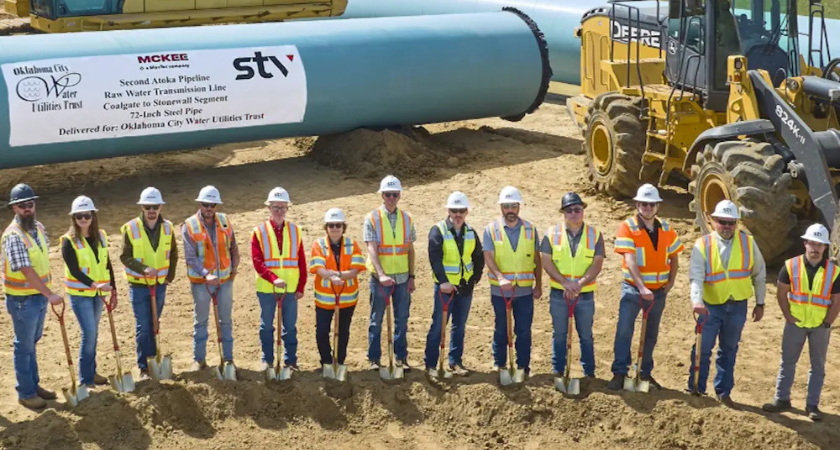
Oklahoma is moving forward with one of the most significant water infrastructure investments in its history as construction begins on a major segment of the Second Atoka Pipeline project. Designed to enhance long-term water security for Oklahoma City and surrounding communities, the initiative will expand delivery capacity while improving system resilience for decades to come.
.jpg)
The project represents a critical upgrade to a regional water network that currently serves millions of residents and businesses. As population growth and economic development continue across central Oklahoma, utility leaders are investing in expanded infrastructure to ensure reliable access to drinking water and support future demand.
The new pipeline will add a 72-inch steel transmission line adjacent to the existing 60-inch Atoka pipeline, creating additional capacity while utilizing an established corridor to minimize impacts on surrounding properties and communities.
STV is overseeing design and construction management activities for a 15-mile section of the approximately 100-mile project between the Coalgate and Stonewall pump stations. The firm's responsibilities include engineering, utility coordination, surveying, environmental compliance and construction oversight.
A notable component of the work involves extensive trenchless construction methods. More than 3,600 linear feet of tunneling will allow crews to cross highways, rail corridors and waterways while reducing disruptions to transportation networks and environmentally sensitive areas.
Project teams are also coordinating multiple active tunneling operations simultaneously, requiring advanced planning and geotechnical expertise.
The Second Atoka Pipeline is intended to provide additional redundancy to one of Oklahoma City's most important water supply systems. The original Atoka pipeline, constructed during the 1960s, currently delivers approximately 70% of the city's drinking water supply.
Upon completion, the new infrastructure will initially transport up to 90 million gallons of water daily. Additional pump stations associated with the project are being designed to accommodate future demand projections through at least 2060.
Utility owners across the country are increasingly prioritizing redundancy and resilience in water infrastructure as aging systems face growing operational and environmental challenges.
Across the United States, municipalities are accelerating investments in water transmission, treatment and distribution systems to address aging infrastructure and support economic growth. Federal and state funding programs have helped drive renewed focus on long-term water reliability, particularly in rapidly growing metropolitan regions.
Large-scale transmission projects such as the Second Atoka Pipeline demonstrate the growing emphasis on system resiliency, environmental stewardship and construction techniques that minimize impacts on communities and transportation networks.
The use of trenchless technologies continues to gain traction as owners seek solutions that reduce construction risks, preserve ecosystems and maintain mobility during infrastructure upgrades.
The Second Atoka Pipeline highlights several trends shaping the infrastructure construction market:
As municipalities nationwide confront aging water systems and rising demand, projects that enhance resilience, capacity and operational reliability are expected to remain a major source of construction activity for years to come.
Source: STV