Pennsylvania transportation officials have finalized a major bridge modernization effort on the Pennsylvania Turnpike, delivering new infrastructure intended to improve traffic flow, enhance safety and reduce future maintenance costs for one of the state's key transportation corridors.
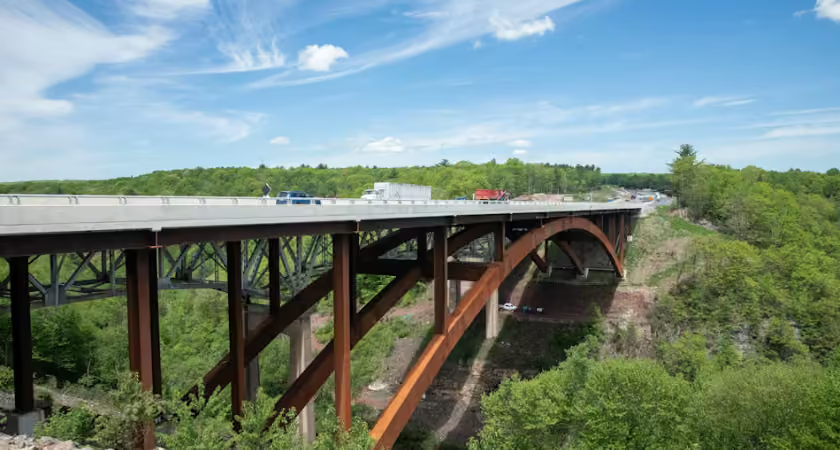
The $88 million investment centered on replacing the aging Hawk Falls Bridge in Carbon County, a structure originally constructed during the mid-20th century. The completed project also included reconstruction of the nearby Hickory Run Road Bridge, creating a broader infrastructure upgrade aimed at supporting growing travel demand across the region.
The new Hawk Falls Bridge continues to carry two lanes of traffic in each direction but introduces wider shoulders and expanded medians to improve operational flexibility and roadway safety. Transportation officials indicated that traffic volumes on the corridor have continued to increase, reinforcing the need for a modernized crossing capable of supporting current and future transportation requirements.
Project designers incorporated weathering steel into the bridge structure and eliminated expansion joints, two measures expected to extend service life while reducing ongoing maintenance expenditures. For public agencies and infrastructure owners, lower maintenance requirements can translate into fewer lane closures and reduced lifecycle costs over time.
According to project information released by the Pennsylvania Turnpike, the replacement structure spans approximately 720 feet and includes a 480-foot deck arch span supported by additional deck plate girder sections.
The initiative also replaced the Hickory Run Road Bridge, which carries the turnpike over Pennsylvania State Route 534. The new single-span bridge eliminates existing interior piers, creating a more open configuration that can better accommodate future roadway improvements and simplify long-term asset management.
A key construction strategy involved building both replacement bridges on a new alignment east of the existing roadway. By separating construction activities from active traffic lanes, project teams were able to limit disruptions for motorists throughout much of the work.
The completion of the Hawk Falls project reflects a broader trend among transportation agencies seeking to replace aging bridge assets before maintenance costs escalate. Across the United States, owners are increasingly prioritizing projects that improve durability, reduce maintenance frequency and minimize impacts to roadway users.
For contractors, the project highlights continued opportunities in bridge replacement, rehabilitation and transportation modernization programs funded through state and federal infrastructure investments. Design approaches that reduce lifecycle costs and improve constructability are becoming increasingly important evaluation factors for public owners.
Owners managing transportation infrastructure can view the Hawk Falls replacement as an example of long-term asset planning that balances mobility, safety and maintenance considerations. By investing in more durable materials and construction methods, agencies can potentially lower future repair expenses while improving reliability for the traveling public.
The project also demonstrates how alternative alignments and phased construction strategies can help maintain traffic operations during major infrastructure upgrades, an approach that may become increasingly valuable as agencies address aging bridge inventories nationwide.
Source: Jessica Parks, Staff Writer in Roads & Bridges.