A major office redevelopment project in New Hampshire has earned statewide recognition for construction excellence, highlighting the growing role of adaptive reuse in commercial real estate and corporate facility development.
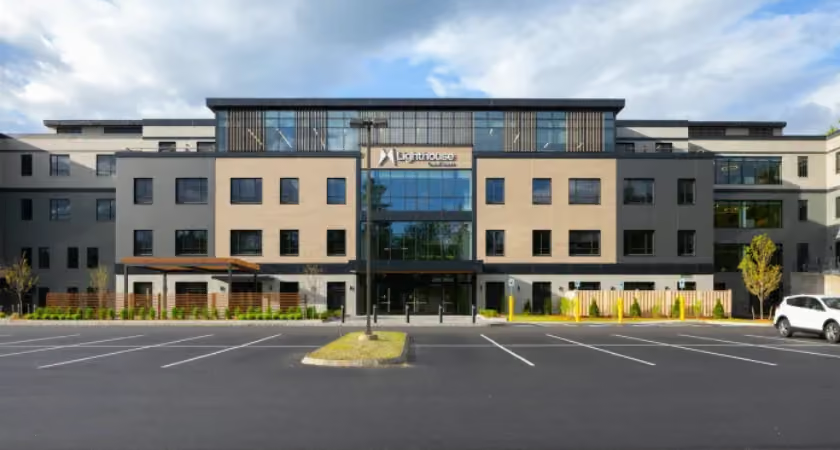
PROCON was honored with the 2026 "Best in Building" Award from the Associated General Contractors of New Hampshire for its work on the new Lighthouse Credit Union headquarters in Dover. The project transformed a vacant four-story office building into a contemporary workplace designed to support collaboration, employee engagement, and future organizational growth.
The recognition underscores increasing demand for redevelopment strategies that extend the life of existing buildings while meeting modern workplace requirements.
The headquarters project was delivered through an integrated design-build model that combined architecture, engineering, and construction services under a single project team.
Originally built in 2006, the 100,000-square-foot structure required extensive modernization to overcome outdated layouts and highly segmented interior spaces. Project teams reconfigured the building to create open work environments, expanded access to natural light, and upgraded building systems to support long-term operational efficiency.
For owners and developers, the project demonstrates how integrated delivery methods can help manage complex renovations while maintaining schedule and budget objectives.
A key element of the redevelopment involved the use of LiDAR scanning technology to create a detailed digital model of the existing facility before construction activities began.
The technology allowed project teams to identify and coordinate modifications to mechanical, plumbing, fire protection, and infrastructure systems with greater precision. The resulting data helped support ceiling-height improvements and reduced the risk of costly field conflicts during construction.
Engineers also addressed one of the project's most significant structural challenges by creating a multi-story atrium within the building's core. New structural systems were designed to support the removal of existing floor and steel components while preserving overall building stability and meeting life-safety requirements.
Rather than pursuing demolition and new construction, the project team elected to preserve and modernize the existing structure.
The adaptive reuse strategy reduced construction waste, retained embodied carbon, and minimized the environmental impacts typically associated with large-scale redevelopment projects. Such approaches are becoming increasingly attractive to owners seeking to balance sustainability goals with capital investment efficiency.
The renovation also included extensive exterior improvements designed to modernize the building's appearance while incorporating materials and architectural elements inspired by the surrounding New Hampshire landscape.
Across the Northeast and other U.S. markets, developers and corporate occupiers are increasingly evaluating existing office assets for redevelopment opportunities rather than pursuing ground-up construction.
Higher construction costs, sustainability targets, and shifting workplace expectations are driving investment toward building repositioning projects that can deliver modern facilities while leveraging existing infrastructure.
Projects like the Lighthouse Credit Union headquarters illustrate how aging commercial properties can be converted into competitive, high-performing assets through strategic engineering, design innovation, and coordinated project delivery.
The award-winning redevelopment highlights the business case for adaptive reuse as owners seek cost-effective ways to modernize existing properties. For contractors and developers, demand for complex renovation projects is creating opportunities that require advanced technology, multidisciplinary coordination, and specialized engineering expertise.
As sustainability considerations continue to influence investment decisions, adaptive reuse projects are expected to remain a significant segment of the commercial construction market.
Originally reported by Boston Real Estate Times.