Communities across the western United States are increasingly investing in water reuse infrastructure as prolonged drought conditions and climate pressures place greater demands on traditional water sources. The latest example is a major purification initiative in California designed to expand local water independence while creating long-term resilience for residents and businesses.
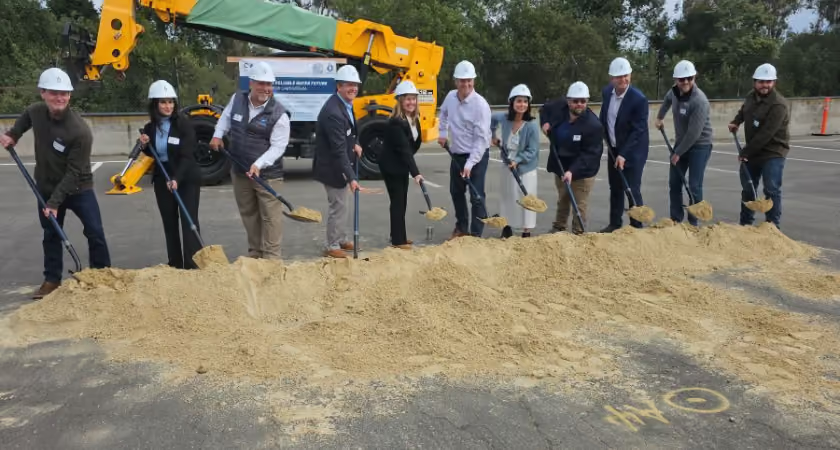
Construction is underway on the Carpinteria Advanced Purification Project, a regional water infrastructure investment that will transform treated wastewater into a dependable source of drinking water. The project is being developed through collaboration between local water and sanitation agencies and includes a state-of-the-art purification facility alongside supporting conveyance infrastructure.
Once operational, the facility will process more than one million gallons of recycled wastewater each day. Advanced treatment technologies, including membrane filtration, reverse osmosis, and ultraviolet advanced oxidation, will be used to produce drinking water that can be integrated into the community's supply portfolio.
In addition to the treatment plant, the project includes approximately one mile of conveyance pipelines that will transport purified water to the Carpinteria Groundwater Basin. Recharging groundwater resources is expected to enhance regional water security and provide an additional buffer during periods of limited rainfall.
For contractors and infrastructure owners, the project reflects growing opportunities in the water reuse and treatment sector. Across the country, municipalities are directing capital toward advanced purification systems, groundwater recharge facilities, and recycled water networks as aging infrastructure and supply challenges drive new construction demand.
Water projects of this scale also generate long-term economic benefits by reducing dependence on imported water supplies and improving operational flexibility for local agencies. As climate adaptation becomes a larger component of public infrastructure planning, advanced water treatment facilities are emerging as a key area of investment.
The Carpinteria project highlights the increasing role of water resilience infrastructure within municipal capital programs. Owners and developers should expect continued growth in advanced treatment, pipeline, and groundwater recharge projects as communities seek sustainable solutions to future water supply challenges. For construction firms with expertise in water and wastewater facilities, the sector continues to present significant opportunities for long-term project delivery and specialized infrastructure work.
Source: Walsh Group.