A major higher education redevelopment project in New Jersey has achieved a significant construction milestone as Rutgers University–Camden celebrated the topping out of its Cooper Street Gateway Project, a transformative initiative designed to expand academic capacity while preserving the character of a historic urban district.
The approximately $60 million development is intended to strengthen connections between the university and the surrounding Camden community through a blend of new construction, adaptive reuse, and public-facing spaces that support education, collaboration, and community engagement.
Skanska Integrated Solutions (SIS) is supporting the project through owner representation and reporting services, helping oversee compliance and funding accountability throughout the construction process.
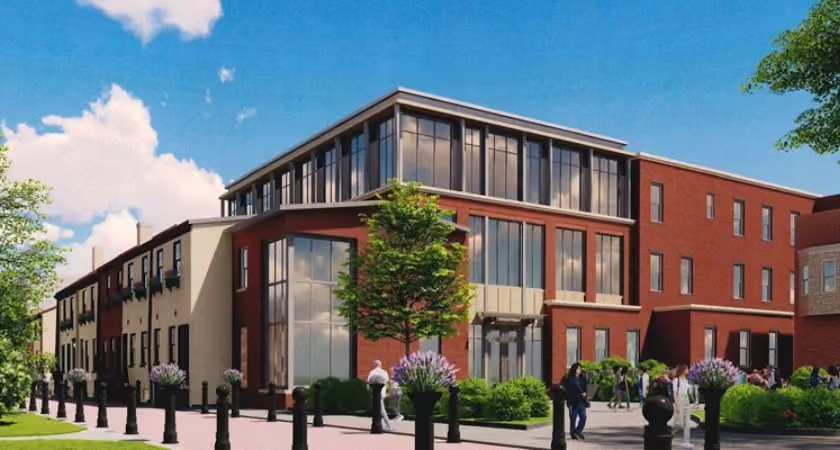
The Cooper Street Gateway Project is distinguished by its combination of historic rehabilitation and contemporary construction. The redevelopment encompasses 13 properties, including 11 historic buildings located along Cooper Street and Lawrence Street.
Rather than replacing the historic structures, project planners designed the development to preserve the existing streetscape while integrating a new three-story facility and outdoor event plaza behind the historic properties. This approach allows the project to introduce modern educational facilities while maintaining the architectural character of the neighborhood.
Adaptive reuse projects of this scale have become increasingly popular among higher education institutions seeking to modernize campuses while preserving historically significant assets and supporting community revitalization efforts.
At the center of the project is a new academic facility that will consolidate faculty offices and resources currently distributed across multiple campus buildings. University leaders expect the centralized space to improve operational efficiency, increase collaboration, and enhance the student experience.
The project also includes flexible gathering and event spaces designed to support academic programming and community initiatives. Planned uses include activities related to health and wellness, arts and culture, nutrition education, violence prevention, and other programs intended to strengthen community engagement.
By integrating academic and public functions, the development reflects a growing trend in campus planning that emphasizes stronger connections between universities and the communities they serve.
The redevelopment is supported in part through a $31 million investment from the Coronavirus State Fiscal Recovery Fund, administered through the New Jersey Office of the Secretary of Higher Education.
As public funding continues to support large-scale institutional construction projects, oversight and compliance management have become increasingly important components of project delivery. Construction management and integrity monitoring services help ensure funding is utilized appropriately while maintaining transparency throughout the development process.
The Cooper Street Gateway Project highlights how owners can successfully combine historic preservation, adaptive reuse, and new construction within a single development strategy.
For universities, municipalities, and institutional owners, projects that preserve existing assets while introducing modern facilities can enhance community engagement, reduce environmental impacts associated with demolition, and create distinctive destinations that support long-term growth.
The project also demonstrates the increasing importance of integrating academic, civic, and community-focused functions into modern campus developments, creating facilities that serve both institutional objectives and broader public needs.
Source: Skanska USA