A major civic redevelopment in East Tampa has reached completion as Skanska delivers a large-scale recreation complex designed to expand public amenities and modernize community infrastructure in the region.
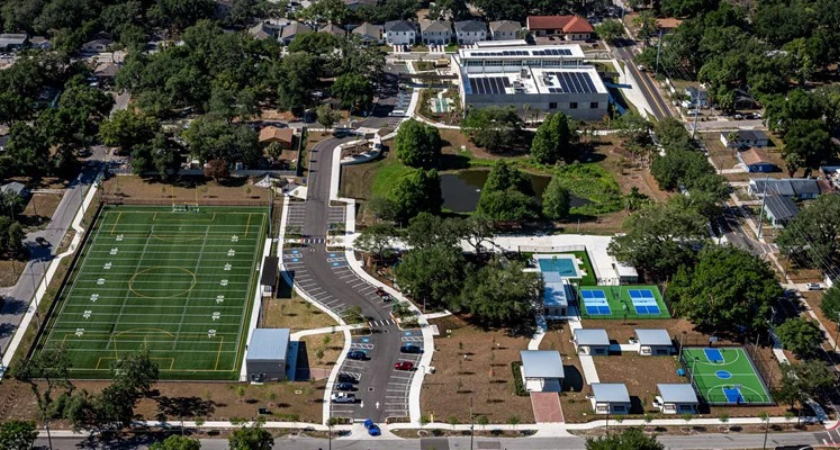
The $34.69 million Fair Oaks Recreation Complex represents a full replacement and expansion of a previously existing facility, transforming the site into a 10.25-acre multi-use recreational campus. The development introduces a significantly larger community center and a range of outdoor amenities aimed at supporting wellness, sports, and social programming.
.jpg)
The project was delivered by Skanska as part of a design-build team that integrated architecture and construction services to streamline project delivery. The new 33,055-square-foot recreation center serves as the centerpiece of the campus and is approximately five times larger than the previous facility on the site.
The expanded facility includes indoor gym space, fitness areas, and dedicated rooms for arts, music, and multipurpose programming. Additional interior features include community learning spaces such as a computer lab, designed to increase access to digital resources and educational programming.
Outdoor improvements include athletic fields, basketball courts, pickleball courts, shuffleboard courts, playground areas, and walking trails spanning more than a mile. The site also incorporates water-adjacent landscaping and public gathering areas intended to improve accessibility and usability across the campus.
Sustainability features are integrated into the project design, including rooftop solar installations that support on-site energy generation. The approach reflects growing demand in civic construction for energy-efficient and environmentally responsive public facilities.
From a construction perspective, the project highlights continued investment in public recreational infrastructure across growing metropolitan areas. Civic campus redevelopments of this scale typically combine structural expansion, site reconfiguration, and phased public access planning to maintain long-term usability and durability.
Industry trends show increasing emphasis on multi-purpose public facilities that combine recreation, education, and community services in a single footprint, particularly in urban neighborhoods undergoing redevelopment or population growth.
For contractors and developers, projects like Fair Oaks illustrate the expanding role of design-build delivery in public-sector work, where integrated teams can streamline timelines, reduce coordination risk, and deliver complex community assets under fixed budget constraints.
For construction owners and public-sector developers, the Fair Oaks Recreation Complex underscores continued demand for large-scale civic infrastructure projects that prioritize community services, sustainability, and long-term operational value.
The project reflects a broader trend toward replacing outdated municipal facilities with multi-functional campuses that consolidate recreation, education, and social programming under one development footprint. Owners managing similar projects may increasingly rely on design-build delivery models to control cost, improve coordination, and accelerate delivery timelines.
Sustainability integration, including solar power and energy-efficient design, is also becoming a standard expectation in modern civic construction, influencing both design requirements and procurement strategies.
Originally reported by Skanska.