Expanding rail capacity through densely developed urban corridors requires coordinated design, utility work and construction planning. A Skanska and Stacy Witbeck joint venture has secured a $2.43 billion contract from the Los Angeles County Metropolitan Transportation Authority to deliver the East San Fernando Valley Light Rail Transit Project in Van Nuys, California.
The total contract value includes preconstruction and early-works activities associated with the project.
The project will add 6.7 miles of street-level light rail along Van Nuys Boulevard, extending transit service through the East San Fernando Valley.
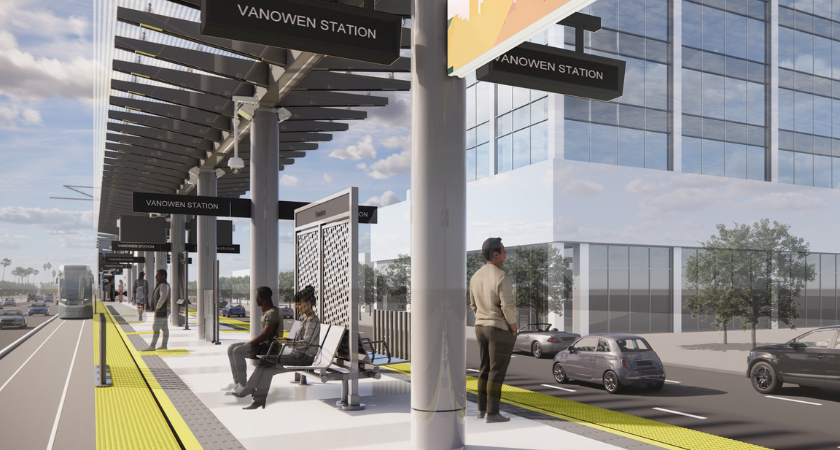
The construction program includes 11 new stations with shade structures, utility relocations and improvements, and a 26-acre rail and maintenance facility.
The new rail infrastructure is intended to improve connections along the Van Nuys Boulevard corridor and link communities including Panorama City, Arleta and Pacoima with the broader Los Angeles County transit network.
Construction began in July 2026. The project is currently scheduled for completion in December 2031.
The project is being delivered through a Progressive Design-Build approach, bringing design and construction teams together during project development rather than separating the two functions until later stages.
The delivery model allows the joint venture, Metro and project stakeholders to evaluate design requirements, third-party constraints and construction methods during preconstruction. Utility coordination and work within active urban corridors are among the factors being addressed as the project advances into construction.
Early collaboration is intended to support design refinement and construction planning before the project reaches full-scale build-out.
The $2.43 billion award adds a major rail construction program to Los Angeles County's transportation infrastructure pipeline. Its scope combines guideway construction, stations, utility improvements and a new maintenance facility within an active urban environment.
For contractors and public owners, the project also provides an example of progressive design-build being used on a large transit program where early coordination between design, construction and stakeholders is central to delivery.
Source: Skanska.