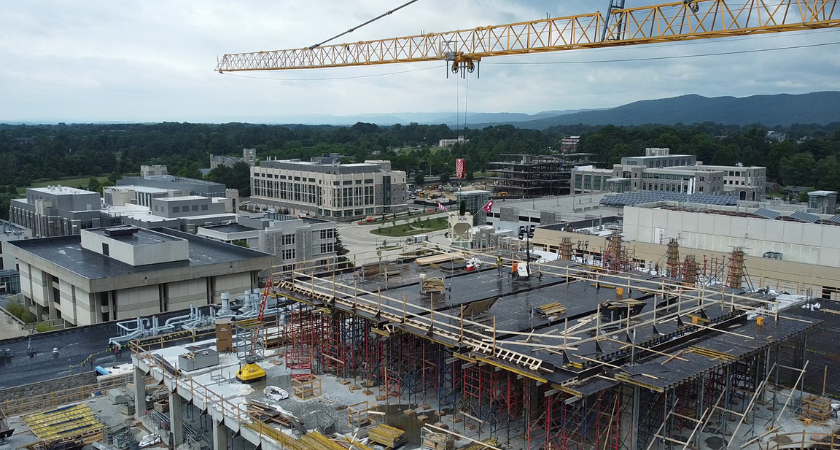
Construction continues to advance on one of Virginia Tech's largest academic capital projects as Skanska reaches the structural topping out of Mitchell Hall in Blacksburg, Virginia. The milestone signals continued progress on a facility that will expand engineering education and research capacity while modernizing campus infrastructure.
Once complete, the five-story building will significantly increase the College of Engineering's footprint by adding more than 285,000 square feet of academic and research space.
Mitchell Hall is designed to support a broad range of engineering programs, including aerospace and ocean engineering, chemical engineering, mechanical engineering, computer science, and engineering education.
The project also enhances campus accessibility by introducing an additional pedestrian route that meets Americans with Disabilities Act (ADA) standards.
A notable feature of the development is the integration of one of the nation's largest university-owned wind tunnels, which is being preserved within the footprint of the new structure while construction progresses around the existing facility.
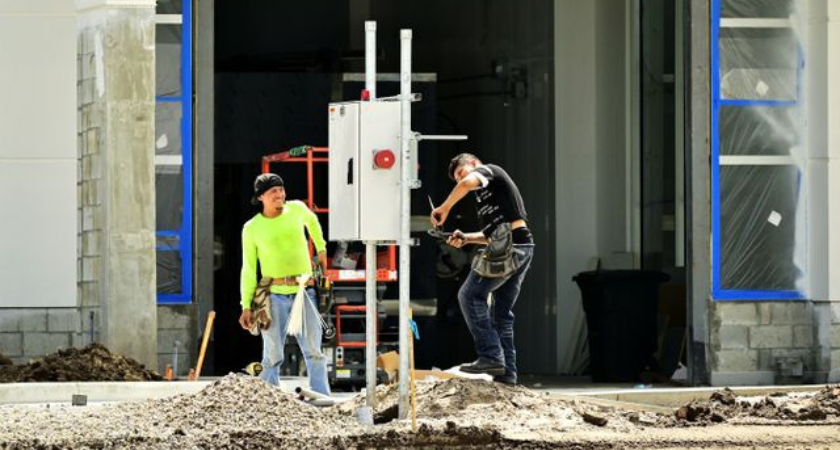
Work completed to date includes placement of more than 18,300 cubic yards of concrete and approximately 2,600 tons of reinforcing steel. The project team has also logged roughly 300,000 labor hours during construction, including substantial work performed by the concrete subcontractor.
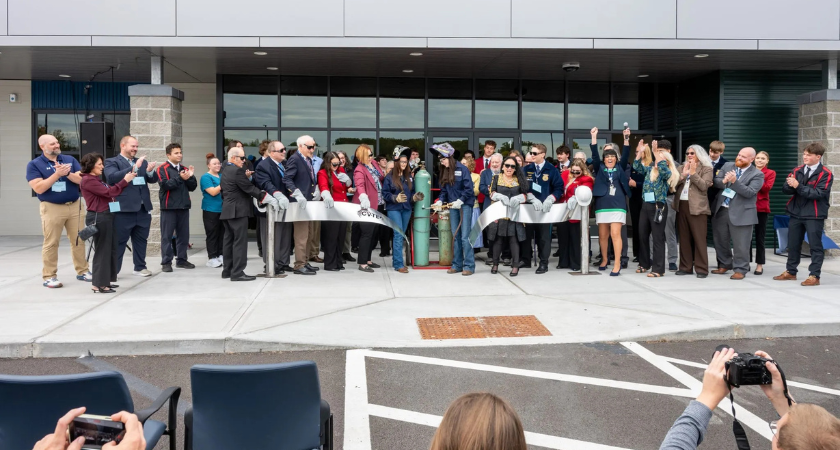
The topping out ceremony recognized the collaboration among Virginia Tech, Skanska, project partners, and trade contractors that contributed to reaching the milestone.
Skanska previously delivered the Virginia Tech Undergraduate Science Laboratory Building in 2025 and completed the Fralin Biomedical Research Institute Addition in Roanoke in 2020.
Higher education institutions continue to invest in modern research and instructional facilities to support growing demand for engineering and technology programs. For contractors, specialty trades, and construction owners, projects such as Mitchell Hall demonstrate sustained opportunities in the institutional building sector, particularly for complex laboratory construction, accessibility improvements, and technically demanding academic facilities.
Source: Skanska.