Railroad switching safety has received renewed federal attention following recent actions by the National Transportation Safety Board (NTSB) and the Federal Railroad Administration (FRA), with industry stakeholders examining risks associated with shove movements.
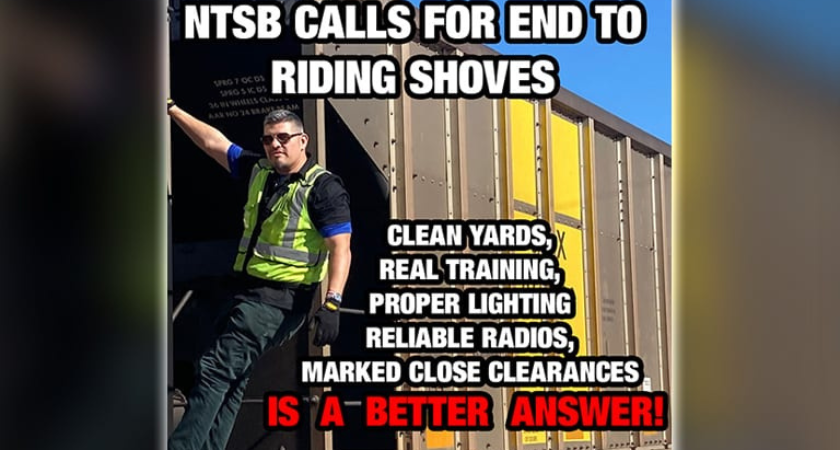
The NTSB on Sept. 21 called on railroads and the FRA to address practices involving workers riding equipment during shove movements. According to the agency, it has investigated 16 accidents involving workers riding equipment during shove movements since October 2020, resulting in 14 fatalities and two serious injuries.
The FRA separately released research on switching and shoving operations on Sept. 11. The research identified shove movements as a significant source of human-factor injuries and fatalities during switching operations.
SMART-TD, the transportation division of SMART Union, said the recent federal attention reinforces longstanding concerns about switching conditions and worker safety.
The union is advocating for training specific to each yard where crews operate. It also wants experienced personnel assigned to train new employees and clearer identification of close clearances and other hazards.
Communication infrastructure is another focus. SMART-TD said radio coverage in some yards can create communication challenges between conductors and engineers, particularly during longer train movements and complex switching operations.
The organization is also calling for better yard lighting and improvements to areas where workers may encounter pinch points or other close-clearance hazards.
SMART-TD also raised concerns about relying solely on cameras and other technology to address switching risks. The union maintains that cameras cannot replace the situational awareness of workers operating directly in the yard environment.
Instead, it is advocating for a combination of hands-on training, infrastructure improvements, reliable communications and worker involvement in safety discussions.
The union plans to present its recommendations to federal regulators and rail carriers while encouraging members to document safety conditions, including radio dead zones, inadequate lighting and unmarked close clearances.
The renewed federal focus places switching and shove movements among the key areas for continued railroad safety improvements. For rail operators and contractors working around rail infrastructure, better training, communication systems, hazard identification and workforce participation could influence how switching operations are managed and how safety risks are addressed.
Source: Smart.