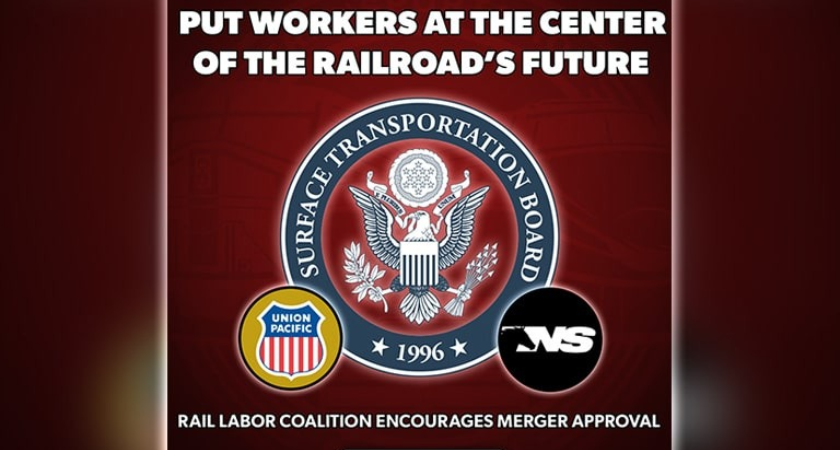
The proposed combination of Union Pacific and Norfolk Southern could increase freight rail capacity, shift more long-haul shipments away from highways and expand work opportunities for railroad employees. A coalition of four rail labor organizations is asking federal regulators to approve the transaction while ensuring negotiated employment protections remain in place.
SMART Transportation Division (SMART-TD), the National Conference of Firemen and Oilers, the International Brotherhood of Boilermakers and SMART's Mechanical Division submitted joint comments to the Surface Transportation Board (STB) on November 19, 2026, supporting the merger.
The coalition said each participating organization has secured a Jobs for Life agreement with Union Pacific and Norfolk Southern. The agreements provide career-long employment commitments for covered employees, with protections for union wages, benefits and retirement security.
Specific provisions vary by represented craft and agreement. For SMART-TD members, protections include safeguards against involuntary furlough for covered employees within their crafts and current seniority districts, subject to applicable collective bargaining agreements.
The employment commitments depend on regulatory approval and completion of the merger. The coalition urged the STB to ensure the negotiated protections are honored in full as the combined railroad moves forward.
Union Pacific and Norfolk Southern estimate that the combined network could move approximately 2.1 million truckloads from highways to rail annually. The labor organizations said improved network connectivity, fewer interchange delays and more dependable service could help railroads compete for freight currently transported by trucks.
A shift toward rail freight could also affect highway traffic and supply chain performance. Reduced long-haul truck volumes may ease congestion and heavy vehicle traffic, while more reliable rail service could support manufacturers, agricultural shippers and other businesses moving goods across the country.
The coalition linked potential freight growth to increased demand for railroad workers, emphasizing that employment security and expanded rail activity should advance together.
The organizations asked federal regulators to approve the merger with the negotiated employment commitments protected, alongside effective oversight of railroad safety and service. They also called for labor representatives to remain involved throughout the implementation process.
The filing reflects the coalition's position that the proposed network changes should support freight growth while maintaining employment protections for the workers responsible for operating and maintaining the railroad system.
The proposed merger could reshape freight movement across major U.S. rail corridors, with potential implications for transportation infrastructure, highway congestion and industrial supply chains. For construction and infrastructure stakeholders, changes in freight rail capacity and reliability can influence the movement of building materials, equipment and other goods.
The negotiated Jobs for Life agreements also place workforce continuity at the centre of the merger review. The STB's decision and subsequent implementation will determine whether the proposed network benefits proceed alongside the employment commitments secured by the participating labor organizations.
Source: Smart.