Major higher education construction projects often require universities to relocate academic, research or athletics functions before existing facilities can be renovated, demolished or replaced. Managing those moves without interrupting institutional operations has become an important component of project planning.
STV has outlined relocation strategies used at Tufts University in Massachusetts and Northeastern University in Boston, highlighting how move planning can be adjusted according to the type of assets and activities being transferred.
At Tufts University, the relocation of the Earth and Climate Sciences department to renovated Bacon Hall involved thousands of geological specimens, teaching materials, laboratory equipment and field research resources.
The inventory included rocks, minerals, fossils, plaster casts and bone replicas, as well as a seven-ton dinosaur track fossil. Because many of the materials were difficult or impossible to replace, the relocation required detailed documentation and controlled handling.
Collections were categorized and assigned specific destinations before transportation. Some specimens required custom mounting and anchoring solutions. Larger pieces were handled with specialized rigging support.
The move was completed over four weeks, with coordinated activities at both the existing and receiving locations. The process emphasized condition verification and timely readiness for academic use.
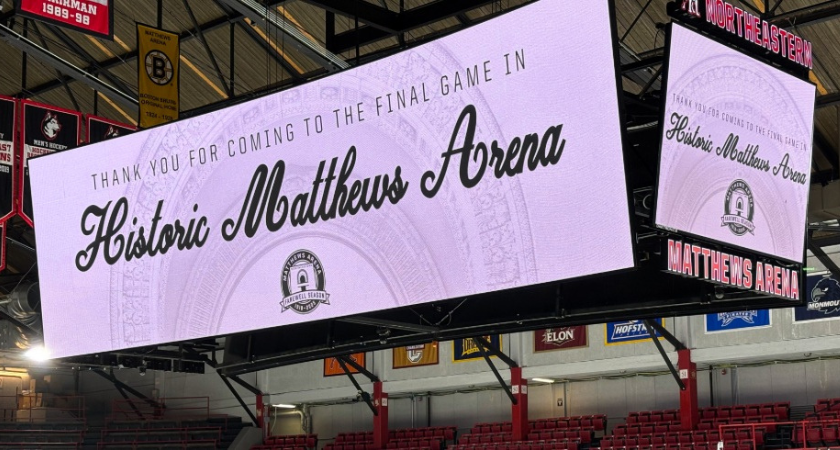
Northeastern University faced a different set of requirements during the transition involving Matthews Arena in Boston. The arena, which has served as an active athletics venue, is being replaced as part of a broader campus development effort.
The relocation involved arena occupants, equipment and activities that had to be transferred to alternate campus locations while demolition and subsequent construction proceeded.
Unlike the Tufts move, where protection of specialized physical assets was the primary concern, Northeastern's planning centered heavily on operating schedules and continuity. Athletic calendars, alternate facilities and coordination among campus stakeholders influenced the sequencing of the move.
The approach was designed to maintain access to competition, training and scheduled activities during the facility transition.
The two examples demonstrate that university relocations can involve substantially different risks. Sensitive collections require preservation and documentation, while athletics and other active operations require schedule coordination and alternate facilities.
STV's approach organizes relocation planning around risk levels, readiness and accountability. Key measures can include condition verification for sensitive assets, preservation of teaching and research activities, and documentation of move scope and costs.
For higher education owners, incorporating move management into capital project planning can help align relocation activities with construction schedules and institutional operations.
Campus decanting can directly affect construction schedules when buildings must be cleared before renovation, demolition or new construction begins. The Tufts and Northeastern examples show how relocation planning can be tailored to protect valuable assets and maintain academic or athletics operations.
For university owners, project managers and construction teams, early identification of relocation risks can provide a clearer path for coordinating facility transitions with capital construction programs.
Source: STV.