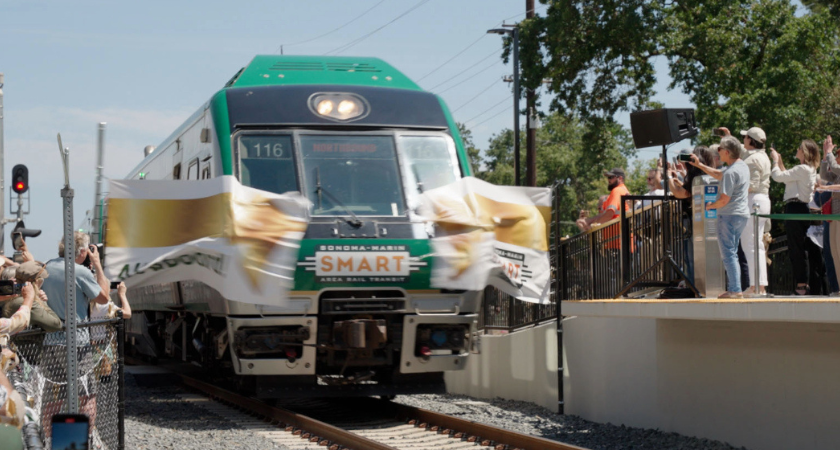
Investments in multimodal transportation infrastructure continue to reshape mobility across California, with the Sonoma-Marin Area Rail Transit Windsor Station project earning statewide recognition for its contribution to regional connectivity and passenger rail expansion.
The California Transportation Foundation named the Windsor Station project its Rail and Transit Project of the Year, recognizing efforts to expand rail access and improve transportation options in Northern California's North Bay region.
The Windsor Station project is part of a 3.2-mile northern extension of the SMART commuter rail system, extending passenger service from the Sonoma County Airport area into downtown Windsor.
The expansion includes a new multimodal station, reconstructed track infrastructure, five rebuilt rail bridges, two pedestrian bridges, a pedestrian underpass, upgraded grade crossings and a 2.6-mile pathway designed for pedestrians and cyclists.
STV provided a range of services for the project, including civil, structural and rail engineering, station architecture, roadway design, drainage systems, accessibility improvements and safety enhancements.
The extension has expanded rail access for residents and businesses while providing an alternative transportation option along the heavily traveled U.S. Highway 101 corridor.
The project also improves connections between Sonoma and Marin counties and enhances access to ferry services at Larkspur, strengthening multimodal transportation options across the North Bay region.
STV's involvement with SMART spans nearly two decades and includes planning, engineering and design work for multiple stations, track alignments, bridges and grade crossings throughout the rail system.
For construction owners and public agencies, the recognition highlights the growing emphasis on projects that integrate rail, pedestrian and bicycle infrastructure into a single transportation network.
The Windsor Station extension also demonstrates how transportation investments can improve regional mobility while expanding access to transit options and reducing dependence on heavily traveled roadway corridors. For designers and contractors pursuing transit work, the project illustrates increasing demand for multidisciplinary delivery teams capable of integrating rail infrastructure with broader multimodal transportation systems.
Source: STV.