Modernizing occupied government facilities requires careful coordination to maintain public services while improving building performance. Sundt has completed a major renovation project for court facilities in downtown Tucson, providing upgraded judicial spaces while allowing court operations to continue throughout construction.
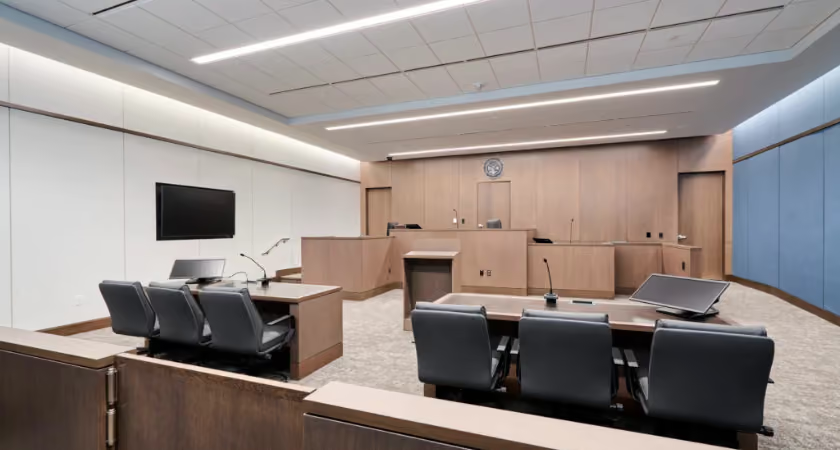
The Public Service Center Tenant Improvements project encompassed approximately 58,000 square feet across two buildings in downtown Tucson. The renovation transformed previously vacant areas into new courtrooms, judicial chambers and supporting administrative spaces designed to expand the county's judicial capacity.
Project delivery concluded under budget and one week ahead of the planned completion schedule, demonstrating effective project management within an active public sector environment.
To support design coordination before construction began, Sundt developed a full-scale courtroom mock-up that enabled project stakeholders to evaluate and refine layout and functional elements prior to installation.
Additional work is planned to continue the courthouse modernization program. A second construction phase is expected to begin in August and will focus on interior demolition of the seventh floor at the Pima County Superior Court building to prepare the space for future improvements.
Because the facilities remained operational throughout construction, Sundt scheduled portions of the work during nighttime hours to minimize disruption to daily court functions while maintaining security requirements associated with occupied judicial buildings.
Courthouse modernization projects present unique challenges because construction must be completed without interrupting essential public services. For construction owners and public agencies, the project demonstrates the importance of phased construction, early stakeholder coordination and scheduling strategies that support work in secure, occupied facilities while reducing operational impacts. Successful delivery of these projects helps extend the useful life of existing civic infrastructure while improving functionality for court personnel and the public.
Source: Sundt.