Small-scale improvements on construction sites can reduce delays, improve worker safety and address operational challenges without requiring major technology investments. Sundt is highlighting several field-developed solutions that demonstrate how crews can adapt everyday tools and equipment to improve project execution.
The examples span worker comfort, site protection, equipment operations, communication and quality inspections across projects in Arizona, Texas and Nevada.
At the Phoenix Zoo Veterinary Medical Center project, Sundt workers identified excessive heat inside portable restroom facilities as a jobsite concern. The team installed solar-powered ventilation fans in the restroom vents to increase airflow and improve conditions inside the units.
The system uses solar energy to operate the fans and does not require a conventional electrical connection. The approach also addresses odor and ventilation issues associated with portable facilities in hot weather.
On a transportation project in Central Texas, Sundt crews developed a temporary protective barrier near residential properties. The highway work created the potential for airborne dust and small debris to reach adjacent homes.
The crew assembled the barrier using filter fabric, lumber, tie wire and nails. The measure provided a physical screen between construction activities and nearby properties while work continued.
A Nevada project presented a different operational challenge involving a water tower that required approximately six hours to fill. Sundt personnel modified the setup by adding a booster pump and automatic pressure switch.
The equipment change increased inlet pressure and cut the filling process to approximately 45 minutes. The shorter cycle reduced the amount of time required for the task and allowed project activities dependent on the water supply to move forward sooner.
Sundt teams have also developed standardized communication aids for equipment operations. After observing variations in hand signals used between workers and forklift operators, a team created laminated reference cards showing commonly used signals.
The cards can be carried by workers and provide visual references for commands involving movements such as lifting, lowering, tilting and stopping.
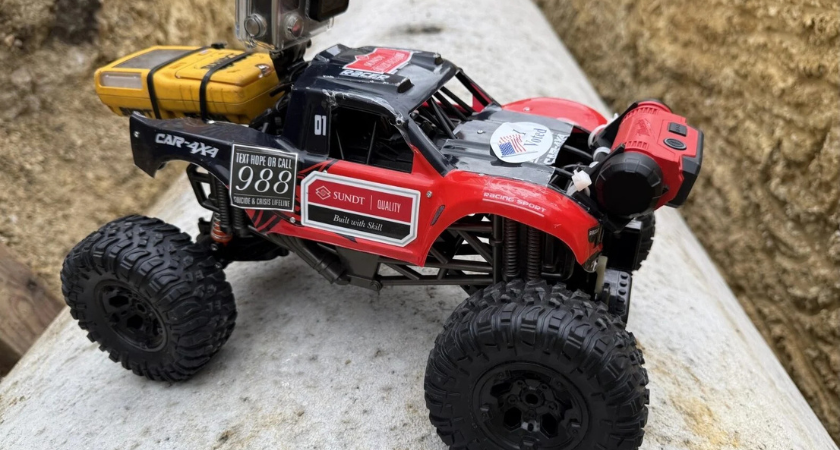
Sundt personnel working with reinforced concrete pipes developed a remote inspection method using a modified radio-controlled vehicle. The vehicle carries a camera and sensors that transmit information to a smartphone positioned above ground.
The approach enables crews to examine conditions inside confined pipe spaces without requiring a worker to enter the space for the initial inspection. The method can provide visual information for quality control and condition assessment while reducing the need for personnel exposure to confined environments.
These examples show how construction teams can apply relatively simple equipment modifications, field-built protections and standardized communication tools to address specific project conditions.
For construction owners and contractors, field-level improvements can have direct effects on safety, productivity, quality control and project continuity. Sundt's examples also demonstrate that jobsite innovation can involve relatively low-cost modifications rather than major technology deployments.
The ability to identify recurring operational problems and develop practical solutions can give project teams additional tools for managing site conditions, protecting surrounding properties and reducing avoidable downtime.
Source: Sundt.