As public agencies and institutional facility owners pursue carbon reduction goals, building retrofits and energy modernization projects are becoming an increasingly important component of long-term infrastructure planning. Recent improvements at the Oregon Zoo demonstrate how targeted facility upgrades can contribute to broader campus sustainability objectives.
Swinerton, working alongside Studio Petretti, completed a renovation program that upgraded the zoo's gift shop and nearby animal support facilities while advancing efforts to reduce fossil fuel use across the campus.
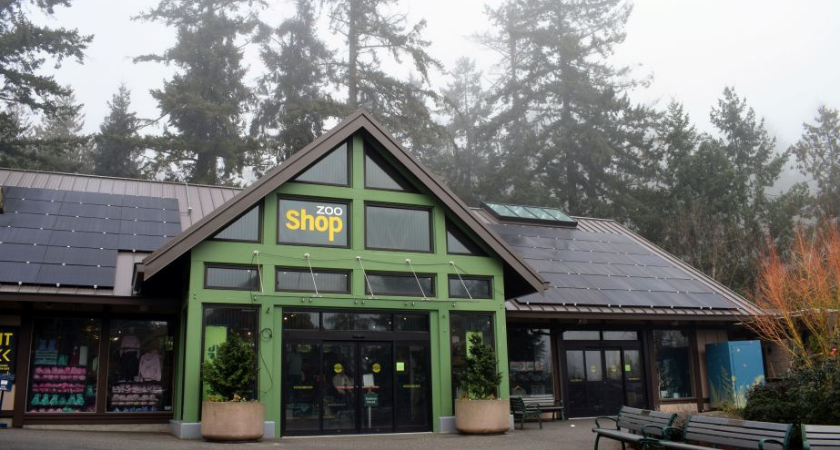
The project included replacement of the gift shop roof and construction of protective structures covering holding areas associated with mountain goat and black bear habitats. The work provided an opportunity to address maintenance needs while incorporating energy-efficiency improvements.
As part of the renovation, existing gas-fired heating equipment serving the facilities was removed and replaced with electric mechanical systems designed to improve operational efficiency. The upgrade retired the final natural gas-heated building in the southwestern section of the zoo campus.
Studio Petretti also designed a photovoltaic system that was incorporated into the project. The solar installation contributes renewable energy generation that supports overall campus operations.
Project delivery incorporated construction practices intended to reduce air quality impacts during the work. Equipment selection emphasized battery-powered and electric alternatives where feasible, while other machinery met low-emission diesel standards.
Construction logistics were managed to minimize vehicle idling and reduce the potential for emissions near occupied areas. The project team also implemented sustainability-focused jobsite policies aimed at reducing waste and single-use materials.
Such practices are becoming more common on publicly funded projects as owners increasingly incorporate environmental performance requirements into procurement and construction programs.
Many institutional owners, including zoos, universities, and public agencies, are investing in building electrification, renewable energy generation, and facility modernization projects to reduce long-term energy consumption and greenhouse gas emissions.
The Oregon Zoo project represents one component of a broader initiative to eliminate fossil fuel dependence and advance campus-wide decarbonization goals through phased facility improvements.
For facility owners, public agencies, and construction teams, the project highlights how renovation work can be leveraged to address deferred maintenance while improving energy performance. The combination of electrification, solar generation, and low-emission construction practices reflects an integrated approach increasingly being adopted for institutional and public-sector facilities seeking to meet sustainability objectives.
Source: Swinerton.