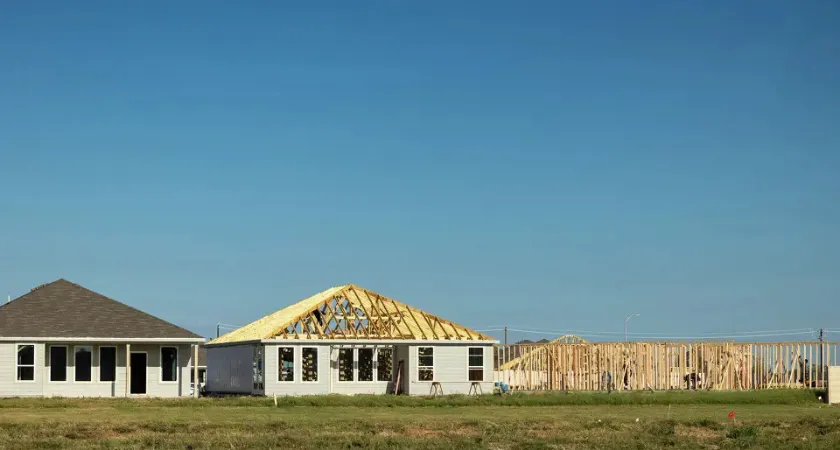
Home construction across Texas failed to keep pace with housing demand for the second consecutive year, contributing to a widening supply gap and intensifying affordability pressures across the state.
.avif)
A recent report from Realtor.com found that the national housing deficit surpassed 4 million homes in 2025, rising from approximately 3.8 million in 2024. The increase reflects continued underbuilding relative to the number of households forming each year.
Rapid population growth and strong job markets have fueled housing demand across Texas cities, including Houston and other major metropolitan areas.
Despite record numbers of building permits issued in recent years, the pace of home construction has not kept up with demand. Housing analysts say this imbalance has been building for more than a decade as population growth outpaces the rate at which new homes are added to the market.
In Texas specifically, previous studies showed that the state needed hundreds of thousands more homes even before the latest widening of the supply gap. Continued migration from other states and strong economic growth have only intensified demand.
The shortage has pushed housing prices higher and reduced the number of available properties for prospective buyers.
The housing imbalance has had significant consequences for middle-income households across the state. In many markets, wages have not increased quickly enough to keep pace with rising home prices and rents.
Residents in the Houston region have experienced these challenges firsthand. Over the past several years, home values in the area have climbed sharply while available housing inventory has remained limited compared with the number of buyers entering the market.
Some segments of the housing market have shown signs of slowing. For example, new apartment construction in the Houston area cooled in 2025 compared with earlier development booms. However, even with these adjustments, overall housing supply remains below demand.
The imbalance between housing supply and demand was also evident in national construction statistics. In 2025, approximately 1.41 million new households formed, while the U.S. recorded about 1.36 million housing starts.
This difference may appear small, but analysts note that the housing market is still trying to recover from years of underbuilding following the 2008 financial crisis, leaving a significant backlog.
"Even when annual construction and household formation are roughly balanced, the market is still digging out from more than a decade of underbuilding," Danielle Hale said in a statement. "Without a sustained and targeted increase in housing supply, particularly in areas with strong job growth and persistent demand, affordability challenges will continue to sideline many would-be buyers."
Lawmakers in Texas have taken steps to address the housing shortage by attempting to reduce regulatory barriers to new development.
In 2025, state leaders passed bipartisan legislation aimed at simplifying zoning rules and easing permitting processes in order to accelerate homebuilding. Housing policy analysts say these measures could help developers bring more projects to market in the coming years.
However, experts caution that closing the gap will likely require a sustained increase in construction, particularly in affordable and entry-level housing.
.webp)
The continued housing shortage is expected to influence real estate markets across Texas for years to come. Limited inventory often leads to higher home prices, increased rent burdens and fewer opportunities for first-time homebuyers.
While Texas continues to build more homes than most states, population growth and migration have kept demand extremely high. As a result, the state’s housing supply struggles to keep pace with the number of households seeking homes.
Industry analysts say boosting construction activity—especially affordable housing—will be critical to restoring balance to housing markets in Texas and across the United States.
If construction does not accelerate significantly, affordability challenges could remain a defining issue for many buyers and renters throughout the next decade.
Originally reported by Ahmed Humble,Senior Trending Reporter in Chron.