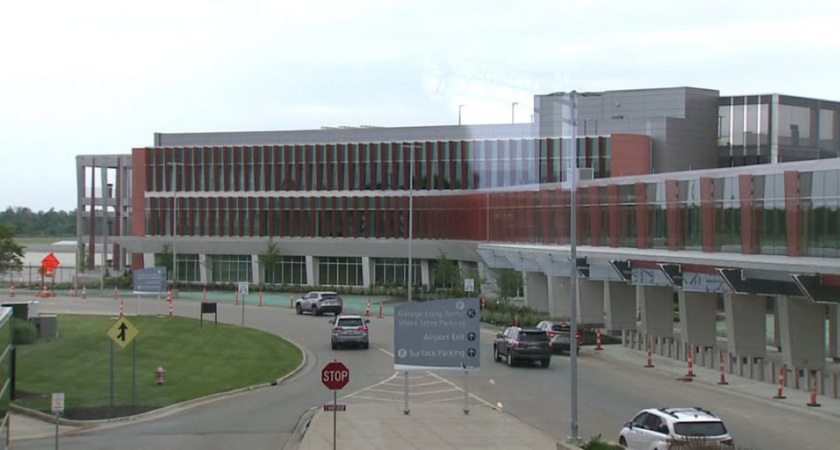
Airport operators across the United States continue investing in consolidated ground transportation infrastructure to improve passenger flow, operational efficiency, and sustainability performance. At Gerald R. Ford International Airport in Grand Rapids, Michigan, Turner Construction recently completed a new consolidated rental car facility designed to centralize rental operations and support future airport growth.
The $156 million project marks the first consolidated rental car facility developed in Michigan and combines customer service, parking, fueling, maintenance, and vehicle processing functions within a single airport campus.
The completed ConRAC development includes a four-level customer service building, a ready-return garage with capacity for more than 1,000 rental vehicles, and a three-story quick turnaround facility used for vehicle cleaning, fueling, inspection, and preparation.
The quick turnaround component contains fueling and vacuum stations along with multiple car wash tunnels designed to improve fleet processing efficiency for rental operators serving the airport.
By consolidating rental vehicle operations into a centralized location, the facility is intended to streamline customer pickup and return activity while reducing off-site vehicle circulation throughout the airport area.
Project stakeholders stated the development was designed with operational sustainability goals in mind. Airport officials estimate the centralized facility could reduce vehicle travel associated with rental fleet servicing by approximately 600,000 miles annually.
The facility also incorporates water conservation systems, including infrastructure designed to recycle up to 90 percent of water used during vehicle washing operations.
In addition, the project includes infrastructure intended to support future expansion of electric vehicle fleets as rental car operators continue transitioning portions of their inventory toward EV platforms.
Consolidated rental car facilities have become a growing component of airport capital improvement programs as operators seek to improve traffic management, reduce curb congestion, and create more efficient passenger transportation systems.
Many airport authorities are also incorporating sustainability objectives into landside transportation projects, including reduced emissions, water conservation measures, and infrastructure supporting fleet electrification.
Large-scale airport infrastructure projects continue generating construction opportunities across transportation, parking structures, utilities, mechanical systems, and specialty operational facilities.
For airport owners, transportation contractors, and infrastructure developers, consolidated rental car facilities represent increasingly important investments tied to operational efficiency, passenger experience, and environmental performance.
The Gerald R. Ford International Airport project also highlights growing demand for integrated transportation infrastructure capable of supporting evolving fleet technologies and long-term airport expansion strategies.
Source: Turner Construction.