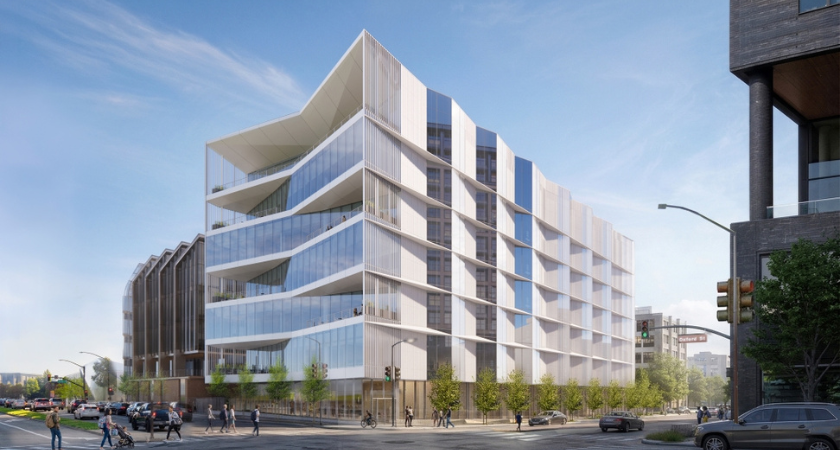
Construction activity is moving forward on a new life sciences development at the University of California, Berkeley, aimed at expanding research capacity and supporting biotechnology commercialization in the Bay Area. Turner Construction recently joined university officials, research organizations and project partners for the groundbreaking of the Innovative Genomics Institute-Bakar Labs building.

The project adds to ongoing investment in research and innovation facilities tied to biotechnology, laboratory development and startup incubation across major university markets.
The planned facility will include laboratory environments, research areas and collaborative workspaces designed for genomics research and biotechnology operations. The building will support programs associated with the Innovative Genomics Institute while also accommodating companies connected to the Bakar Labs startup ecosystem.
According to project information released during the groundbreaking, the development is intended to increase capacity for CRISPR-related research and provide expansion space for early-stage life sciences companies transitioning into larger operations.
The project is also positioned as part of Berkeley’s broader Innovation Zone initiative, which is focused on strengthening the city’s biotechnology and research infrastructure.
Turner Construction is serving as builder for the project. Design responsibilities are being led by Weiss/Manfredi Architects, with DGA serving as executive architect. The broader project team includes engineers, consultants, university stakeholders and research partners.
Construction marks the next phase of a multi-year planning and coordination effort involving the University of California, Berkeley, the Innovative Genomics Institute and Bakar Labs. Publicly released project information indicates the facility is intended to support closer integration between academic research programs and biotechnology commercialization efforts.
The project is also expected to provide infrastructure intended to help retain startup companies within the Berkeley market as they expand operations.
University-affiliated research developments continue to generate construction demand in major biotechnology hubs, particularly in California and other markets with established academic research ecosystems.
Projects combining laboratory construction, incubator space and commercialization infrastructure have become increasingly common as universities and municipalities seek to support biotechnology growth, workforce development and private-sector investment.
Facilities designed for advanced laboratory functions typically require specialized mechanical, electrical and plumbing systems, higher energy capacity and flexible research environments capable of supporting evolving scientific programs.
For construction owners and developers, the Berkeley project reflects continued demand for specialized life sciences facilities connected to higher education and research institutions.
The development also highlights the growing role of partnerships between universities, startup incubators and private construction teams in delivering research-oriented infrastructure. Contractors active in laboratory and biotechnology markets may continue to see opportunities tied to research expansion, innovation districts and startup-focused development programs.
Source: Turner Contruction.