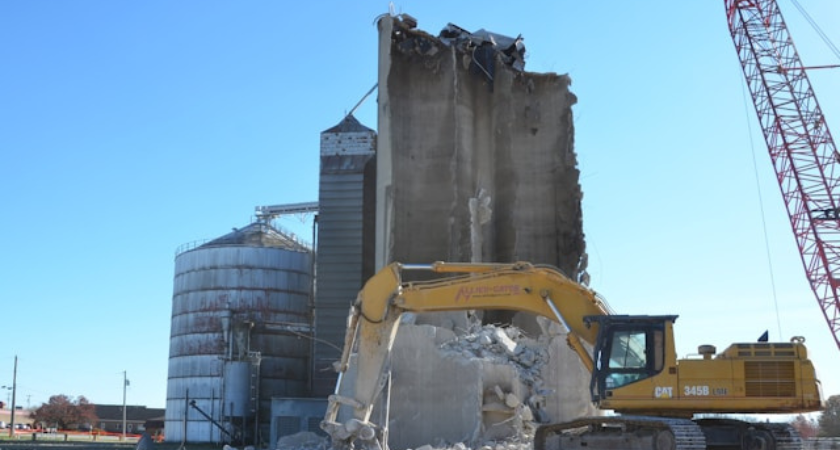
Demolition crews have begun tearing down the Wallace Building in Des Moines, marking the end of a long-troubled chapter for one of Iowa’s most problematic state office facilities. Located near the Iowa Capitol, the building was fenced off last week as the state moved forward with dismantling the structure rather than investing in expensive repairs.

The building, constructed in the 1970s, has faced decades of issues that made it both costly and hazardous to maintain. From malfunctioning ventilation that made employees sick to chronic roof leaks, mold outbreaks, and lead contamination discovered in 2014, the facility has been considered a poor environment for state workers for nearly 40 years.
State leaders ultimately determined that renovation costs outweighed any potential benefit. Instead of investing millions to restore the building, officials approved full demolition, clearing the way for a new direction in how Iowa uses state-owned land near the Capitol.
The Wallace Building once housed several key departments, including those focused on environmental protection and agriculture. State workers had been relocated gradually over time as conditions worsened. The recent fencing signals a final transition away from the aging building.
Currently, “there is no word at this time on how the state plans to use the land once the building is gone.” However, lawmakers are expected to consider options ranging from new office construction to potential public space improvements, given the building’s high-value location near state government offices.
The demolition is expected to take weeks, with crews working to safely remove materials from the site due to the building’s history of hazardous conditions like mold and lead. Once the project is complete, the state will have a cleared parcel in an area where real estate is both strategic and symbolic, leaving open opportunities for modernization of state infrastructure.
The teardown of the Wallace Building reflects a broader push to address aging government structures across Iowa. Officials say long-term planning will continue as the state reviews facility needs and explores investment in safer, more efficient buildings for public employees and government services.
Originally reported by KCCI.