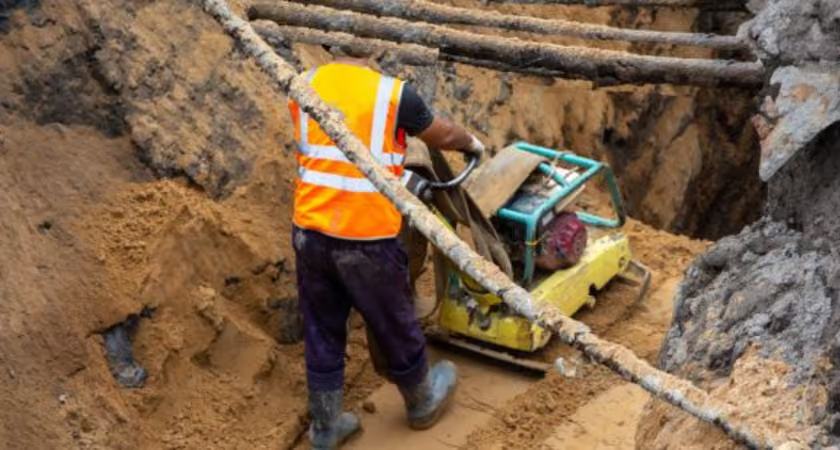
Washington state has introduced enhanced safety requirements for trench excavation projects, requiring contractors to complete detailed planning and hazard assessments before breaking ground.
The updated rules are designed to address one of the construction industry's most dangerous activities. Trench collapses remain a leading cause of serious injuries and fatalities on jobsites, often occurring with little warning and leaving workers with limited opportunities to escape.
Under the new requirements, employers must prepare a written trench excavation work plan that documents how risks will be managed throughout the project.
A central component of the regulation is the requirement for a project-specific excavation safety plan.
Before excavation begins, contractors must evaluate site conditions, identify potential underground and atmospheric hazards, and determine the protective systems that will be used to stabilize trench walls. Acceptable protection methods may include sloping, benching, shoring, shielding, or other engineered solutions appropriate for site conditions.
The completed plan must remain available at the jobsite and be accessible during inspections conducted by state labor and safety officials.
The new rules place significant responsibility on a designated competent person who is qualified to evaluate excavation hazards and soil conditions.
This individual must assess site-specific risks, classify soil types, monitor changing conditions, and ensure that protective systems are properly selected and maintained throughout construction activities.
For contractors, the requirement reinforces the importance of trained field personnel who can identify warning signs of trench instability before incidents occur.
In addition to documentation requirements, Washington's regulations emphasize several operational safety measures.
Trenches measuring four feet or deeper must provide workers with a safe means of egress, such as ladders or ramps, positioned so employees can exit quickly in an emergency.
The rules also require excavated material, equipment, and other loads to remain at least two feet from trench edges to reduce the risk of cave-ins caused by surcharge pressure and soil displacement.
These measures are intended to address common excavation hazards that frequently contribute to trench-related incidents.
The updated requirements will likely increase preconstruction planning efforts for excavation contractors, utility builders, site development firms, and civil construction companies operating in Washington.
Contractors may need to invest additional time in site assessments, soil analysis, documentation, and workforce training to meet compliance expectations. Companies that routinely perform trenching work may also need to review existing safety programs and update internal procedures to align with the new standards.
For project owners and developers, the regulation highlights growing regulatory attention on excavation safety and risk management. Owners may see increased emphasis on contractor safety qualifications, trench protection plans, and documentation during procurement and project execution.
While the new requirements could add planning and administrative costs, they are intended to reduce workplace incidents, minimize project disruptions, and lower the financial and legal risks associated with trench-related accidents.
Originally reported by Jesse Jacobs in Ohsonline.