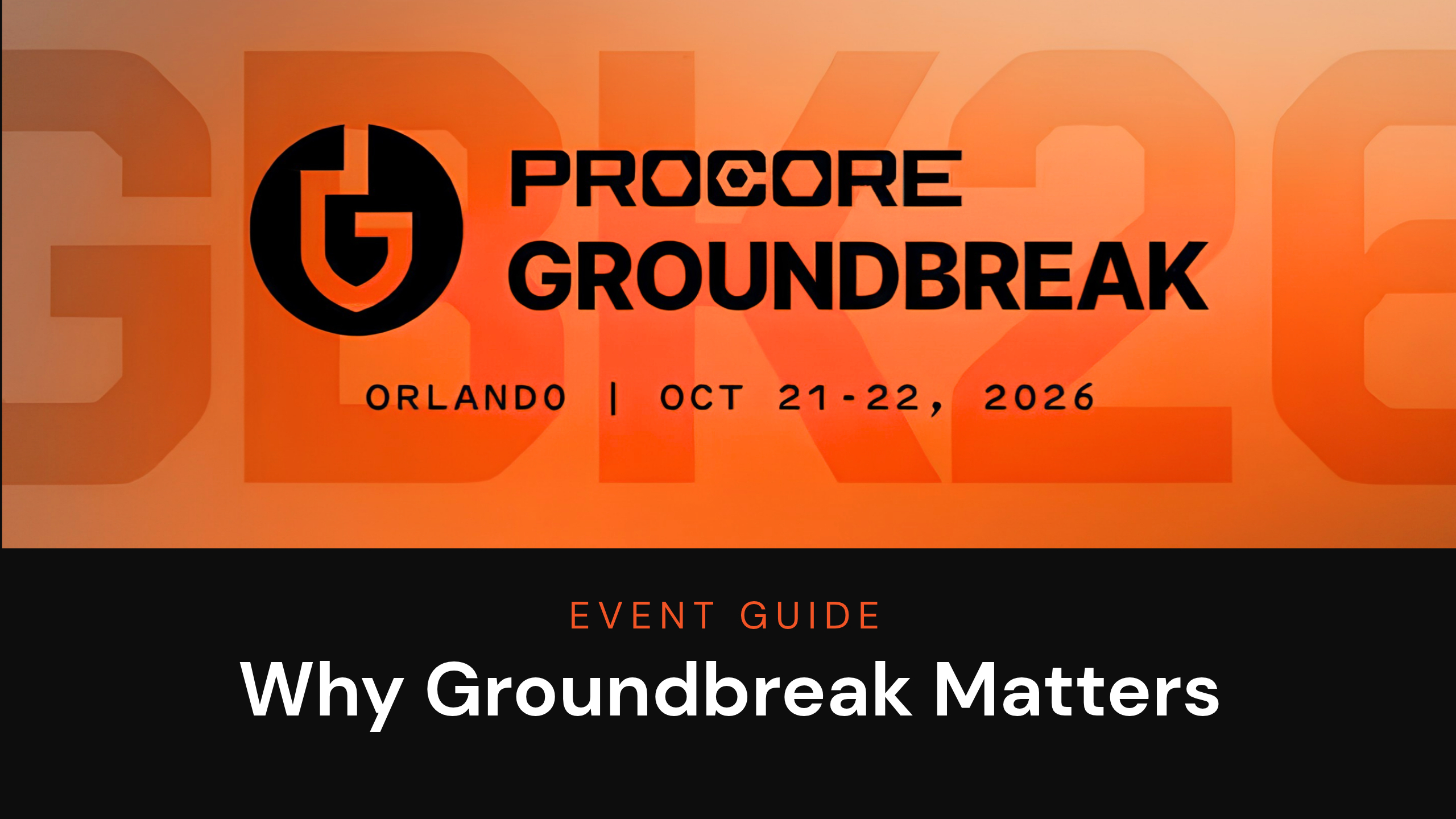
ORLANDO, Fla.: When thousands of builders, technologists and project executives file into the Orange County Convention Center on October 21 for Groundbreak 2026, much of the attention will fall on general contractors and the software they use to run jobsites. But the people with the most at stake may be the ones writing the checks.
Procore's annual conference, held October 21–22 with optional hands-on workshops starting a day earlier, has adopted the banner "Build and win together in the AI era." For construction owners, including developers, institutional builders, healthcare systems, universities, public agencies and corporate real estate teams, that slogan is more than marketing. It describes a shift already reshaping how capital projects are delivered, monitored and paid for.
The central question for owners is no longer whether their contractors use digital tools. It is whether the data those tools produce can give owners an earlier, clearer and more honest view of cost, schedule and risk across an entire portfolio. Groundbreak has become one of the few places where that question is debated in the open, by the people building the answer.
The scale alone makes the event hard to ignore. Procore is advertising more than 80 sessions this year, and the company expected more than 4,500 people from over 35 countries at its 2024 edition.
Keynotes include Procore chief executive Ajei Gopal and AI advisor Zack Kass, a former OpenAI executive who now counsels business leaders on the technology.
For most of the past decade, construction technology was something owners inherited. A general contractor chose a project management platform, and the owner received reports exported from it, often weekly, often late and usually filtered.
That arrangement is breaking down. Owners increasingly write technology and data requirements directly into their contracts. They want live access to RFIs, submittals, change orders and budget data rather than a monthly summary assembled by someone else. They want the documentation from one project to inform the next one, and they want to compare performance across dozens of contractors on the same terms.
That is why Groundbreak's own materials and third-party event listings now name owners alongside general contractors and specialty trades as a core audience. The conference is no longer a user group for jobsite software. It is a marketplace of ideas about who controls construction data, and owners are the party with the most leverage to set the rules.
The practical upside is significant. An owner who understands how a builder's platform captures information can ask sharper questions during procurement. They can specify the outputs they need at closeout and avoid paying twice for documentation that should have been delivered in the first place. Above all, they can spot trouble while there is still time to act.
Artificial intelligence will dominate the agenda, and the version on display this year is more ambitious than the chatbots of earlier conferences.
In January, Procore completed its acquisition of Datagrid, a San Francisco company that builds AI agents designed to work across a project's scattered systems. Procore said the deal advances the long-term AI strategy it first laid out at Groundbreak. Datagrid's chief executive, Thiago da Costa, joined Procore to lead its AI and data strategy, describing his goal as building an AI "that can execute, not just talk."
By May, Procore had rolled agents powered by that technology into its platform, adding automated review functions for RFIs, submittals and contracts. Notably, the company has said Datagrid's products will be available to non-Procore customers as well. That is a meaningful detail for owners whose contractors run a mix of systems.
For owners, the promise is less about drafting documents faster and more about visibility. Agents that can read across drawings, specifications, schedules and financial systems could flag a scope gap, an unpriced change or a stalled approval before it surfaces as a claim. Steve Davis, Procore's president of product and technology, framed the goal as helping customers bridge siloed data and take action across their entire technology ecosystem.
Groundbreak gives owners a chance to pressure-test those claims. Beyond keynotes, the program includes hands-on labs on budget management, reporting, configuration, RFIs and submittals. Those are the workflows where an owner's money is most exposed, and where the gap between a polished demo and real-world performance is easiest to see.
The timing reflects strain that owners feel on nearly every project. Material prices remain volatile, and trade policy has added fresh uncertainty to imported equipment and supplies. Skilled labor is scarce in many markets. Projects are larger and more technically complex, especially in data centers, healthcare and advanced manufacturing, where schedules are tight and the cost of delay can dwarf the cost of construction itself.
Procore's own regional research, including its 2026 Canadian Construction Forecast, points to workforce challenges, AI adoption, public procurement and productivity as forces shaping the market. Those same pressures land squarely on owners' desks.
Accountability has risen too. Boards, lenders, investors and public oversight bodies want to know where capital is going and why forecasts change. A finance committee is unlikely to accept "the contractor's report was late" as an explanation for a budget surprise. Owners need defensible, auditable data, and they need it early enough to make decisions rather than explain them afterward.
Technology alone will not solve those problems. But owners who understand what connected data and AI agents can and cannot do will be better placed to set realistic expectations, choose the right partners and avoid paying for capability that never materializes in the field.
For all the product news, many attendees say the real value of Groundbreak lies in who else is there. Owners rarely get to sit with the general contractors, specialty trades, technology vendors and fellow owners who make up their project ecosystem, outside the pressure of a live job or a contract negotiation.

Those conversations can be blunt and useful. An owner can ask a contractor what data they would happily share if asked, and what they hold back. Peers who have already rolled out portfolio dashboards or AI-assisted document review can describe what worked and what did not. The expo hall offers a quick survey of integration partners that connect to the platforms their builders already use.
The event has its lighter side too. Mentalist Oz Pearlman closes the program, and ticket holders are invited to the Groundbreak Bash, an evening at Universal Islands of Adventure. Procore says it will share recordings of select sessions with in-person attendees after the event.
Owners weighing the trip should arrive with a plan. That means bringing questions from active projects rather than generic curiosity, and sending someone who controls technology and procurement decisions, not just an observer. Owner teams can split up to cover sessions by workflow, such as financials, project management and preconstruction, then compare notes.
Most important, owners should return with a short list of changes: a data requirement to add to the next contract, a reporting gap to close, or a pilot to test with a trusted builder. Those that do will treat Groundbreak not as a vendor showcase but as a briefing on how their next projects will be run.
The builders in Orlando will be talking about how to win in the AI era. The owners who listen closely may be the ones who decide what winning looks like.