A major infrastructure improvement effort is underway along Wisconsin’s State Trunk Highway 31, with contractor A.W. Oakes & Son beginning work on a multi-year reconstruction project designed to modernize one of the region’s most important commercial transportation corridors.
The project addresses roadway sections that have exceeded their intended service life, prompting a full reconstruction rather than incremental repairs. Once completed, the upgraded corridor is expected to provide improved ride quality, enhanced durability, and expanded access for both motorists and pedestrians.
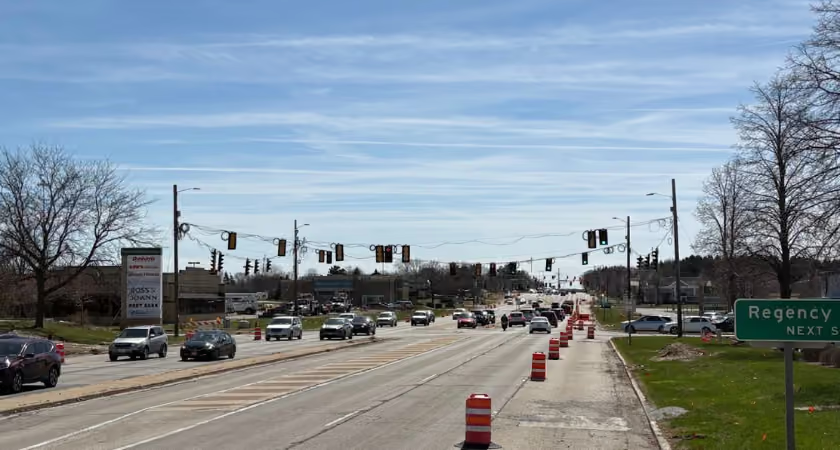
Construction activities are currently focused on pre-construction preparations, including traffic management measures intended to support future phases of work. Temporary traffic signals are being installed to help maintain vehicle movement throughout the project area as construction progresses.
Beginning in the initial construction phase, crews will modify median areas and establish temporary travel lanes that will allow traffic to continue moving while reconstruction of the northbound roadway takes place. This phased approach is intended to minimize disruption along a corridor that serves significant commercial and commuter traffic.
A central component of the project is the installation of nearly 20,000 cubic yards of concrete pavement. The investment reflects a long-term infrastructure strategy aimed at reducing future maintenance requirements and extending the roadway’s operational lifespan.
Beyond roadway improvements, the project includes a substantial pedestrian infrastructure expansion. More than 90,000 square feet of new sidewalks will be added along the corridor, creating continuous pedestrian connections between State Highway 11 and State Highway 20.
The sidewalk additions are expected to improve accessibility for nearby residents, workers, and businesses while providing safer separation between pedestrians and the heavy vehicle traffic commonly found along the commercial route. New pathways are planned on both sides of the roadway to support broader mobility options throughout the corridor.
For contractors and public infrastructure owners, the STH 31 project highlights a growing emphasis on combining roadway rehabilitation with multimodal transportation improvements. State and local agencies increasingly are incorporating pedestrian accessibility and safety enhancements into major corridor reconstruction projects rather than limiting investments solely to pavement replacement.
The project also demonstrates the scale of investment required to address aging transportation assets. Full reconstruction projects typically involve higher upfront costs than resurfacing programs but can deliver longer-term performance benefits and reduced lifecycle maintenance expenses.
Across the Midwest, transportation agencies continue prioritizing corridor modernization efforts as aging highways and commercial routes approach the end of their design life. Many projects now integrate complete-streets elements, including sidewalks, pedestrian crossings, and accessibility improvements, alongside traditional roadway upgrades.
These investments are becoming increasingly important in commercial districts where freight movement, business access, and pedestrian safety must be balanced within the same transportation network.
For public owners and infrastructure stakeholders, the Highway 31 reconstruction illustrates how major corridor projects can address multiple objectives simultaneously: extending asset life, improving transportation efficiency, enhancing safety, and expanding community connectivity.
As transportation agencies face growing maintenance backlogs, projects that combine roadway renewal with pedestrian and accessibility improvements may provide greater long-term value while supporting broader economic development goals within surrounding commercial corridors.
Source: Oakes & Son.