Women are becoming a more visible part of the U.S. sheet metal and HVAC workforce as contractors and industry organizations focus on recruitment, retention, training and leadership development. A September 14 feature from the Sheet Metal and Air Conditioning Contractors’ National Association (SMACNA) examined the experiences of women working across field, management and business-development roles.
Women represented 11.2% of the U.S. construction workforce in 2024, according to data cited in the SMACNA feature. That share increased from 9.1% in 2017 and represented approximately 1.34 million women working in construction.
Industry analysis cited in the article found that women added about 22,000 net construction jobs between 2024 and 2025, increasing their share of the construction workforce to 11.3%.
Participation remains lower in several skilled trades. The article cited research showing that women accounted for 4.3% of construction trade jobs nationally in 2024. Women represented 3.5% of laborers, 3.2% of plumbers, pipefitters and steamfitters, and 2.9% of electricians.
The workforce data comes as mechanical contractors and other construction businesses continue to address labor shortages and develop new pathways into skilled trades.
The SMACNA feature identified retention as an important issue for women entering construction and skilled trades. Professionals interviewed for the article pointed to workplace culture, limited mentorship and personal protective equipment that does not adequately fit women as factors affecting the workforce experience.
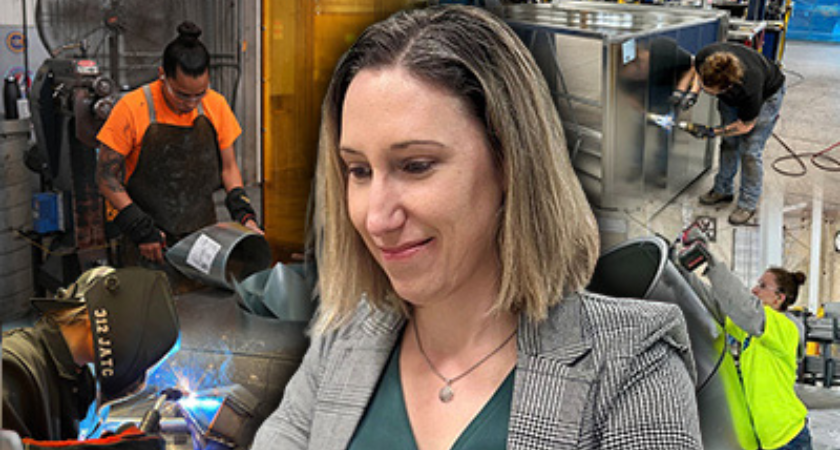
Michelle Acosta, Vice President of Business Development at ATS Mechanical in San Jose, California, described entering her family's sheet metal business as a teenager before moving into shop-floor and business-development responsibilities. Other professionals featured in the article described career paths spanning engineering, fabrication, finance, estimating, project integration and company leadership.
The range of career paths illustrates the variety of positions available within the sheet metal and HVAC sector. It also highlights the importance of access to technical training, estimating, project management, financial education, mentorship and industry networks.
SMACNA has expanded programs designed to strengthen connections among women working in sheet metal and HVAC. Its National Women in Leadership Committee has established a private LinkedIn community intended to connect women in office, field and leadership positions with peers and mentors.
The association's Representation, Integrity, Support, and Empowerment (RISE) Committee also addresses broader representation and support across the industry. The committee works with SMACNA and the sheet metal workers' union SMART on initiatives aimed at supporting underrepresented workers.
Workforce outreach extends to younger people through programs such as Heavy Metal Summer Experience. The initiative gives students opportunities to visit sheet metal and manufacturing operations and learn about potential careers in the trades.
SMACNA's RISE and Safety and Health committees also administer an annual safety sponsorship that can provide up to $5,000 toward attendance at the National Safety Council's Safety Congress & Expo.
For construction owners, mechanical contractors and specialty contractors, the growing participation of women represents one element of the industry's broader workforce-development effort. Recruitment alone does not address labor needs if new workers do not remain in the industry or have access to opportunities for advancement.
The initiatives highlighted by SMACNA place emphasis on mentorship, training, safety resources, jobsite conditions and leadership development. These areas can influence how effectively contractors attract and retain workers as the construction industry continues to compete for skilled labor.
Source: SMACNA.