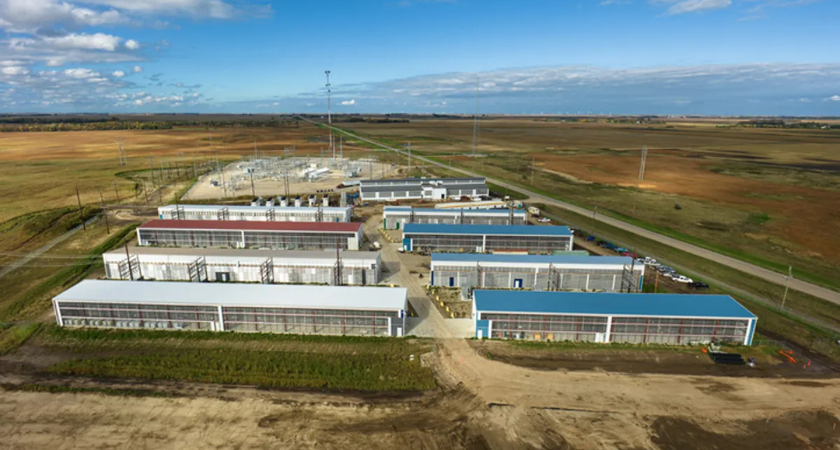
The rapid expansion of artificial intelligence-driven data centers is forcing utilities to rethink how they forecast and manage electricity demand, as traditional planning models struggle to accommodate increasingly volatile load patterns.
.jpg)
Utilities are now facing a fundamentally different type of demand compared to conventional industrial or commercial users. “Utilities are being asked to plan for a new class of electricity demand, one that behaves less like traditional industrial load and more like a dynamic, high-density energy system,” said Mark Knipfer, who leads data center services at Integrated Environmental Solutions.
According to estimates from the Electric Power Research Institute, data centers could account for between 9% and 17% of total U.S. electricity demand by 2030, up from roughly 3% to 4% today. This surge is being driven largely by AI workloads, which require high-density computing infrastructure and significant power capacity.
Unlike traditional industrial facilities, which typically operate on predictable schedules, AI data centers can experience dramatic fluctuations in energy use. “High-density compute clusters can experience swings in power demand of as much as 40–50% over short periods, depending on workload intensity,” Knipfer said. “These fluctuations create rapid changes in cooling and power requirements that ripple through the entire facility.”
This variability introduces a level of uncertainty that existing utility planning frameworks were not designed to handle. Historically, utilities have relied on relatively stable demand forecasts to guide long-term infrastructure investments. The dynamic nature of AI workloads, however, is making those forecasts increasingly unreliable.
As a result, utilities must now make critical investment decisions without fully predictable load profiles, raising concerns about both overbuilding and underbuilding infrastructure. Overestimating demand could result in stranded assets and higher costs for ratepayers, while underestimating demand may lead to grid congestion and reliability risks.
The strain from this evolving demand is already visible in interconnection queues and project timelines. Individual data center developments can require anywhere from 100 to 500 megawatts of capacity, with some multi-phase projects eventually reaching gigawatt-scale demand. At the same time, utilities are under pressure to accelerate connection timelines to remain competitive in attracting data center investments.
Developers are increasingly being asked to provide more comprehensive and realistic projections of how their facilities will operate. “It is no longer enough to specify maximum load; utilities increasingly need to understand how that load will vary over time,” Knipfer noted.
.jpg)
This shift presents challenges for both utilities and developers. Developers must produce detailed and defensible demand profiles, while utilities must integrate those profiles into planning processes originally built around far more static assumptions.
Meanwhile, regulators and policymakers are paying closer attention to the implications of rapid data center growth. In some regions, interconnection queues already exceed two to three times current peak demand, prompting questions about cost allocation and whether large new loads should bear a greater share of infrastructure investments.
To better manage these uncertainties, industry stakeholders are turning to advanced modeling techniques. Physics-based simulation tools are increasingly being used to evaluate how data centers perform under real-world conditions across a full year of operation. These tools help generate more accurate demand profiles, offering utilities improved visibility into how large loads interact with existing grid infrastructure.
Ultimately, experts say addressing the challenges posed by AI-driven data center growth will require collaboration across the industry. “Utilities, developers and regulators all have a role to play in ensuring that new capacity can be delivered in a way that is both economically and operationally sustainable,” Knipfer said.
As artificial intelligence continues to expand across industries, its impact on energy systems is becoming more pronounced. Whether utilities can adapt their planning frameworks quickly enough to keep pace with this transformation remains a critical question for the sector.
Originally reported by Mark Knipfer in Utility Dive.
.png)


.png)