A new bipartisan bill introduced in the U.S. House of Representatives seeks to streamline the permitting process for transit and passenger rail projects by aligning it more closely with procedures already in place for highway construction.

The legislation, introduced by Rep. Dina Titus, D-Nev., would allow transit and rail projects to acquire property before completing the National Environmental Policy Act review process — a step currently permitted for highway projects but not for transit initiatives.
Supporters say the proposal is designed to eliminate inconsistencies in federal permitting that can delay major infrastructure projects and complicate planning for agencies working across multiple transportation modes.
“The current process establishes distinct permitting regulations for each mode, potentially confusing sponsors who work across multiple transportation projects,” Titus said in a news release.
The bill, known as the Modal Parity in Permitting Act, is expected to be considered as part of the next surface transportation legislation package, which will outline federal funding and policy priorities for highways and mass transit systems.
Titus, a member of the House Committee on Transportation and Infrastructure, represents a district that includes parts of Las Vegas and southern Nevada, where Brightline West is developing a high-speed rail project.
“When high-speed rail comes to Southern Nevada, it will support tourism, improve air quality, and ease traffic congestion,” Titus said in a statement. “The Modal Parity in Permitting Act will help ensure that the permitting process that allows these services to be built in our community is in line with the process for highway projects.”
The legislation, H.R. 8315, has garnered bipartisan support, including co-sponsorship from Rep. Robert Bresnahan Jr., R-Pa., and Rep. Laura Friedman, D-Calif.
“Right now, unnecessary delays in permitting are holding back critical transit projects in communities like ours,” Bresnahan said in a statement. “This [bill] is about cutting red tape, supporting smart growth, and delivering the modern, connected transportation systems our region deserves.”
Transportation industry groups and advocacy organizations have also expressed strong support for the measure, citing long-standing disparities in how different types of infrastructure projects are reviewed and approved.
The American Public Transportation Association emphasized that current rules place transit and rail projects at a disadvantage compared to highway developments.
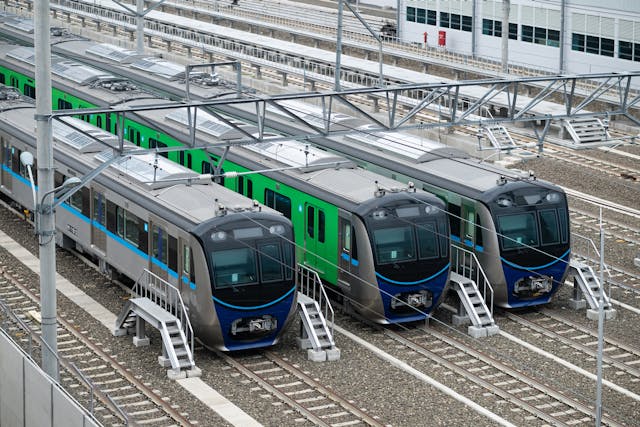
“For too long, public transit and passenger rail projects have faced a structural disadvantage in the permitting process — highway projects can acquire land before NEPA is complete, while [Federal Transit Administration] and [Federal Railroad Administration] projects cannot,” said Paul Skoutelas, the organization’s president and CEO. “This bill levels the playing field and will help move critical public transit and passenger rail investments forward faster and more efficiently.”
Additional backing has come from regional and national transportation stakeholders, including the Regional Transportation Commission of Southern Nevada and The Bus Coalition, both of which advocate for expanded and more efficient transit systems.
Proponents argue that streamlining the permitting process could accelerate the delivery of major transit and rail projects, reduce costs associated with delays and improve coordination across agencies. For contractors, developers and infrastructure stakeholders, the proposed changes could help create more predictable timelines and reduce regulatory uncertainty.
As Congress prepares to debate the next surface transportation bill, the proposed legislation highlights growing efforts to modernize infrastructure delivery and address regulatory bottlenecks that have historically slowed transit development.
Originally reported by Dan Zukowski, Senior Reporter in Smart Cities Dive.



.png)