Allan Myers and P. Flanigan & Sons have completed a major runway rehabilitation at Baltimore/Washington International Thurgood Marshall Airport in Maryland, delivering an $83 million infrastructure project ahead of schedule. The work returned the airport’s longest commercial runway to service while limiting disruption to flight operations at a busy regional transportation hub.
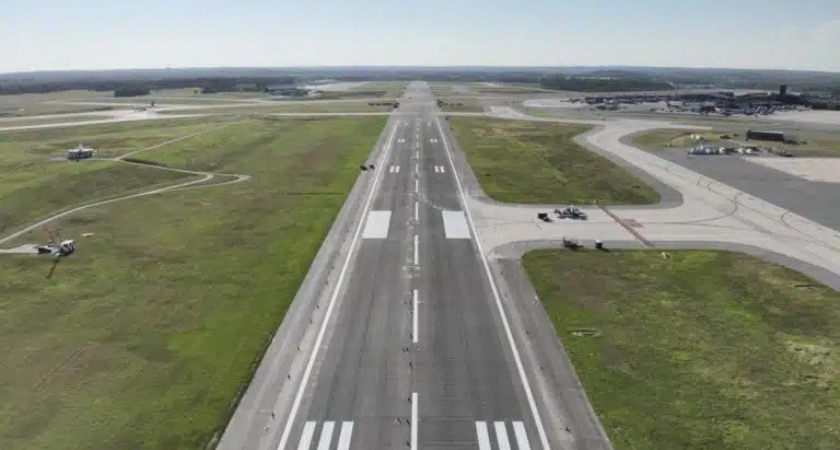
The joint venture rehabilitated Runway 10-28, which extends 10,500 feet. Construction began in mid-July and included milling and paving the runway surface, correcting grades to improve drainage and installing new LED runway lighting.
The runway reopened on October 15, two days before the planned completion date. Its return to service restored full access to both primary commercial runways at the airport.
The improvements addressed pavement condition, surface drainage and lighting infrastructure, all of which are important to the safe and reliable operation of airport runways.
The project team carried out much of the work within restricted overnight windows, allowing crews to complete construction activities before morning flights began. Multiple paving crews, trucks, rollers, surveyors and support teams worked in coordination to maintain progress.
Work at the intersection of Runway 10-28 and Runway 15R-33L required a complete overnight airport shutdown. The team completed that portion on schedule without unplanned impacts, according to the project announcement.
Quality control was also a priority because the compressed schedule left little room for rework. Coordination among construction crews, safety personnel, survey teams, plant operations, dispatch, mechanics and trade partners helped keep the project on track.
Runway rehabilitation requires contractors to balance pavement quality, construction productivity and strict operational windows. At active airports, delays can affect flight schedules and limit access to critical infrastructure, making advance planning and coordination essential.
The early reopening of Runway 10-28 demonstrates how closely managed night work and coordinated field operations can support delivery within a demanding schedule. For airport owners and infrastructure contractors, the project highlights the importance of quality assurance, logistics planning and collaboration when major rehabilitation work must be completed while minimising disruption to the travelling public.
Source: Allanmyers.