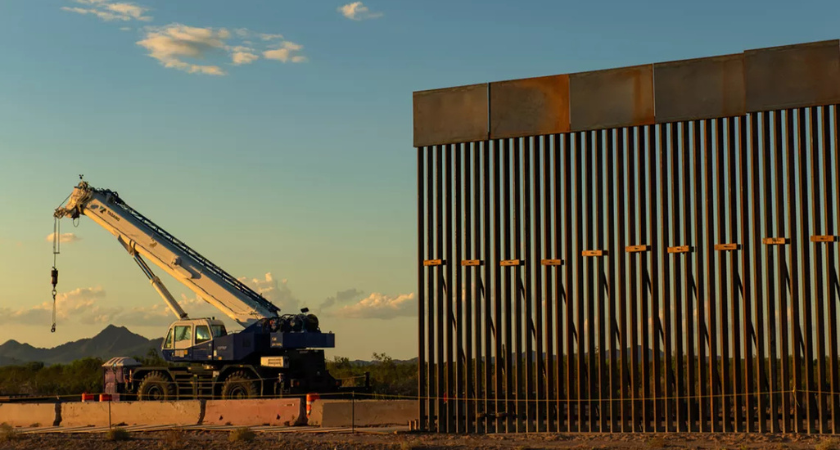
AJO, Ariz. — The Center for Biological Diversity said new photos and video footage show that border wall construction crews damaged a centuries-old archeological site inside Arizona’s Cabeza Prieta National Wildlife Refuge during recent construction activity tied to the Trump administration’s border infrastructure expansion.
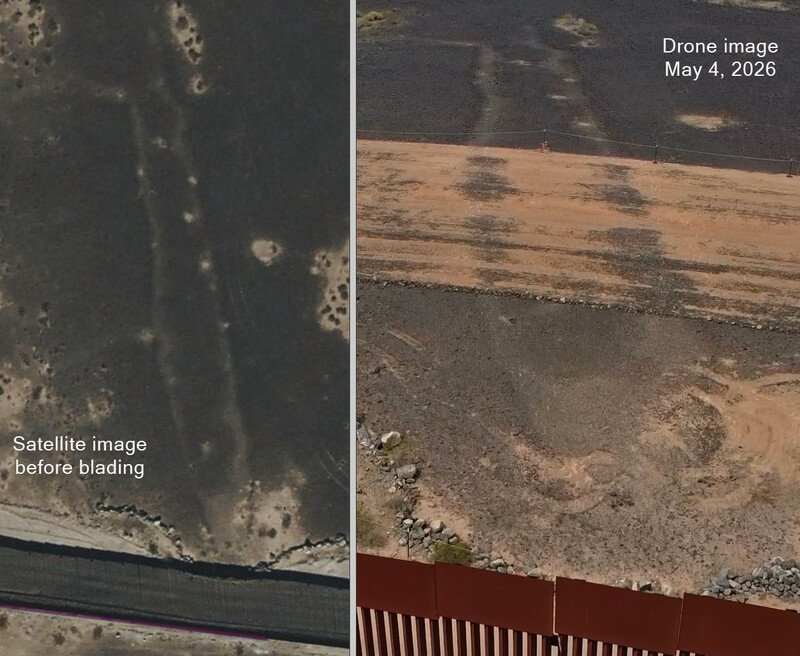
According to the conservation group, contractors scraped through part of the Las Playas Intaglio, a 272-foot-long fish-shaped geoglyph estimated to be about 1,000 years old. The site is located near the U.S.-Mexico border inside federally protected refuge land.
The organization said construction crews carved a roughly 50-foot-wide corridor through the ancient figure and surrounding desert landscape to prepare for a planned second border wall.
“This is the destruction that occurs when the Trump administration strips away our bedrock environmental laws and turns protected public lands into a lawless construction zone,” said Russ McSpadden of the Center for Biological Diversity. “I was just at the border and saw the damage up close. The intaglio has been scraped apart, a bladed corridor has been cut through it, and heavy machinery is parked nearby. This is an irreplaceable piece of human history that’s been permanently scarred.”
The group said the damage occurred around April 23 when crews working for U.S. Customs and Border Protection allegedly drove heavy equipment through the protected site.
The incident follows waivers issued by the U.S. Department of Homeland Security in 2025 that allowed border wall construction projects to bypass several environmental and cultural protection laws.
According to the Center for Biological Diversity, the waivers suspended requirements under laws including the National Environmental Policy Act, the Endangered Species Act and the National Historic Preservation Act to accelerate border wall construction across southern Arizona.
Environmental advocates and Tribal groups have argued that the waivers eliminate key safeguards designed to protect sensitive cultural landscapes, wildlife habitat and archeological resources.
The Las Playas Intaglio is considered part of a broader sacred cultural landscape recognized by Native American Tribes. Desert intaglios are created by removing dark volcanic rock to expose lighter soil beneath, forming large-scale figures visible from above.
The fish-shaped geoglyph points south toward the Gulf of California, approximately 45 miles away.
Conservation organizations have repeatedly raised concerns that expanded border wall projects could permanently damage fragile desert ecosystems and cultural sites throughout the Southwest.
The Center for Biological Diversity said plans for additional parallel barriers and expanded border infrastructure could further impact protected lands across the region.
The organization released photographs and video footage documenting the damage, including images showing construction corridors cut directly through portions of the geoglyph.
The Center for Biological Diversity is a nonprofit conservation organization focused on endangered species and habitat preservation and says it has more than 1.8 million members and online activists nationwide.
Originally reported by Biological Diversity.