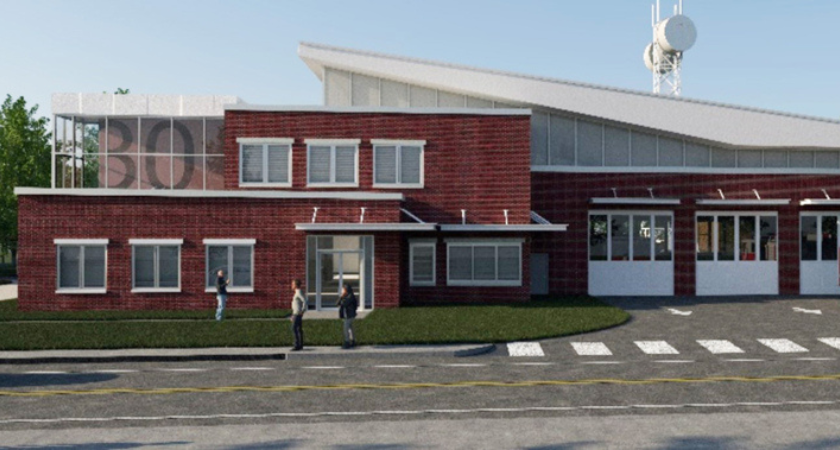
Atlanta’s ongoing redevelopment of Fire Station #30 underscores how municipal governments are increasingly prioritizing replacement of aging public safety infrastructure with larger, technology-forward facilities that support operational resilience and faster emergency response.

Set in the city’s urban core, the new two-story station is designed to serve more than 500,000 residents and represents a significant capacity expansion over the previous building. At more than twice the size of its predecessor, the facility includes a three-truck apparatus bay, expanded firefighter living quarters, dedicated training and gear rooms, and design features aimed at improving deployment speed.
For contractors and developers, the project reflects a broader trend in civic construction: cities are moving beyond basic replacement toward infrastructure upgrades that integrate advanced building systems, telecommunications, life safety, and resilience measures.
Wayne J. Griffin Electric’s role extends beyond traditional power and lighting installation, encompassing fire alarms, telecommunications infrastructure, security pathways, electrical distribution, and lightning protection. This wider systems integration highlights how public-sector projects increasingly require multidisciplinary subcontractor capabilities, especially as municipalities demand higher performance standards for safety-critical assets.
The project also reinforces the strategic value of experienced regional contractors in government work. Griffin Electric’s presence in the Southeast, paired with FH Paschen’s role as general contractor, demonstrates how established firms with public-sector expertise are positioned to capture growing volumes of municipal modernization work.
Nationally, many local governments are confronting deferred maintenance challenges across fire stations, police facilities, schools, and utility assets. Population growth, emergency preparedness concerns, and building code evolution are pushing cities to invest in replacement rather than renovation, creating a durable pipeline for contractors specializing in public works, electrical systems, and life safety infrastructure.
For owners and developers watching the civic market, projects like Fire Station #30 also signal increased competition for labor, specialized trades, and public procurement opportunities—particularly in fast-growing metro areas where emergency response infrastructure must scale alongside development.
Public-sector modernization is emerging as a stable growth segment even amid broader private market volatility. Construction owners, developers, and specialty contractors should view municipal infrastructure projects as long-term strategic opportunities, particularly in sectors requiring advanced systems integration. Firms with expertise in public compliance, emergency operations, and complex MEP coordination may be especially well-positioned as cities continue replacing outdated civic facilities with larger, more technologically sophisticated assets.
Originally reported by Griffin Electric.