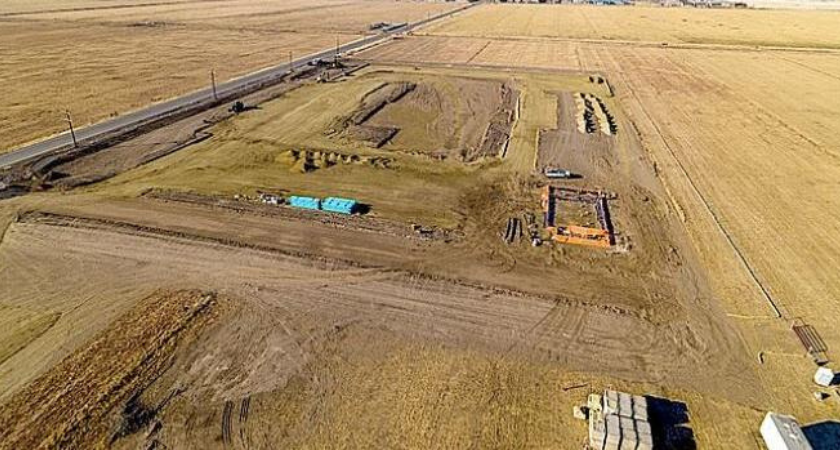
The Bureau of Land Management has accelerated federal review and permitting for a natural gas pipeline tied to the controversial Project Jupiter data center development in southern New Mexico, advancing a major infrastructure component even as environmental and regulatory opposition continues to grow.

The BLM’s Las Cruces district office announced this week that it granted expedited permission for construction activities related to the “Green Chile Project,” a proposed pipeline led by Dallas-based Energy Transfer through its subsidiary, Transwestern Pipeline Company.
The proposed infrastructure project includes nearly 18 miles of pipeline crossing federal, state and private lands in Doña Ana County. Approximately 16 miles of the route would cross public lands overseen by the BLM. The estimated $60 million project is designed to deliver up to 400 million cubic feet of natural gas per day from El Paso, Texas, to private power plants serving the planned Project Jupiter data center campus.
Project Jupiter has drawn national attention because of reported ties to major technology companies including OpenAI and Oracle.
Federal officials said the accelerated review process relied on emergency permitting authorities adopted by the U.S. Department of the Interior in 2025. According to the BLM, the new process reduced a federal environmental review timeline from roughly one year to just 14 days.
The right-of-way authorization allows Transwestern to construct, restore and operate most of the pipeline route across federal lands.
The pipeline, however, still faces multiple regulatory hurdles. Last month, the New Mexico State Land Office denied rights for construction across state trust land, creating a potential obstacle for the overall project.
The project also remains under review by the Federal Energy Regulatory Commission, which is considering a January application from Transwestern seeking immediate approval for construction activities.
Environmental groups and regulators have already challenged portions of the application process. Several New Mexico environmental organizations filed formal protests in April, while FERC staff also raised concerns that the application materials were incomplete.
FERC directed Transwestern to provide additional documentation from the New Mexico State Historic Preservation Office within 30 days or face a more extensive federal review process.
In recent filings, Transwestern and Oracle urged federal regulators to extend the documentation deadline, stating that “time is of the essence” and requesting rapid approval so pipeline construction can begin by August.
Opponents argue the project should undergo a lengthier review process due to unresolved environmental and operational questions.
Attorneys representing the Sierra Club and the Center for Biological Diversity said FERC rules do not allow the requested extension and contend the project now requires a more comprehensive review.
.jpg)
The environmental groups also noted that New Mexico regulators have not yet fully evaluated revised plans for Project Jupiter’s energy generation systems. Developers recently modified the project’s power strategy, shifting from exclusive reliance on natural gas infrastructure to incorporating fuel cell technology.
“This development reiterates that any potential need for the Project is uncertain at best,” the filing stated.
Critics of the pipeline have also raised concerns about the scale of natural gas consumption required to power the data center campus. According to previous reporting by Source New Mexico, experts estimated the proposed daily gas volume could supply winter heating needs for the city of Española, New Mexico, for an entire year.
The Green Chile pipeline represents another example of growing energy infrastructure demands tied to rapidly expanding data center construction across the United States, particularly as artificial intelligence and cloud computing projects require increasingly large power supplies.
Originally reported by Danielle Prokop in Source NM.