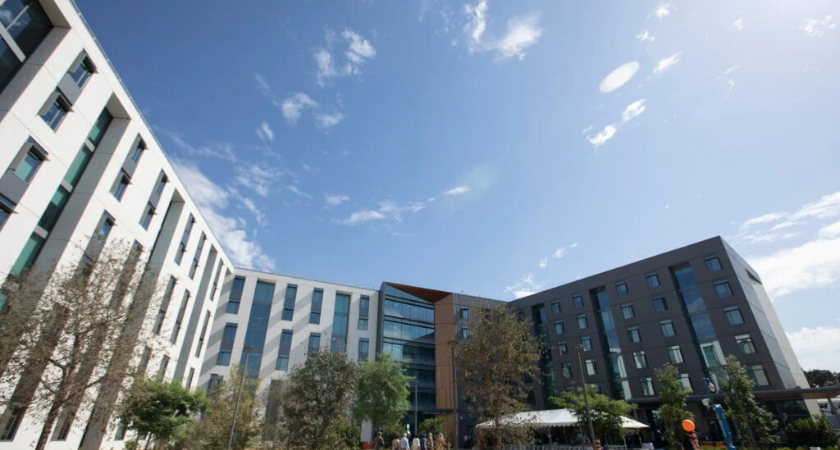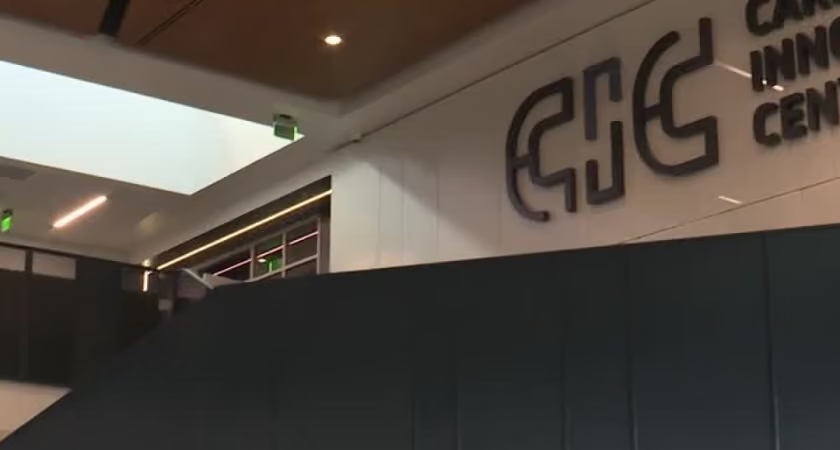
A new career education facility in eastern Jackson County, Missouri, is expanding access to hands-on training in fields connected to the region's workforce needs. Blue Springs School District's Career Innovation Center is now operating for the 2026-27 school year, bringing approximately 700 students into specialized learning environments designed around career pathways.
The Career Innovation Center was constructed on the site of the district's former Freshman Center, where career programs previously operated from a portion of the existing building.
The new facility provides dedicated environments for multiple career disciplines. Its programs include culinary arts, aviation, nursing, computer animation and introductory teacher education, along with physical, athletic and personal training facilities.
A commercial kitchen supports culinary instruction, while aviation students have access to a flight simulator. The nursing program also has a substantially expanded dedicated training area compared with its previous space.
Students from multiple Eastern Jackson County school districts are represented in the center's programs, broadening access to career-focused education across the area.
The center incorporates participation from local businesses as part of its career education model. Business partners include Scout Coffee, which supports the culinary program, and JE Dunn, which is involved with trades education.
The school district is continuing to seek additional business partnerships to connect students with real-world industry experience and career opportunities.
Construction of the facility was funded through a voter-approved 2024 bond, making the project part of a broader investment in school infrastructure and career-focused education.
Career and technical education facilities can serve a dual purpose for school districts by providing instructional space while also creating environments that introduce students to industries requiring specialized skills.
For construction stakeholders, the Blue Springs project is notable for its direct connection between educational infrastructure and workforce development. Programs focused on trades and other technical careers provide students with exposure to industry environments before entering the workforce, while partnerships with businesses can connect classroom instruction with practical experience.
The opening of the Career Innovation Center demonstrates how school capital investments can incorporate workforce-development objectives alongside traditional educational needs. For construction owners, contractors and developers, partnerships with career centers can provide a channel for supporting future workforce development while giving students earlier exposure to construction and other technical occupations.
Source: KSHB.