TEXAS — Federal officials are laying the groundwork for potential border wall construction across multiple Texas state parks, a move that could trigger new infrastructure contracts while intensifying environmental and public land concerns.
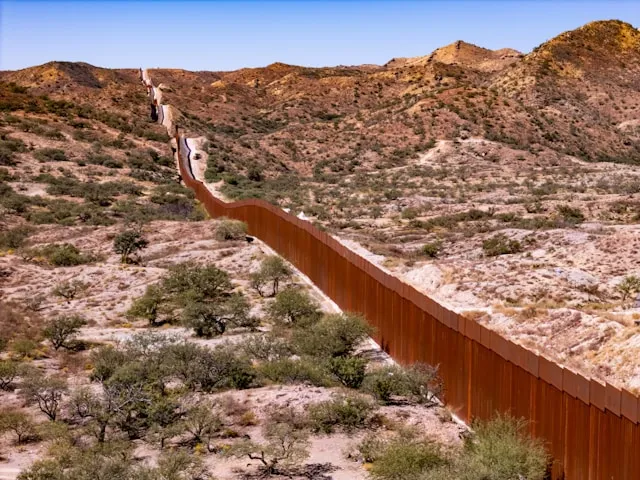
According to documents obtained by Inside Climate News, the U.S. Border Patrol has requested access to parcels within three major parks — Big Bend Ranch State Park, Seminole Canyon State Park and Bentsen-Rio Grande Valley State Park — as part of early-stage planning for a potential border barrier project.
The requests, submitted to the Texas Parks and Wildlife Department (TPWD), include detailed maps outlining possible routes for a wall, access roads and supporting infrastructure. While officials have stated that construction in these areas is currently “on hold,” the documents indicate that site access discussions and preliminary planning are already underway.
Letters sent in February outline initial steps toward securing land access through easements, leases or direct purchases. In Big Bend Ranch State Park alone, the Border Patrol identified 14 parcels as part of an “initial notification” to begin negotiations.
The agency has also proposed compensation for access, offering $5,000 for temporary entry tied to construction-related activities. If agreements cannot be reached, federal officials indicated that land acquisition could proceed through eminent domain.
In addition to Big Bend Ranch, parcels in Hidalgo County — including land tied to Bentsen-Rio Grande Valley State Park and the Las Palomas Wildlife Management Area — have been targeted for early-stage evaluation.
Internal communications suggest that future development may not be limited to a physical wall. Officials referenced the possibility of installing “barrier, roads, and/or technology,” indicating a broader infrastructure footprint that could involve grading, roadway construction and surveillance systems.
For contractors, such projects typically involve a mix of civil construction, heavy earthwork, structural installation and specialized security infrastructure — often under accelerated timelines and federal procurement frameworks.
However, uncertainty remains around the final scope. Public-facing updates from federal agencies have at times emphasized “detection technology” in certain park areas rather than a continuous physical barrier, creating mixed signals about the project’s direction.
The potential for construction within protected lands has sparked mounting opposition from residents, environmental advocates and public lands groups.
“None of these comments are binding in any way. They are just statements,” said Laiken Jordahl of the Center for Biological Diversity. “They could show up with bulldozers and dynamite trucks and start building in the state park tomorrow. And nothing could stop them.”
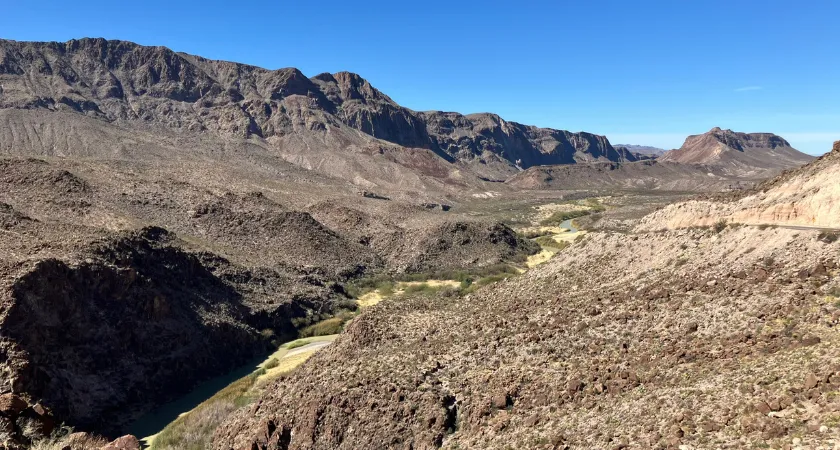
Concerns center on the environmental and cultural impact of construction within sensitive areas. In Seminole Canyon State Park, proposed routes could restrict access to ancient rock art sites along the Rio Grande. In Big Bend Ranch, plans could alter views along FM 170, a scenic roadway known for its canyon landscapes.
Residents and advocacy groups have also reported seeing survey markers and contractor vehicles in parts of the region, further fueling concerns that preliminary work may already be underway.
Officials with TPWD have largely deferred questions to federal authorities, while U.S. Customs and Border Protection has not provided detailed responses regarding the access requests.
Internal emails obtained through public records requests suggest that even state park officials were initially unaware of the scope of the proposals. In one exchange, a staff member described the development as “quite the surprise,” reflecting the limited communication between agencies during early planning stages.
Despite statements that construction is not an immediate priority in these parks, federal officials have not ruled out future development. Instead, the areas are expected to be evaluated over time as part of broader border infrastructure planning.
If advanced, the projects could open new federal contracting opportunities tied to border infrastructure, particularly in remote and logistically challenging environments. However, the combination of regulatory waivers, environmental sensitivities and public opposition is likely to shape both the pace and scope of any future construction.
For now, the situation remains fluid. While no active construction timeline has been confirmed, the access requests mark a critical early step — signaling that planning for potential border wall infrastructure in Texas state parks is moving forward, even as public debate intensifies.
This article is based on reporting by Martha Pskowski for Inside Climate News. Read the original report here: https://insideclimatenews.org/news/02042026/texas-state-parks-border-wall-access/