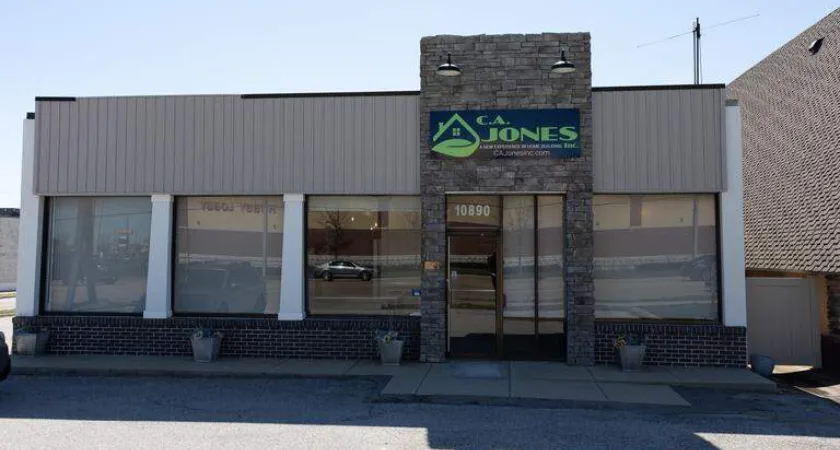
One of the largest residential builders in Illinois’ metro-east region, C.A. Jones Inc., has abruptly disappeared from the market, leaving behind unfinished projects and uncertainty in Belleville.
.webp)
The company, once a prominent name in local home construction, has vacated its office in Fairview Heights, disconnected its phone lines and gone silent on social media. While its website remains online, there has been no public communication from company leadership. Attempts to reach President Mike Needles and founder Chris Jones have been unsuccessful.
“They are out of business,” said Rick Swain, broker for the Keller Williams Marquee realty group in Edwardsville and former vice president of the company.
The company’s disappearance has had direct consequences for local development efforts. In partnership with the city, C.A. Jones had agreed to purchase and build homes on multiple vacant lots as part of a redevelopment initiative.
While the builder completed several homes, progress stalled on others. City officials have now begun reclaiming unused parcels after missed construction deadlines.
“They’ve done nothing with the lot, so we are going to proceed with taking it back,” said Jenny Gain Meyer, noting the city has had no recent contact with the company.
Additional agreements tied to other lots are also expected to be rescinded, particularly where land has been deemed unsuitable or construction never began.
Despite reports suggesting financial trouble, no formal bankruptcy filing has been recorded in the U.S. Bankruptcy Court for the Southern District of Illinois. This has added to the uncertainty surrounding the company’s sudden exit.
Swain indicated he left the firm earlier due to management concerns and was later told the company had gone bankrupt. However, without official filings, the exact circumstances behind the shutdown remain unclear.
C.A. Jones was established in 1995 and, according to state records, is still listed as an active business. The company had built a reputation for delivering energy-efficient homes and engaging in community-focused initiatives, including charitable programs and partnerships with local organizations.
The builder had been experiencing notable growth in recent years. After Mike Needles took over as president in 2022, the company celebrated closing its 900th home and highlighted its commitment to community impact.
“It is so important that we continue to give back to the communities that we serve and that have given us so much,” Needles stated in a previous interview. “We will continue to find ways to grow our community involvement and have a positive impact on as many lives as we can.”
At its peak, the firm was constructing roughly 100 homes annually and played a key role in regional housing development.
“Building these homes in St. Clair County, which is the No. 1 county that we serve, it’s a privilege, and anytime we can help out Mayor Patty Gregory, we definitely want to do that,” Swain said.
.webp)
The sudden disappearance of a major homebuilder highlights the volatility facing the residential construction sector, particularly amid rising material costs, labor shortages and financing challenges. When a firm of this size exits unexpectedly, the ripple effects extend beyond unfinished homes — impacting buyers, subcontractors, municipalities and local housing supply.
For cities like Belleville, redevelopment programs that rely on private builders can face setbacks when partners fail to deliver. The situation underscores the importance of risk management, oversight and contingency planning in public-private development agreements.
Looking ahead, local officials may need to identify new builders to take over stalled projects and restore momentum to redevelopment initiatives. The unfinished lots and partially completed agreements could delay housing availability in an already tight market, while also creating administrative and legal challenges for the city. At the same time, the case of C.A. Jones may serve as a cautionary example for municipalities partnering with private developers, emphasizing the need for stronger safeguards, performance benchmarks and financial transparency to ensure long-term project success.
Originally reported by Teri Maddox in BND.