LOS ANGELES — California’s long-delayed high-speed rail project is facing renewed scrutiny as cost estimates climb to approximately $126 billion, nearly four times the original projection presented to voters in 2008.
.jpg)
Officials acknowledged the updated estimate in recent remarks, underscoring the scale of the challenge facing the state’s ambitious effort to connect Los Angeles and San Francisco with high-speed rail service.
"Today, we estimate with the right optimization just over $125 billion," California High Speed Rail Authority board member Anthony Williams told CBS’s "60 Minutes." "I think $126 billion is the current estimate for that."
The project, initially pitched at $33 billion, has become a focal point for criticism over cost overruns, delays and management challenges. Nearly two decades after its inception, no track has been laid, with construction activity largely concentrated on segments in California’s Central Valley.
Critics argue the project exemplifies government inefficiency and mismanagement. Rep. Vince Fong, R-Calif., voiced strong opposition to continuing the effort.
"We’re now in 2026: There are no trains; there’s no track laid; it was a complete bait and switch," Fong said in the interview, adding that the project "needs to stop."
California transportation officials, however, have acknowledged shortcomings while maintaining that progress is being made.
"There were mistakes made," California Transportation Secretary Toks Omishakin said. "Some of the criticisms on this project, I think, are very fair."
Omishakin added that early projections underestimated the complexity of delivering such a large-scale infrastructure project.
"I don't think the voters fully understood, and neither did we in the public sector, what it was going to take to actually get this project delivered," he said.
The project now faces a funding gap estimated at roughly $90 billion, raising questions about how California will secure the resources needed to complete the full Los Angeles-to-San Francisco corridor.
Political leaders have weighed in as well. Donald Trump criticized the project’s escalating costs, calling it “the worst cost overrun” he has seen, while federal officials indicated a shift away from supporting what they described as inefficient infrastructure investments.
In a statement, Transportation Secretary Sean Duffy said, “This administration is working to usher in a Golden Age of Transportation,” but added that it “won't stand for boondoggle projects like Newsom's Train to Nowhere that wasted billions in taxpayer dollars yet delivered nothing to the American people.”
Despite the criticism, state officials remain confident additional funding can be secured. However, even supporters acknowledge the challenges ahead.
"The ultimate 494 miles of building this out without the federal government's help will be challenging: There's no doubt about that," Omishakin said.
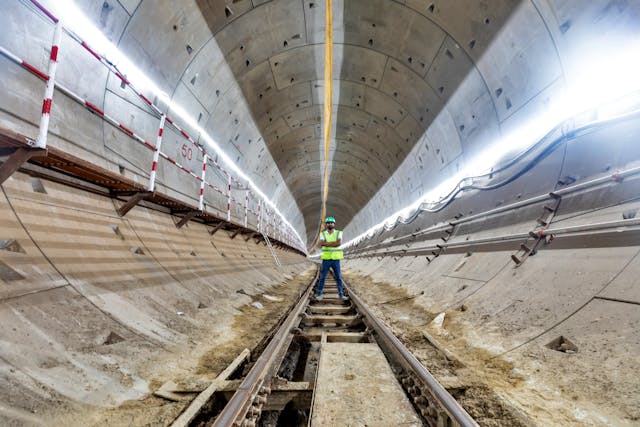
The earliest projected opening date for any operational segment is now 2033, far later than initially promised. Meanwhile, the most visible progress remains limited to infrastructure work in the Central Valley, including areas between Bakersfield and Merced.
As costs continue to rise and timelines extend, the project has become a symbol of both the ambition and risks associated with large-scale infrastructure development in the United States. For contractors and construction stakeholders, the project highlights the importance of accurate cost forecasting, funding certainty and effective project management in megaproject delivery.
Originally reported by Eric Mack in Fox News.