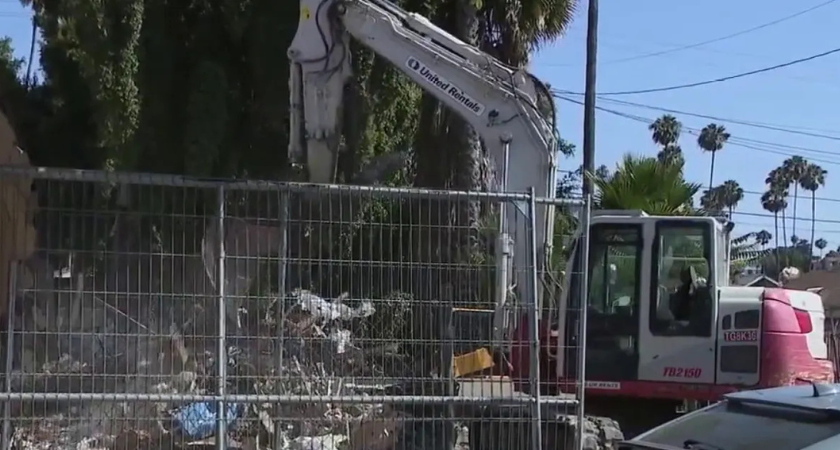
A proposed affordable housing development in Los Angeles’ El Sereno neighborhood has become the center of a broader debate over urban density, construction oversight, and infrastructure impacts as work at the site remains halted following reported utility and safety concerns.
The project, led by Sola Impact, is planned as a more than 100-unit low-cost housing complex at the intersection of South Huntington Drive and Portola Avenue. The development has drawn increasing opposition from nearby residents, many of whom say they support affordable housing goals but object to the project’s lack of onsite parking and the impact construction activity is having on the surrounding community.

Concerns escalated after residents alleged that construction equipment came into contact with an electrical line, resulting in temporary power disruptions and internet outages in the area. While utility officials reportedly found no sustained infrastructure damage, the incident added to tensions surrounding the project and prompted renewed scrutiny of construction operations.
At the same time, regulators are reviewing environmental and workplace safety conditions tied to demolition and site preparation work. State workplace safety officials confirmed they are investigating dust-control practices after residents raised concerns about airborne debris and potential asbestos exposure associated with older structures being demolished on the property.
The project site has also faced prior enforcement actions. Local officials said earlier demolition activity was previously stopped because required permits had not yet been issued, while inspectors reportedly cited dust-abatement control issues during earlier phases of work.
Los Angeles Councilmember Ysabel Jurado said city agencies have spent years attempting to address nuisance conditions at the property, which neighbors described as a longtime encampment and public safety concern before redevelopment efforts began. According to city officials, enforcement measures and cleanup coordination intensified after complaints from nearby residents.
The dispute reflects broader pressures facing affordable housing developers throughout California, where local governments are attempting to accelerate housing production while balancing neighborhood concerns over parking, infrastructure strain, environmental safety, and quality-of-life impacts.
Parking requirements remain one of the most contentious issues in urban infill development. Many California affordable housing projects are now permitted to reduce or eliminate onsite parking under state and local housing policies intended to encourage transit-oriented development and reduce construction costs. However, residents in lower-density neighborhoods often argue that such projects can intensify congestion and increase pressure on already limited street parking.
For developers, the El Sereno project also highlights the growing complexity of entitlement, demolition, and community engagement processes surrounding affordable housing construction. Regulatory scrutiny tied to environmental compliance, utility coordination, and jobsite safety can significantly affect schedules and project delivery timelines, particularly on politically sensitive developments.
Meanwhile, housing advocates continue to argue that opposition to parking reductions and density increases is slowing urgently needed affordable housing construction across Los Angeles at a time of persistent housing shortages and rising development costs.
The El Sereno dispute illustrates how affordable housing construction is increasingly intersecting with infrastructure concerns, environmental oversight, and community resistance in urban markets.
For construction owners and developers, the project reinforces the importance of early stakeholder engagement, utility coordination, environmental compliance, and transparent construction management — particularly on infill sites located in dense residential neighborhoods.
The situation also demonstrates how permitting issues, demolition controls, and neighborhood opposition can create costly schedule disruptions for multifamily housing projects. Owners pursuing affordable housing developments may face heightened scrutiny over parking policies, public safety impacts, and construction operations even when projects align with broader municipal housing goals.
Originally reported by Christina Gonzalez in Fox 11.