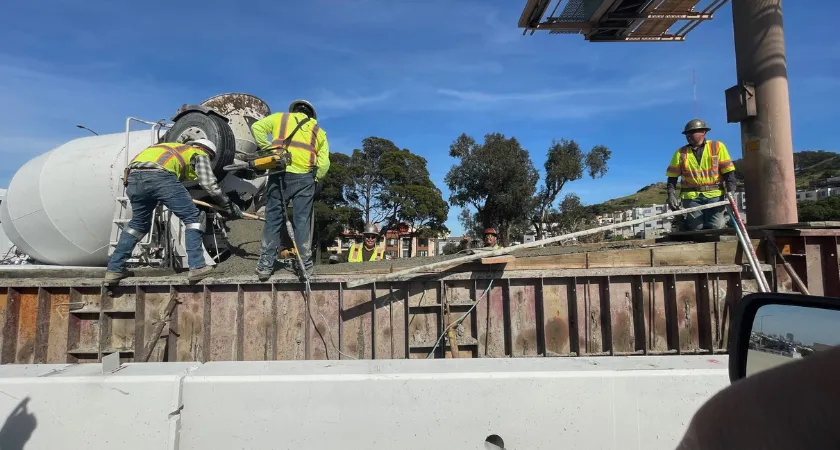
California Department of Transportation has completed critical weekend construction work on the U.S. 101 Bayshore Freeway ahead of schedule, reopening all lanes earlier than expected and easing traffic disruptions for Bay Area drivers.
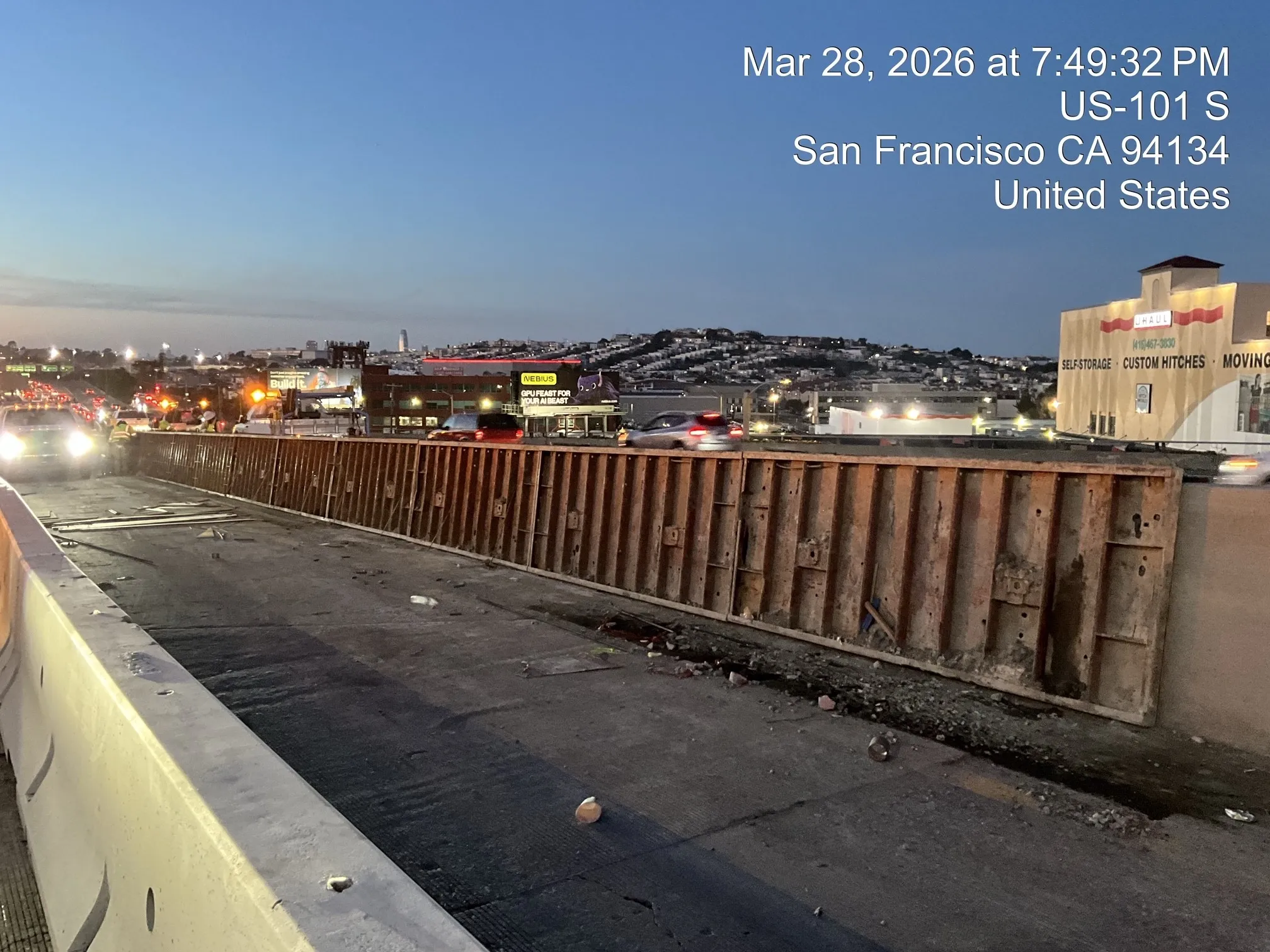
The lane reductions along the heavily traveled Hospital Curve in San Francisco began on Friday, March 27, and were initially scheduled to continue through Monday. However, crews finished work by early Sunday morning, allowing all lanes to reopen at 5:23 a.m. on March 29.
The accelerated timeline marks a significant milestone in the ongoing rehabilitation of the Hospital Curve segment.
With the completion of this phase — specifically median barrier construction — Caltrans confirmed that planned lane closures for the April 3–5 weekend have now been canceled, reducing future disruptions for commuters and freight traffic.
The project remains part of a broader two-year rehabilitation effort that began in October 2025 and focuses on improving one of the region’s busiest freeway corridors.
While weekend closures tied to this phase are now complete, construction activity will continue under less disruptive conditions.
Caltrans crews will proceed with remaining work using weekday overnight schedules, allowing progress to continue while minimizing daytime congestion impacts.
This approach reflects a broader trend in urban infrastructure projects, where agencies aim to balance construction efficiency with traffic management in densely populated areas.
Once fully completed, the Hospital Curve rehabilitation project is expected to deliver several long-term benefits:
These improvements are particularly critical for U.S. 101, a major artery supporting daily commuter traffic, regional logistics and economic activity across the Bay Area.
The early completion highlights effective project coordination and execution — a positive signal for public infrastructure delivery.
Finishing ahead of schedule not only reduces traffic disruption but can also lower indirect costs tied to congestion, labor and extended equipment use. For contractors and agencies alike, such outcomes reinforce the value of precise scheduling, resource planning and accelerated construction methods.
The successful delivery of this phase may also serve as a model for future high-impact highway rehabilitation projects across California and beyond.
Motorists are encouraged to stay informed as work continues through the next phases of the project. Caltrans will provide ongoing updates regarding schedules, traffic conditions and any future impacts.
The agency emphasized its appreciation for public cooperation during construction, noting that minimizing disruption while upgrading infrastructure remains a top priority.
Originally reported by Caltrans in California Government.