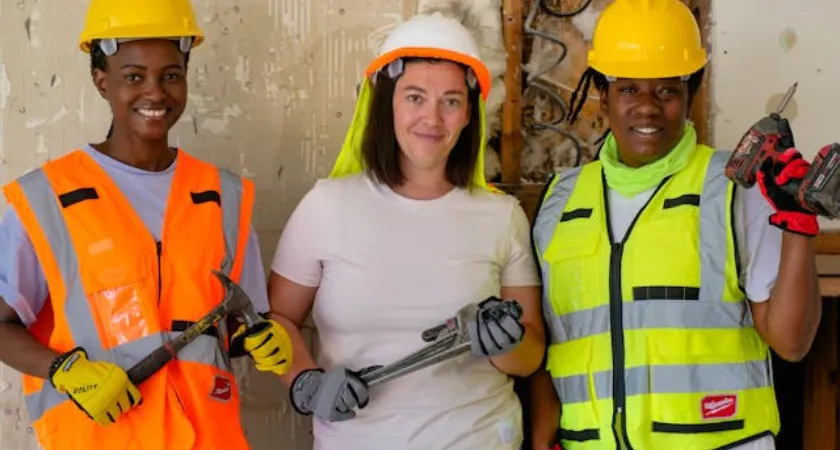
A new generation of women is reshaping the construction industry, and Samantha Martin is emerging as one of its leading voices.
.webp)
Now serving as a council representative for the New York City District Council of Carpenters, Martin’s journey reflects both the challenges and opportunities facing women entering skilled trades. Her story highlights how persistence, training and advocacy are helping diversify a historically male-dominated field.
Martin entered the construction industry at age 21, stepping into job sites where women were still a rarity. Starting as an apprentice with Local 45, she completed a rigorous four-year training program that equipped her with skills in framing and drywall installation.
Her early days mirrored those of many tradespeople—arriving on-site before dawn, learning through hands-on experience and working long hours to build expertise and credibility.
Over time, Martin expanded her role into more specialized areas such as quality control, gaining a deeper understanding of project coordination and execution. Her experience across job sites ultimately led her to a leadership role, where she now helps organize workers and advocate for labor rights across New York City.
Martin’s career progression underscores the evolving role of women in construction, as more organizations and unions work to create inclusive environments and expand workforce participation.
Construction projects often require close coordination between multiple trades, including electricians, plumbers and carpenters. Even small misalignments can impact entire workflows, making communication and precision critical.
“Nothing better than an Electrician installing something exactly where the door has to go,” she said with a laugh.
Her comment reflects both the everyday realities of construction work and the collaborative nature of the industry, where teamwork and problem-solving are essential.
.webp)
Across the United States, labor organizations and training programs are increasingly focused on attracting women and underrepresented groups into skilled trades. Workforce shortages, combined with growing infrastructure demand, have accelerated efforts to build a more diverse talent pipeline.
Union apprenticeship programs, like the one Martin completed, play a key role in this shift by providing structured training, career pathways and long-term job stability.
As more women enter the field and move into leadership roles, stories like Martin’s are helping change perceptions and inspire the next generation of workers—demonstrating that construction careers are both accessible and rewarding for those willing to take on the challenge.
Originally reported by Labor News Story Link To The Chief in WNY Labor Today.