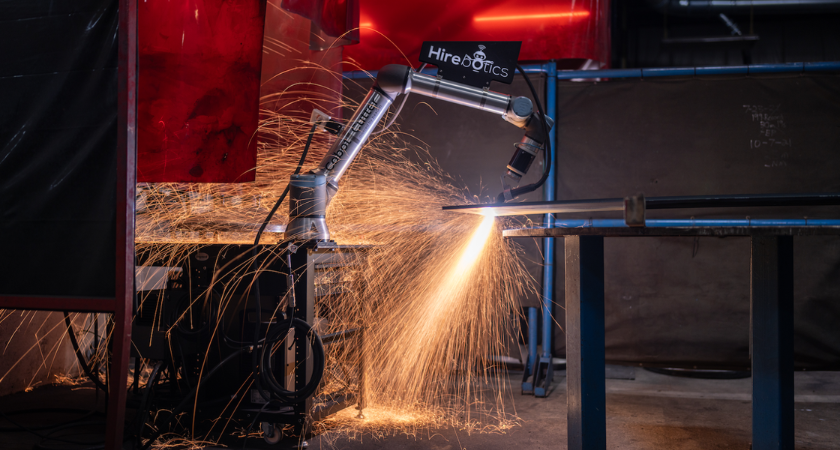
Picture this: a high-rise seismic retrofit in San Francisco. Hundreds of welds, each four or five feet long and requiring a hundred passes, needed across every floor of the building. And a contractor who couldn't find anywhere close to the 70 welders per shift, across three shifts a day, that the project demanded.
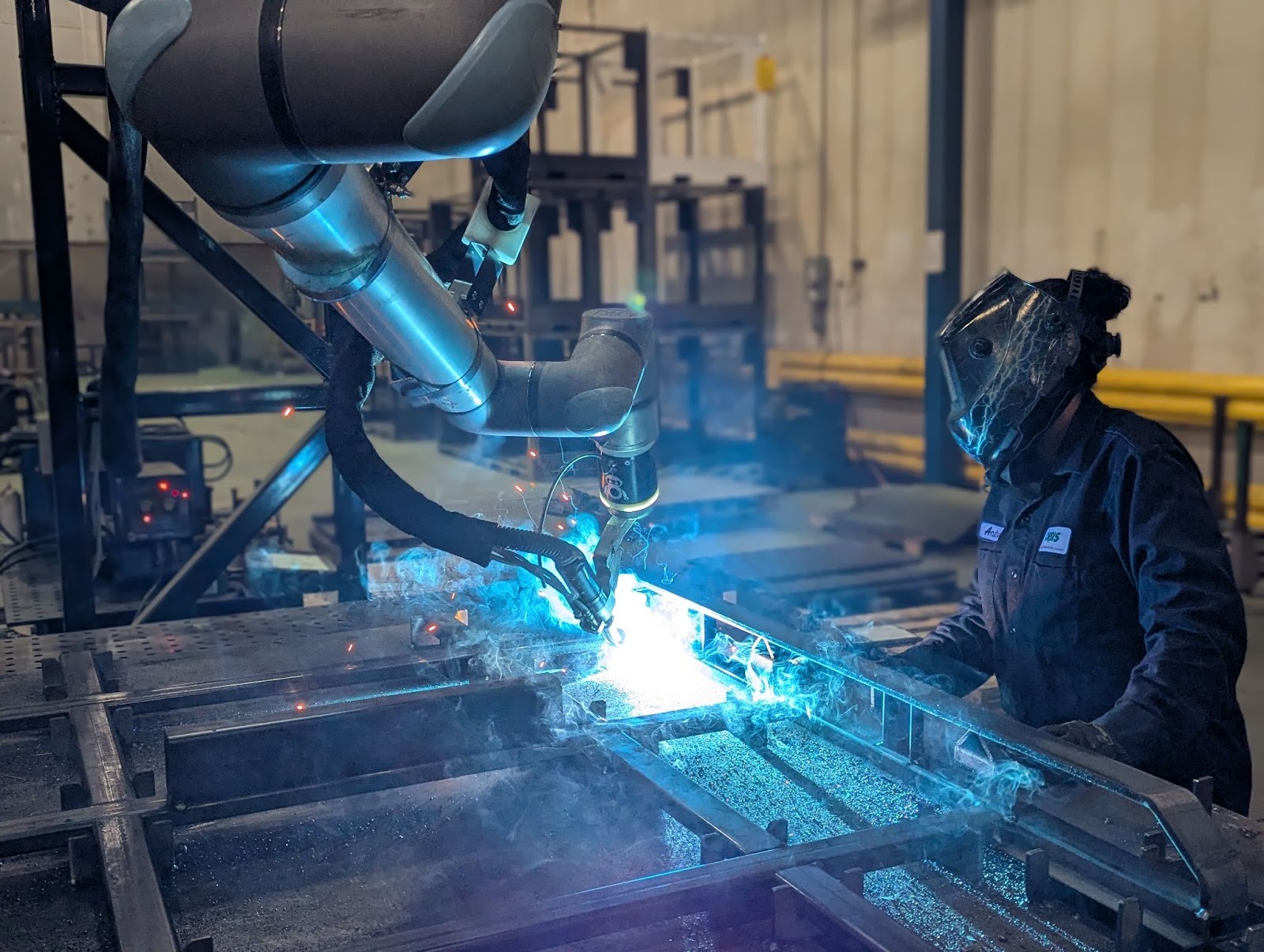
That's the kind of problem Matt Bush, CEO of Hirebotics, has been quietly solving since the company launched in 2015. Not by replacing skilled workers, but by deploying collaborative robots (cobots) that handle the monotonous, physically punishing work while human welders focus on what they do best: fabrication, quality inspection, and skilled decision-making.
Bush shared how the company approaches automation differently, where the biggest opportunities lie for construction and manufacturing owners, and why the fear that robots take jobs is almost always backwards.
Hirebotics didn't come out of a robotics program or a Silicon Valley garage. The founders came out of industry.
"Most automation companies are putting people into the automation space,” Bush said. “ We've lived the labor shortage issue."
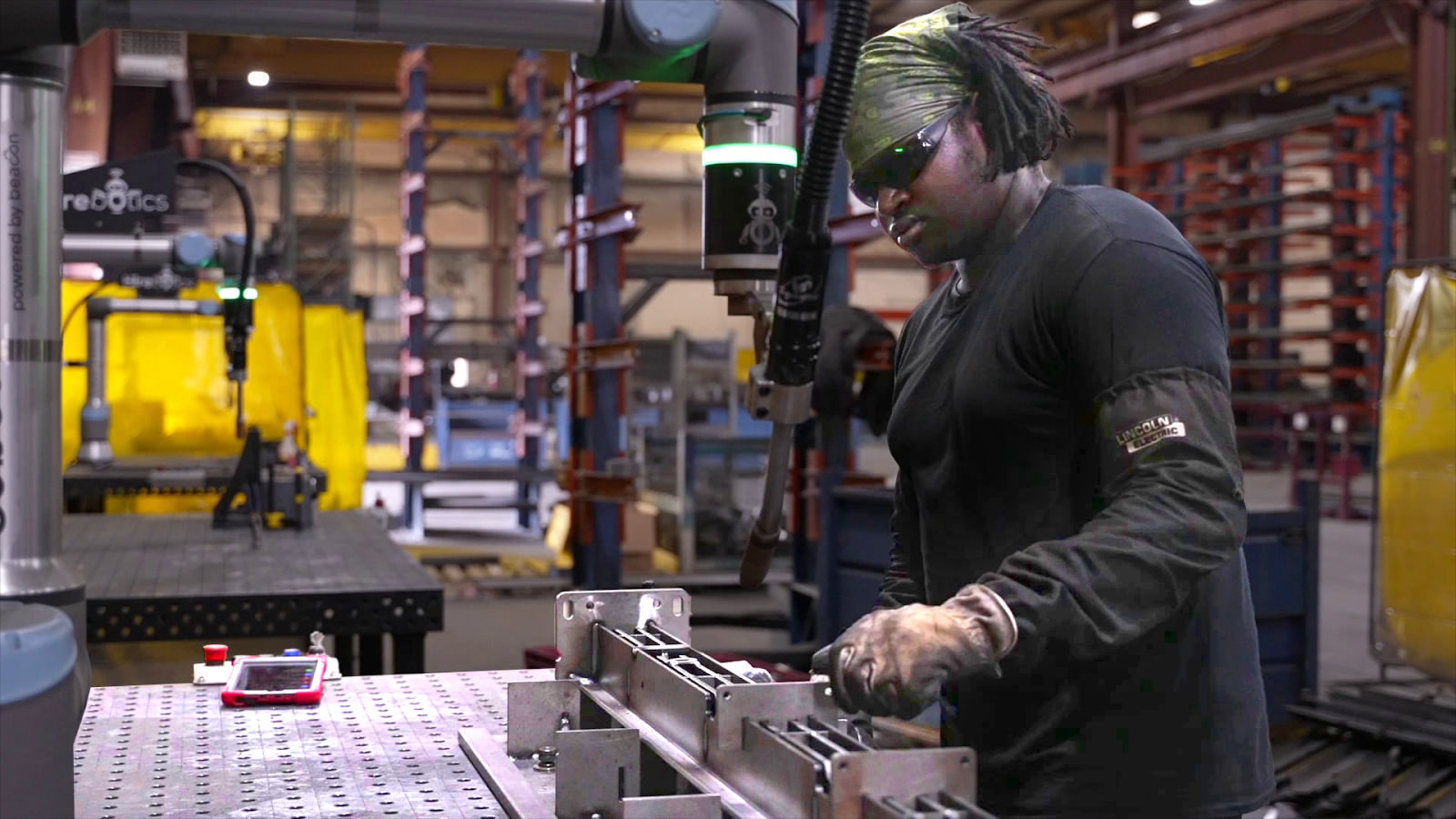
That origin shapes everything about how the company thinks about its products. The goal was never to build systems for robot engineers. It was to build a tool that an actual shop floor operator could use. No specialized programming knowledge required. No robot teach pendant. Just a smartphone, a tablet, or a web browser.
"We try to build a system that is a tool for the operator," Bush said. “The aim is to expand workers' capabilities, not replace them.”
The San Francisco seismic retrofit story is a perfect illustration of how cobots translate to construction. On that project, the contractor needed hundreds of welders they simply couldn't find. Hirebotics' pitch was straightforward: put a cobot on each floor, let it run the long, repetitive welds, and let your human welders handle everything else. Prepping joints, inspecting quality, working alongside the cobot to make sure the finished weld meets spec.
The cobot, as the CEO put it, doesn't get hot. It doesn't need a coffee break, a smoke break, or a bathroom break. Each human welder essentially gets one, two, or three robotic assistants working continuously while the welder manages the higher-skill parts of the job.
“ It's hard to find 200 welders to go on site in San Francisco," Bush said.
That framing runs through everything Hirebotics does: robots as workforce multipliers, not workforce replacements.
For construction and manufacturing owners wondering whether cobots are already everywhere, the answer is no. Not even close. Hirebotics estimates it has reached only about 4 to 5 percent of potential users.
Part of the challenge is simple awareness. Many small and mid-sized fabricators still don't know that portable, flexible cobot systems exist at all. Larger companies that might assume automation requires a million-dollar fixed weld cell are surprised to learn that highly flexible systems can be deployed for around $100,000: a much easier ROI conversation for low-volume or custom work.
"A lot of it is just awareness," Bush said. "There's still so much education out there."
The company also sees major untapped potential in large structural fabrication, particularly in taking the robot to oversized parts rather than the other way around, and in industries like marine manufacturing (vessels, yachts, large ships) and agricultural equipment, where rural labor markets make the workforce problem even more acute.
One of Hirebotics' sharpest differentiators is its cloud-first platform. Since day one, every robot the company has shipped has been cloud-connected. That approach started as a billing mechanism for their robots-as-a-service model and has since evolved into a full-featured platform called Beacon.
What does cloud connectivity actually mean in practice?
For operators: a unified smartphone or web interface where a welding robot, a cutting robot, and a painting robot all look and behave identically in the app, even if they're made by entirely different hardware manufacturers underneath. Hirebotics runs its own tech stack, so the user experience is consistent regardless of what robot brand is underneath the hood.
For support: when something goes wrong, operators don't call a third-party helpdesk and wait. They swipe into a support interface built directly into the same app they use to teach the robot. An AI assistant named Jake ("Jake with the khaki pants," as the team jokes) handles about 70 to 75 percent of support questions to user satisfaction, pulling from a comprehensive knowledge base built on real customer interactions. When Jake can't solve it, the actual product team jumps in. Average response time: three to four minutes. Average ticket close time: just over an hour.
"You're not talking to a third-party support agent,” Bush said. “You're talking to the team that's actually developing the product."
And because every robot runs identical software through the cloud, bug fixes and updates push automatically to every connected system worldwide, with no manual updates and no version fragmentation.
For deployments that need to go fully offline, such as a fabricator shipping robots with parts to a remote job site, the system maintains full functionality offline and syncs all data when reconnected.
Hirebotics started in welding but has been steadily expanding into adjacent applications wherever the labor problem is acute.
One of their fastest-growing verticals is data center construction. These large manufacturing facilities are often built in rural locations where finding sufficient skilled welders for multiple shifts is a genuine operational risk. The company now has robots deployed across multiple facilities for a major data center customer, with a third location in Kentucky currently coming online.
That same customer flagged another pain point: staffing powder coat paint booths. Standing inside a paint booth in summer heat, wearing a full protective suit, manually painting large structural components coming down an assembly line is, as the CEO put it bluntly, a miserable job. Hirebotics is now launching cobot-based painting systems, with first installations targeted for this spring.
The pattern is consistent: find the jobs nobody wants to do, apply automation, and free up the human workforce to focus on the work that actually requires human judgment and skill.
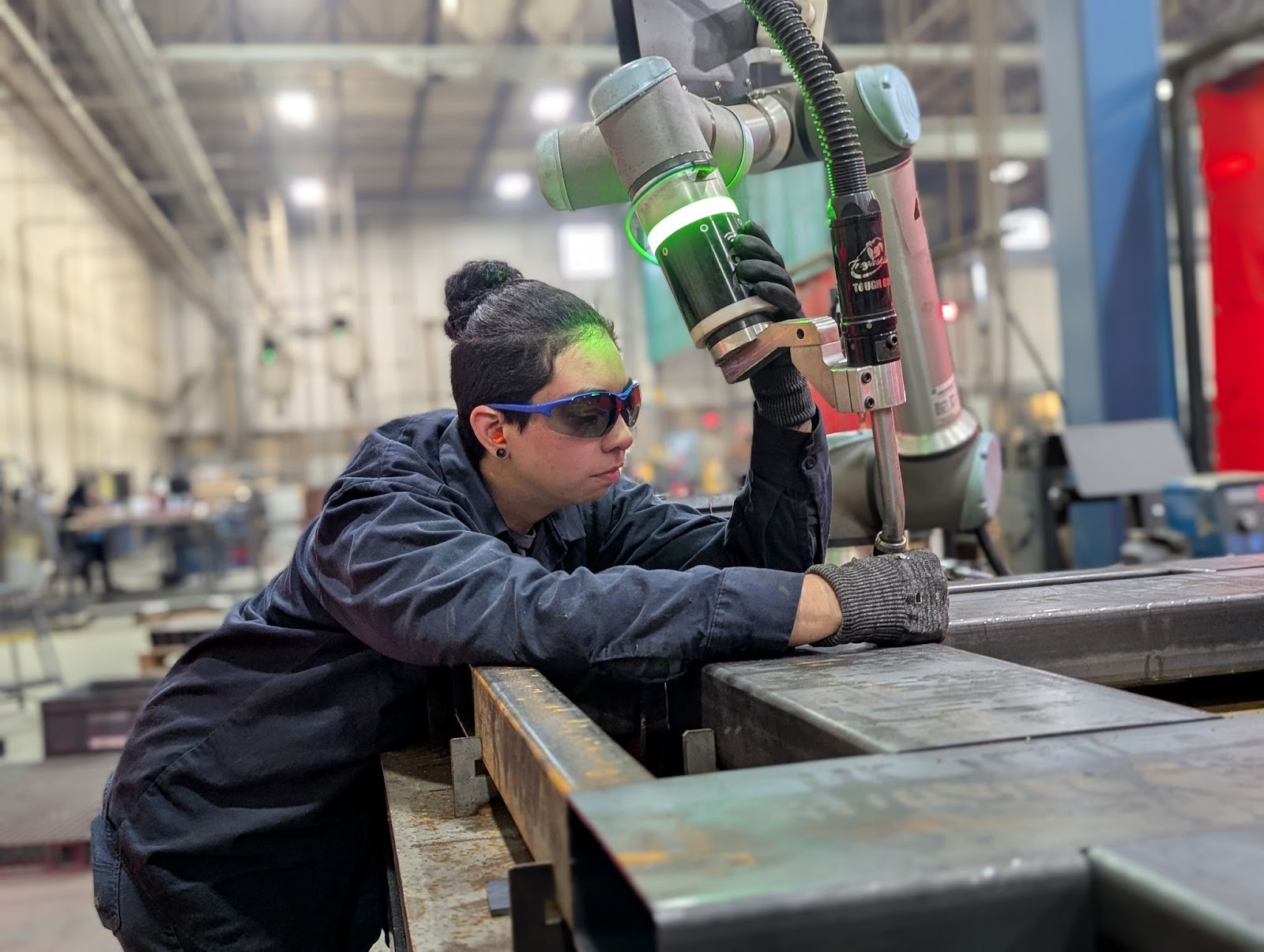
Ask Hirebotics about misconceptions, and the answer is immediate: the fear that robots take jobs.
The data from their own customer base tells a different story. Most of the companies that have successfully deployed cobots employ more people today than they did before they started. Why? Because automation allows them to compete against offshore sources and win more business against competitors still doing everything manually. More business means more work, including skilled work that cobots simply can't do.
"Robots are great at doing the monotonous, boring, repetitive task," Bush said. "They're not great at A to B to C to D to E to Z, Y, X, because they're designed to do the same thing over and over." T
he skilled fabrication, the creative problem-solving, the quality judgment: that stays human.
Hirebotics' very first welding customer grew their welding department from a minor part of the business into something meaningful. Not by replacing welders, but by being able to take on more volume work with cobots handling the repetitive runs, freeing human welders to tackle the custom fabrication work that was previously beyond their capacity.
For construction owners and general contractors watching the skilled trades shortage show no signs of reversing, the Hirebotics model offers a practical near-term path forward: not as a replacement for recruiting and retaining skilled workers, but as a force multiplier for the workforce you already have.
The economics are increasingly compelling. Flexible cobot systems in the $100K range are accessible to small and mid-sized fabricators and contractors in a way that million-dollar fixed automation cells never were. The cloud-connected support model dramatically reduces the downtime risk that historically made automation a harder sell for smaller shops. And the operator-friendly interface means you don't need a robotics engineer on staff to run the system.
As Hirebotics expands from welding and cutting into painting, marine fabrication, agricultural equipment, and beyond, the footprint of cobot automation in construction-adjacent industries is going to grow quickly.
The only real question is whether you'll be early to that conversation or late.
Hirebotics is a cobot automation company founded in 2015, focused on solving labor shortages in manufacturing and construction through cloud-connected collaborative robots. Their Beacon platform supports welding, cutting, and painting applications across small and large fabricators. Learn more at hirebotics.com.