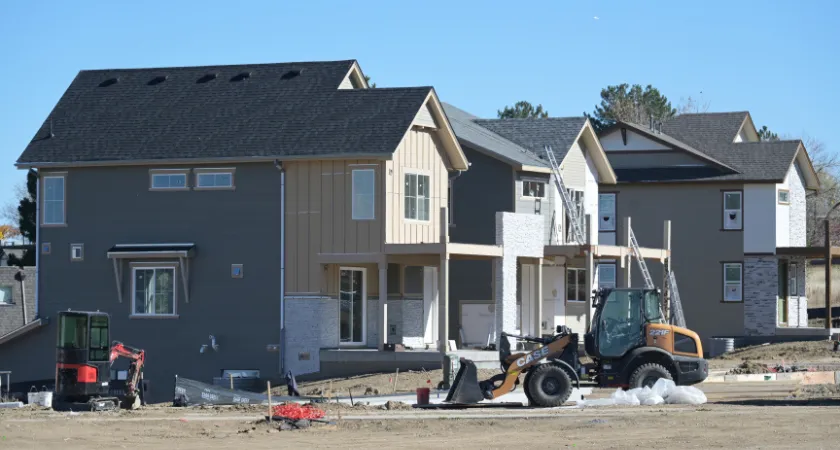
A growing debate over housing policy and energy use in Colorado is gaining attention, as residents weigh in on whether the state should require heat pumps in all newly built homes.
.webp)
In a letter responding to a recent report on Oregon’s approach, one resident argued that similar action could help reduce reliance on fossil fuels while lowering long-term infrastructure costs.
“Oregon’s mandate for heat pumps is a good first step in weaning society off natural gas. Oregon’s mandate only applies to new construction. It’s not clear what ‘new construction’ means, but if it only applies to new residential subdivisions, the cost of natural gas infrastructure can be avoided, and the $3,000 savings per house would offset any additional cost for the heat pump.”
The writer emphasized that building new communities presents a unique opportunity to integrate cleaner technologies from the outset, avoiding expensive retrofits later.
“For a new subdivision, geothermal-based heat pump systems are easier because the pipe grid can be installed during excavation and grading. Such systems can be even more efficient than air-based heat pumps and air conditioners.”
Supporters of the proposal argue that continuing to install gas-based systems in new homes contradicts long-term emissions goals and creates avoidable future costs.
“If our goal is net-zero greenhouse gas emissions, why should we build new homes with gas furnaces that will operate for the next 20 years? After that, converting an existing house with a gas furnace to heat pump heating isn’t as simple as replacing the gas furnace with a heat pump. You need to install the outside equipment with all the associated plumbing and wiring. And the duct work may need to be modified. All this work is much harder (costlier) in a finished house.”
The letter further suggests that policy alignment at the national level could ease the transition.
“A national carbon fee and dividend law would make transitioning off natural gas more palatable by increasing the cost of fossil fuel while giving folks dividends to pay for it.”
While climate-focused policies are gaining traction, other residents expressed frustration over rising living costs, highlighting the daily financial pressures many households face.
“We filled up our gas that was down to 3/4 tank, so we could top it off for less. We group any errand trips and have almost stopped any spending that isn’t absolutely necessary.”
The writer criticized political messaging that downplays economic hardship.
“I am totally insulted by the Oval Office occupant who makes fun of affordability. It’s not a fantasy, it’s reality for those of us who buy groceries, pay heat bills, and fill our own gas tanks. How dare anyone say this war is not affecting real people? How does this war make us safer? It doesn’t. It is just a distraction from the Epstein files.”
The letter paints a stark picture of financial strain, describing difficult choices many families are forced to make.
“It means eating ramen soup instead of a meal, skipping doses of medicine to make it last, and having the house so cold that even a sweater or extra blankets makes it feel like winter camping. And we are lucky to have a home … many are not. People are in lines for food, and people living on the streets.”
The writer calls for immediate action from lawmakers.
“Congress: Stand up and do something, or find a new job after the November elections. Affordability is real, prices going up week after week is real. Anything delivered, anything that is not local, is way more than a year ago. Business people can’t quote a price and not expect a surprise tariff, fee or additional shipping costs. Get real and do something. Amendment 25, Section 4, anyone?”
Another letter shifts focus to international tensions, criticizing U.S. leadership and warning of long-term consequences.
Donald Trump is directly referenced in the critique.
“Donald Trump is a bully. That has been his behavior throughout his personal and business life. He stiffs contractors and then dares them to take him to court. He sues people he perceives as enemies. Now that he is president, he uses the Department of Justice as a tool to further his revenge motives.”
The letter frames ongoing tensions with Iran as a serious escalation.
“Waging war against Iran is bullying on steroids. And make no mistake: This is a war. Whenever Trump talks about it, he uses the word ‘war.’ Republicans in Congress have denied that it is a war, but that’s only because they are too cowardly to stand up to Trump — if they identify it as a war, the War Powers Act comes into play.”
The writer warns that the consequences of current actions could be long-lasting.
.webp)
“Trump’s bullying of Iran will not have a simple resolution. In essence, he has thrown a match into a tinder box, and he has no idea how this will end. In fact, he has no stated objective other than claiming that he has the right to dictate a new Iranian leader. The USA and the Middle East will be paying for his misstep for decades.”
The discussion around mandating heat pumps reflects a broader shift in U.S. housing and energy policy, particularly in states aiming to reduce greenhouse gas emissions. Heat pumps—especially geothermal systems—are increasingly seen as a viable alternative to traditional gas heating due to their efficiency and lower environmental impact.
However, as highlighted in these letters, policy changes tied to climate goals often intersect with affordability concerns. Rising costs for energy, housing, and everyday goods continue to shape public opinion, making it challenging for policymakers to balance environmental priorities with economic realities.
At the same time, geopolitical developments and domestic political divisions are influencing how residents interpret both economic hardship and policy decisions, demonstrating how interconnected these issues have become.
Originally reported by DP Opinion in The Denver Post.



.png)