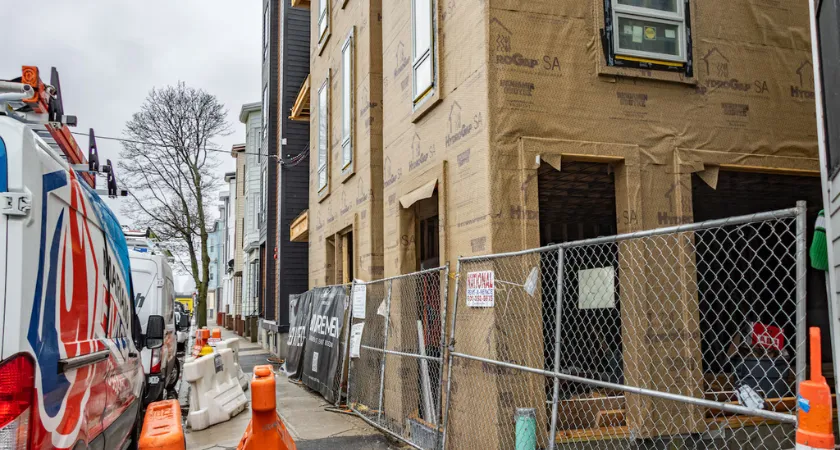
BOSTON — Massachusetts’ ambitious plan to build 222,000 new homes by 2035 is facing mounting challenges as rising construction costs, tariffs and labor shortages slow development across the state.
.webp)
A year after Gov. Maura Healey unveiled the aggressive housing target, many proposed projects remain stalled or scaled back due to economic pressures beyond state control. Despite significant public investment and policy reforms aimed at boosting housing production, developers say high interest rates and escalating material costs are making projects increasingly difficult to complete.
State data reflects the slowdown. Housing permits peaked at more than 19,800 units in 2021 but dropped to around 12,000 last year. If that pace continues, Massachusetts would fall far short of its long-term housing goals.
Construction costs have surged in recent years, driven by a combination of supply chain disruptions, geopolitical factors and increased demand. According to industry data, building costs in Boston rose more than 4% between late 2024 and 2025.
“We’re still in that kind of perfect storm where what’s driving construction costs is a little bit of everything,” said Michael O’Reilly, vice president at Rider Levett Bucknall North America.
Material costs remain a major concern. Prices for steel, lumber and other essentials spiked following the pandemic and have yet to return to pre-pandemic levels. Mark Aubin, an instructor with the Home Builders Institute, highlighted the dramatic increase.
“I can remember building houses for as much as $30,000 or $40,000, materials-wise,” Aubin said. “The same house, square footage-wise, is triple in price now because of the materials.”
Tariffs have further complicated sourcing decisions for developers. Many Massachusetts projects rely on imported materials, particularly from Canada. As a result, builders are often forced to choose between paying higher tariff-driven prices or absorbing additional shipping costs from domestic suppliers located farther away.
“Costs were changing by the day,” said Noah Sawyer, director of real estate for Just a Start, a Cambridge-based nonprofit developer. “Much of that has gone down, but prices haven’t gone back down.”
These rising expenses are especially challenging for affordable housing developers, who depend on limited public funding and grants. As project costs climb, fewer developments can move forward, reducing overall housing supply.
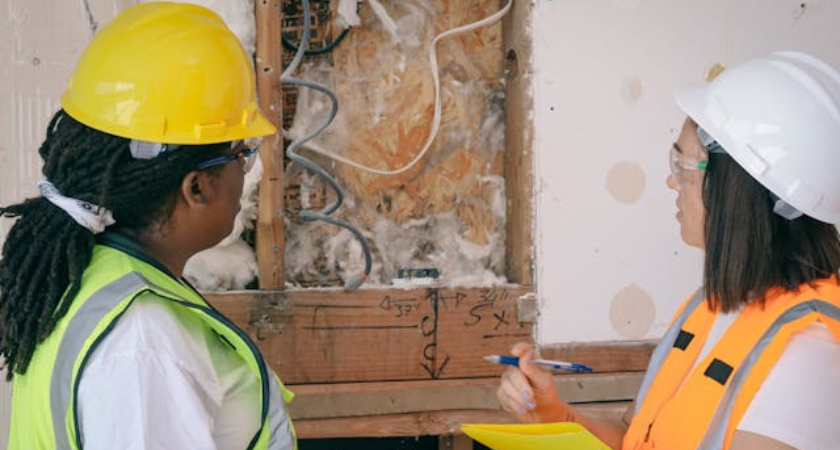
Labor constraints are adding another layer of complexity. While residential construction employment has increased since the pandemic, it still falls short of demand, making it harder and more expensive to find skilled workers.
“Students don’t want to get into the skilled trades anymore. People are thinking, college and college and college,” Aubin said. “Your average age of a construction worker right now is probably 55 to 60 years old.”
Developers can raise wages to attract workers, but doing so increases overall project costs. The shortage is particularly acute in residential construction, where specialized labor is essential to meet tight timelines and budgets.
Regulatory barriers also continue to slow progress. Lengthy permitting processes, zoning restrictions and design reviews can delay projects for months or even years. These delays increase costs as developers hold land without being able to build.
Housing advocates argue that some regulations are outdated and unnecessarily restrictive. Jesse Kanson-Benanav, executive director of Abundant Housing Massachusetts, pointed to other regions that have streamlined regulations to keep projects moving.
.webp)
“We’ve seen other jurisdictions around the country that face all of the same geopolitical factors — high interest rates, building costs, material costs, etc. — but have reduced some of the zoning, permitting or code restrictions on new construction,” he said.
At the same time, local leaders defend certain requirements, particularly those related to affordability and sustainability. Boston Mayor Michelle Wu emphasized the importance of maintaining high standards.
“If the implication is that the only way the city of Boston can be a successful, competitive city is through a race to the bottom … that is not what we are trying to do in Boston,” Wu said.
As Massachusetts continues to balance housing demand with economic and regulatory realities, industry stakeholders say addressing cost drivers and streamlining approvals will be critical to meeting long-term housing goals.
This article is based on reporting by Tréa Lavery, originally published by MassLive.
Read the original article here: https://www.masslive.com